
You flip the switch, hear the hum, and nothing happens. The motor is getting power, but the blades won’t move. A garbage disposal humming but not spinning usually means something is jammed or stuck, and the good news is that most homeowners can fix it themselves in a few minutes with tools they already have.
The bad news is that the clock is ticking. That hum means the motor is straining against whatever is locking the blades in place. Leave it running too long and you’ll burn out the motor, turning a simple jam into a replacement. So the first thing to do is turn the disposal off, right now, before anything else.
This guide walks you through exactly what to do, step by step, starting with the safest way to clear the jam yourself. We’ll also cover when the fix is beyond a YouTube solution and you need a plumber at the house. Here at Bizzy B Plumbing, we handle disposal repairs and replacements across Knoxville, Maryville, Alcoa, and the surrounding East Tennessee communities, usually the same day you call. We’ll give you an upfront estimate before any work starts, so there’s no guessing about cost.
But let’s see if you can knock this one out on your own first.
Safety checks and what the humming means
When your garbage disposal is humming but not spinning, the motor is live and trying to work, but something has locked the grinding plate in place. Understanding what’s happening inside the unit helps you fix it faster and avoid making things worse. Before you grab any tools, take two minutes to understand what you’re dealing with and run through a short list of safety checks.
Why the motor hums but the blades don’t move
Inside your disposal, a spinning plate called the flywheel drives the impeller blades that break up food. When something hard lands in there, like a bone, a bottle cap, or a piece of silverware, it can wedge itself between the flywheel and the shredder ring. The motor gets power and tries to spin, but it can’t overcome the blockage, so it just hums and strains.
Most disposals have a built-in thermal overload protector that shuts the motor down automatically after it strains for too long. That’s why sometimes the disposal stops humming on its own and won’t respond to the switch at all until you press the reset button on the bottom of the unit. If yours has already gone quiet, the thermal protector likely tripped, which is actually a sign the unit protected itself.
If the disposal hums and you don’t turn it off within a few seconds, the motor can overheat and burn out permanently, turning a simple jam fix into a full replacement.
What to check before you touch anything
Safety comes first, and with a disposal that means one rule above all others: never put your hand inside the grinding chamber while the unit has power. Even a jammed disposal can shift suddenly if the blockage moves, and the impeller blades are sharp enough to cut. Cut the power at the wall switch before you lean in for a look, every single time.
Run through this checklist before you do anything else:
- Wall switch is off. Flip it to the off position and leave it there.
- Under-sink outlet is disconnected. Some disposals plug into an outlet under the sink rather than a hardwired connection. If yours plugs in, unplug it completely.
- No standing water blocking your view. A little water in the sink is fine, but if the basin is backed up and full, remove the water first so you can see clearly.
- No visible cracks or leaks on the unit body. A cracked disposal housing changes the repair from a jam fix to a full replacement conversation.
Once you’ve worked through those four checks, you’re ready to move into the actual fix.
Step 1. Shut off power and reset the unit
With the wall switch already off from your safety check, you’re partway there. But fully cutting power means going one step further before you do anything else, and then running through the reset process that clears the thermal overload protector. Many cases of a garbage disposal humming but not spinning resolve completely at this step, without ever touching the jam itself.
Cut the power completely
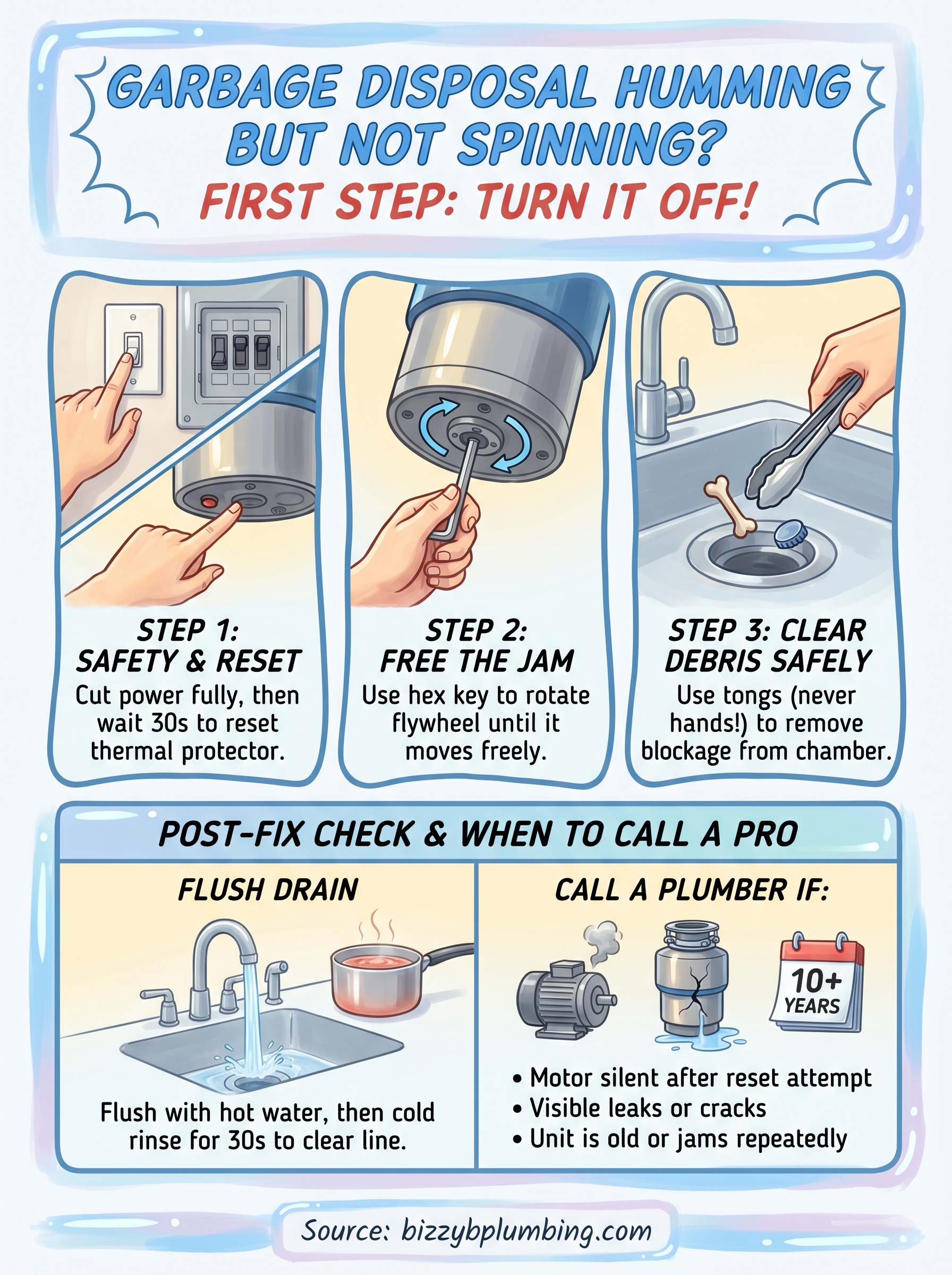
Flip the wall switch off if you haven’t already, and then locate the disposal under the sink. If your unit is plugged into an outlet under the cabinet, pull that plug out of the socket completely. If it’s hardwired, walk to your breaker panel and flip the breaker for the kitchen circuit to the off position. This isn’t optional. You want zero chance the motor can engage while your hands are near the unit.
Cutting power at the wall switch is not enough if the unit is plugged in. Pull the plug or trip the breaker to make sure the circuit is truly dead before you proceed.
Give the disposal 30 to 60 seconds to cool down after you cut power. The thermal overload protector won’t reset until the motor temperature drops, so rushing this step just means the reset button won’t respond.
Press the reset button
Crouch down and look at the bottom of the disposal unit. You’ll find a small button, usually red or black, sitting slightly below the surface of the housing. If it tripped, it will be popped out about a quarter inch. Press it firmly until you feel it click back into place.
Once it clicks, restore power to the unit. Flip the wall switch on for one second, then back off. If you hear the hum return but still no spinning, the jam is still there, which takes you directly into Step 2.
Step 2. Free the jam and turn the flywheel
With power cut and the reset button addressed, now it’s time to physically free whatever is blocking the flywheel. This is the step that actually clears the jam causing your garbage disposal humming but not spinning, and most of the time it takes less than five minutes with a single tool.
Use the hex key at the center of the unit
Manufacturers build disposals with a hex socket at the very bottom of the unit for exactly this situation. You’ll need a 1/4-inch hex key (Allen wrench), which usually ships taped to the disposal when it’s new. If yours is long gone, any standard 1/4-inch hex key from a hardware store works fine.
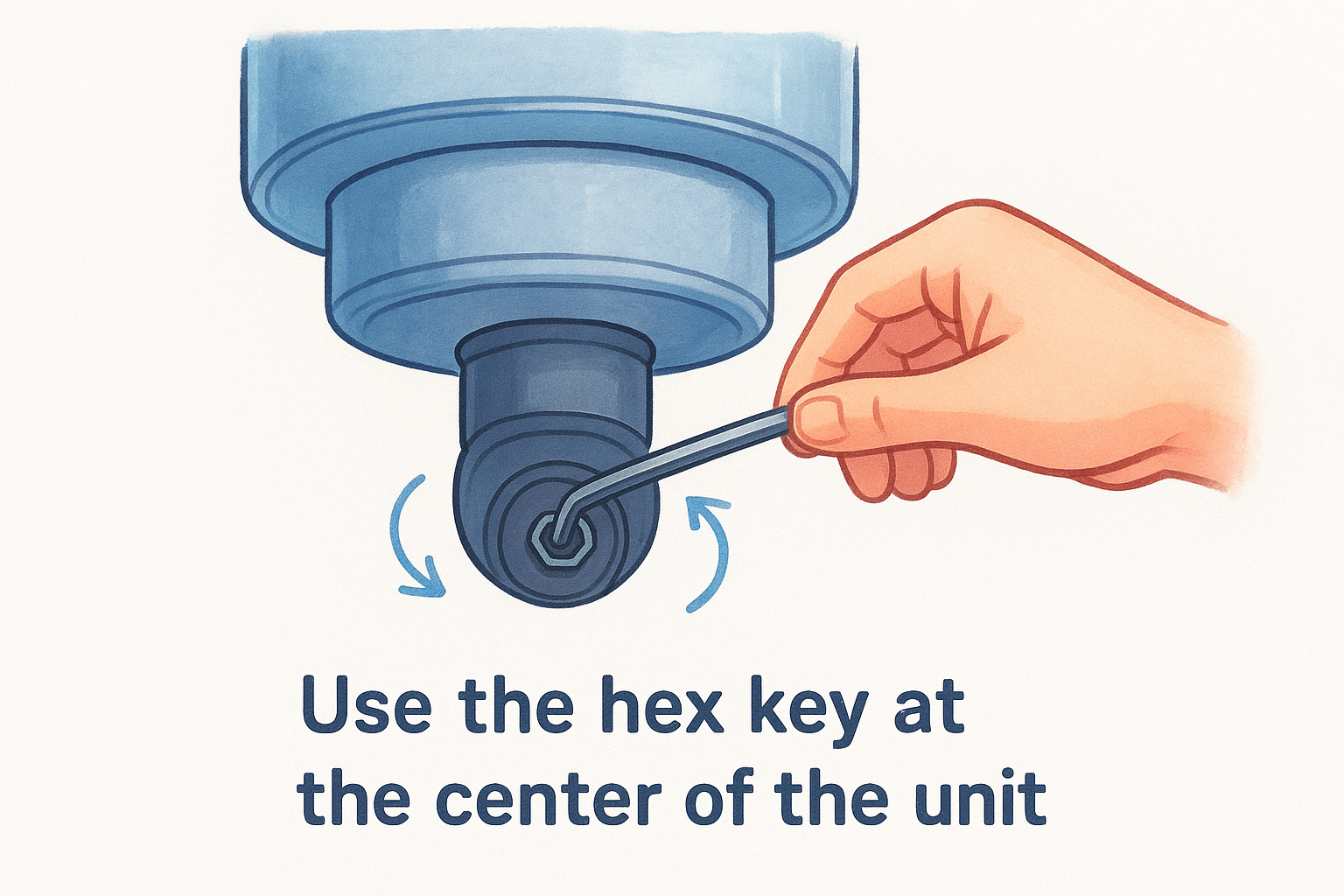
Insert the hex key into the socket and work it back and forth in both directions, not just one way. You’ll feel resistance at first. Keep working it until the socket rotates freely in a full circle, which means the flywheel is no longer locked in place.
Once the hex socket turns freely, remove the hex key completely before you restore power to the unit.
Clear the debris from inside the chamber
After freeing the flywheel, reach in with a pair of tongs or needle-nose pliers to pull out whatever caused the jam. Never use your bare hand, even with the power off. Common culprits include:
- Small bones or hard fruit pits
- Bottle caps or pull tabs
- A dropped utensil like a small spoon or fork
- Broken glass or a jar lid
Remove every piece of debris you can see or feel before turning the power back on. Once the chamber is clear, restore power, press the reset button if it’s still popped out, and flip the wall switch. If the disposal runs without humming or straining, the jam is cleared.
Step 3. Fix slow drainage and clear the line
Once the disposal runs freely again, slow or standing water in the sink basin is the next problem to handle. A jam that causes a garbage disposal humming but not spinning often drags grease, food particles, and loose debris into the drain line, and that material can create a partial clog even after the flywheel is turning again. Don’t assume the job is finished just because the disposal sounds right now.
Check for buildup in the drain line
Look under the sink at the short drain line running from the disposal to the P-trap. That section of pipe collects grease and food sludge over time. If water drains slowly from the sink basin even with the disposal running, there is a good chance that stretch of pipe has a partial blockage working against you.
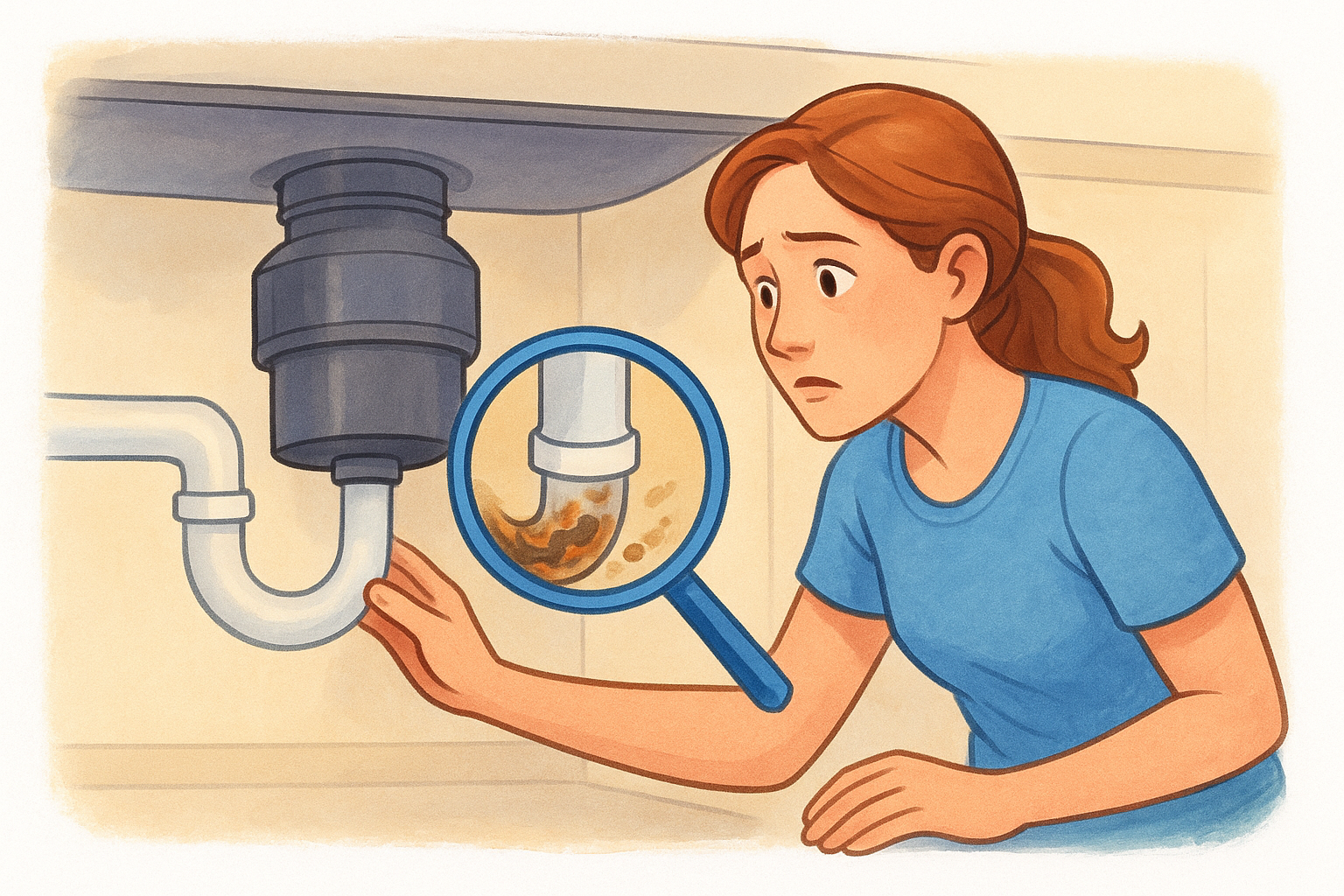
Run the disposal for 30 seconds with a steady stream of cold water flowing from the tap. Cold water firms up grease and helps the disposal push it through the line rather than smearing it against the pipe walls. If the water drains completely within a few seconds of turning the disposal off, the line is clear and you’re done with this step.
Hot water works better for loosening grease sitting in the drain line, but use cold water while the disposal is actually running so fats stay solid enough for the blades to move them through.
Flush the line after clearing the jam
After the disposal spins freely, pour a full pot of hot water down the drain slowly with the disposal switched off. Let it sit for two minutes, then run cold water from the tap and flip the disposal on for a 30-second rinse. This sequence moves any loosened debris through the line and out of the P-trap.
If the drain still runs slow after two rounds of this, the clog sits further down the line and a plumbing snake is likely needed to reach it.
When to stop troubleshooting and call for help
Steps 1 through 3 clear the majority of garbage disposal humming but not spinning situations, but not every fix ends there. Sometimes the humming stops, the disposal runs, and within a day it acts up again. Other times it goes completely silent after the jam clears. Both of those outcomes point to a problem beyond a jammed flywheel, and pushing further on your own can cause more damage than the original issue.
Signs the motor has burned out
A burned-out motor is the most common reason a disposal hums once and then goes completely silent on reset attempts. If you press the reset button and it pops back out within a few seconds of turning the switch on, the thermal overload is tripping immediately because the motor is drawing too much current.
If the reset button won’t stay in, or the disposal makes a loud buzzing sound followed by silence, stop pressing the button repeatedly. Running a failing motor in short bursts will not fix it and can damage the wiring connection.
Watch for these specific signs that point to a motor problem rather than a simple jam:
- The reset button trips within a second or two every time you press it
- The disposal runs for a few seconds and then shuts itself off
- You smell something burning near the unit under the sink
- The unit is completely silent with no hum at all, even with the reset button properly seated
Signs the unit itself needs to be replaced
Age and physical damage are both reasons to stop troubleshooting and get a professional involved. Most disposals last 8 to 12 years with normal use. If yours is in that range, the cost of a service call to diagnose a motor failure often makes a full replacement the smarter financial move.
Call a plumber if you notice any of the following:
- Visible cracks or rust on the body of the unit
- Water leaking from the bottom of the unit (not from the drain connection)
- The unit is more than 10 years old and has stopped working more than once in the past year
- You’ve cleared the jam and reset the unit but the hum returns with no spinning within a day
A simple next step if you want it handled
If you’ve worked through every step in this guide and your garbage disposal humming but not spinning issue is still not resolved, that’s a clear signal the problem is beyond a DIY fix. A burned-out motor, a cracked housing, or a drain line clog sitting deeper in the pipe all need a plumber with the right tools to sort out properly.
Bizzy B Plumbing serves Knoxville, Maryville, Alcoa, Farragut, and the surrounding East Tennessee communities, and in most cases we can get to you the same day you call. We’ll look at the disposal, explain exactly what’s going on in plain English, and give you an upfront estimate before any work starts. You decide what happens next, with no pressure either way. If the issue turns out to be a backed-up drain line rather than the disposal itself, we handle sewer line repair and drain inspections as well.


