
Your garbage disposal handles a lot of abuse, potato peels, coffee grounds, last night’s leftovers, and it rarely gets any credit until it stops working. When it does fail, the signs aren’t always obvious. A strange hum, a slow drain, or a faint smell coming from the sink can all point to a unit that’s on its way out. Knowing when to call a garbage disposal repair service can save you from a much bigger (and more expensive) problem down the line.
The tricky part is that most homeowners aren’t sure whether their disposal needs a quick fix or a full replacement. Some issues seem minor but signal real mechanical failure. Others sound alarming but take five minutes to resolve. Either way, ignoring the warning signs tends to make things worse, and nobody wants a backed-up kitchen sink on a Tuesday evening. At Bizzy B Plumbing, we handle garbage disposal repairs and replacements across Knoxville and the surrounding East Tennessee communities, and we’ve seen just about every scenario play out.
This article breaks down eight clear signs that your garbage disposal needs professional attention. If any of these sound familiar, you’re not imagining it, and you probably shouldn’t wait much longer to get it looked at.
1. You keep dealing with the same disposal problem
If you’ve reset your disposal three times this month, cleared the same jam twice, or noticed the same drain slowdown coming back every few weeks, that pattern is worth paying attention to. A one-time issue usually isn’t cause for concern, but a recurring problem tells you something isn’t getting fully resolved.
What you notice at the sink
You press the reset button, things work fine for a day or two, and then the same problem returns. Maybe the unit jams on the same types of scraps. Maybe it loses power without warning. The frequency of the failure is what sets this sign apart from normal wear.
What it usually means
Recurring issues almost always point to an underlying mechanical or electrical problem that a reset or manual unjamming can’t fix. The grinding plate may be worn down, the motor may be overheating, or a damaged internal component is causing repeated failures. The disposal is telling you it’s struggling.
If your disposal keeps failing after a reset or unjam, the fix is probably not something you can handle at the sink.
What you can try safely before calling
A few simple habits can reduce how often the problem surfaces before you get a professional out:
- Run cold water the entire time the disposal is running
- Avoid fibrous or starchy foods like celery, artichokes, or potato skins
- Use the hex wrench slot at the bottom of the unit to free a jammed grind plate
- Never put your hand inside the disposal for any reason
These steps may buy you some time, but they won’t fix the root cause.
When a plumber makes more sense than DIY
If the problem comes back within a week of your last attempt to fix it, stop troubleshooting on your own. At that point, you’re delaying the real repair, not solving it. Two or more recurring failures in a short period means it’s time to call a garbage disposal repair service to properly diagnose what’s happening inside the unit.
What the service visit typically covers
A plumber will run the unit through a full diagnostic, checking the motor, grind plate, seals, and electrical connections. From there, they’ll tell you whether a targeted repair makes sense or whether a full replacement is the smarter call. Either way, you get a clear, honest answer instead of another temporary patch.
2. Your garbage disposal will not turn on
A completely dead disposal is one of the more frustrating kitchen problems because it gives you no feedback at all. You flip the switch, nothing happens, and you’re left guessing whether it’s a minor electrical hiccup or a failed motor.
What you notice at the sink
You hit the wall switch and hear absolute silence. No hum, no grinding, no clicking. The unit doesn’t respond whether you press the reset button or try the switch multiple times.
What it usually means
A disposal that won’t start has either lost power or suffered internal motor failure. The cause could be a tripped circuit breaker, a blown thermal fuse, a worn-out motor, or a faulty wall switch that no longer sends a signal to the unit.
A disposal that stays completely silent is more likely to need replacement than one that at least hums or clicks when you switch it on.
What you can try safely before calling
Start with the basics before assuming the worst:
- Check your circuit breaker and reset it if the breaker has tripped
- Press the red reset button on the underside of the disposal firmly until you feel it click
- Test the outlet under the sink with another small appliance to confirm it has power
When a plumber makes more sense than DIY
If the breaker and reset button check out but the unit still won’t respond, the problem is inside the disposal itself. That’s when a garbage disposal repair service gives you the clearest path forward.
What the service visit typically covers
A plumber will test the electrical connections, inspect the motor, and determine whether a repair is possible or whether installing a new unit is the better value for your home.
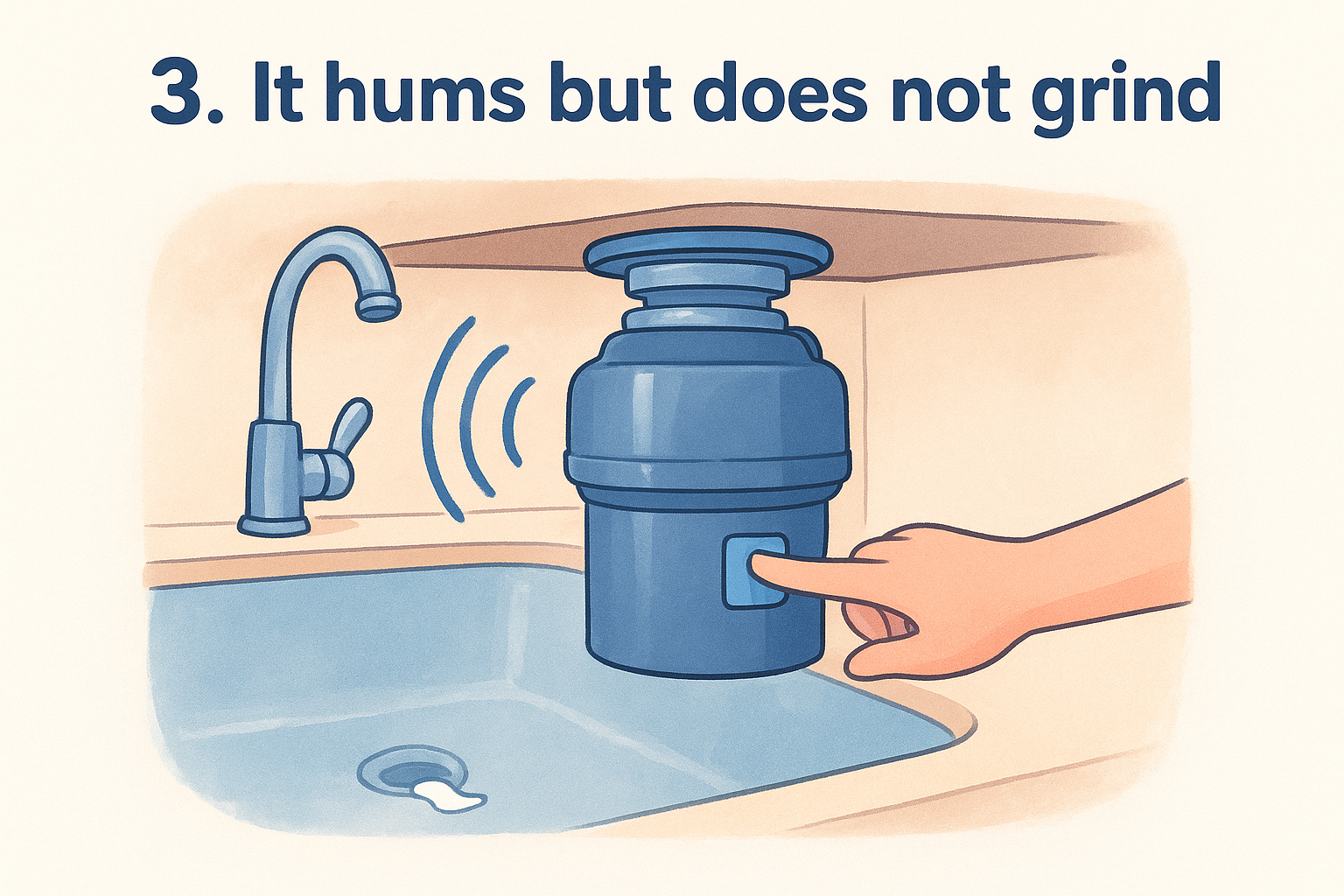
3. It hums but does not grind
A humming disposal that doesn’t actually grind anything is a different kind of problem than a completely silent unit. The motor is receiving power and trying to run, but something is blocking the grinding plate from spinning.
What you notice at the sink
You flip the switch and hear a low, steady hum, but the disposal produces no grinding sound and nothing moves through the drain. The unit may shut off on its own after a few seconds to prevent the motor from overheating.
What it usually means
The humming tells you the motor is still alive, but the grind plate is jammed. A piece of debris, a small utensil, or even a buildup of hardened food waste can lock the plate in place. The motor strains against that resistance, which is why it hums without doing anything useful.
A jammed grind plate left running too long will burn out the motor, turning a fixable problem into a full replacement.
What you can try safely before calling
Before reaching out to a garbage disposal repair service, try these steps:
- Turn the disposal completely off at the wall switch before doing anything
- Insert a 1/4-inch hex wrench into the slot at the bottom of the unit and work it back and forth to free the plate
- Use tongs or pliers, never your hand, to remove any visible debris from the opening
When a plumber makes more sense than DIY
If the hex wrench won’t budge the plate, or the unit jams again immediately after you clear it, the internal components need a closer look.
What the service visit typically covers
A plumber will remove the obstruction properly, inspect the grind plate and motor for damage, and confirm whether the unit is still mechanically sound or needs to be replaced.
4. The reset button trips often
The reset button exists to protect your disposal’s motor from overheating. Pressing it once after an unusual jam is normal. Pressing it two or three times a week is not.
What you notice at the sink
You run the disposal, it stops mid-cycle, and nothing works until you crouch under the sink and press the small red button on the bottom of the unit. It happens more and more often, sometimes with light loads that shouldn’t cause any trouble.
What it usually means
A reset button that trips repeatedly usually means the motor is overheating or overloading more than it should. The internal wiring may be degrading, the motor windings may be wearing out, or the unit is simply reaching the end of its useful life. The reset button is doing its job, but the root problem isn’t going away.
When the reset button becomes part of your regular kitchen routine, the disposal is signaling that it needs more than a quick press to stay functional.
What you can try safely before calling
- Avoid running the disposal without cold water flowing the entire time
- Keep hard items like fruit pits, bones, and ice out of the unit
- Give the disposal a 30-second break between long grinding cycles
When a plumber makes more sense than DIY
If the button trips more than once a week or trips even on small amounts of soft food, call a garbage disposal repair service rather than keep resetting it.
What the service visit typically covers
A plumber will test the motor load and internal wiring to determine whether a repair will solve the overheating or whether a replacement unit makes more financial sense.
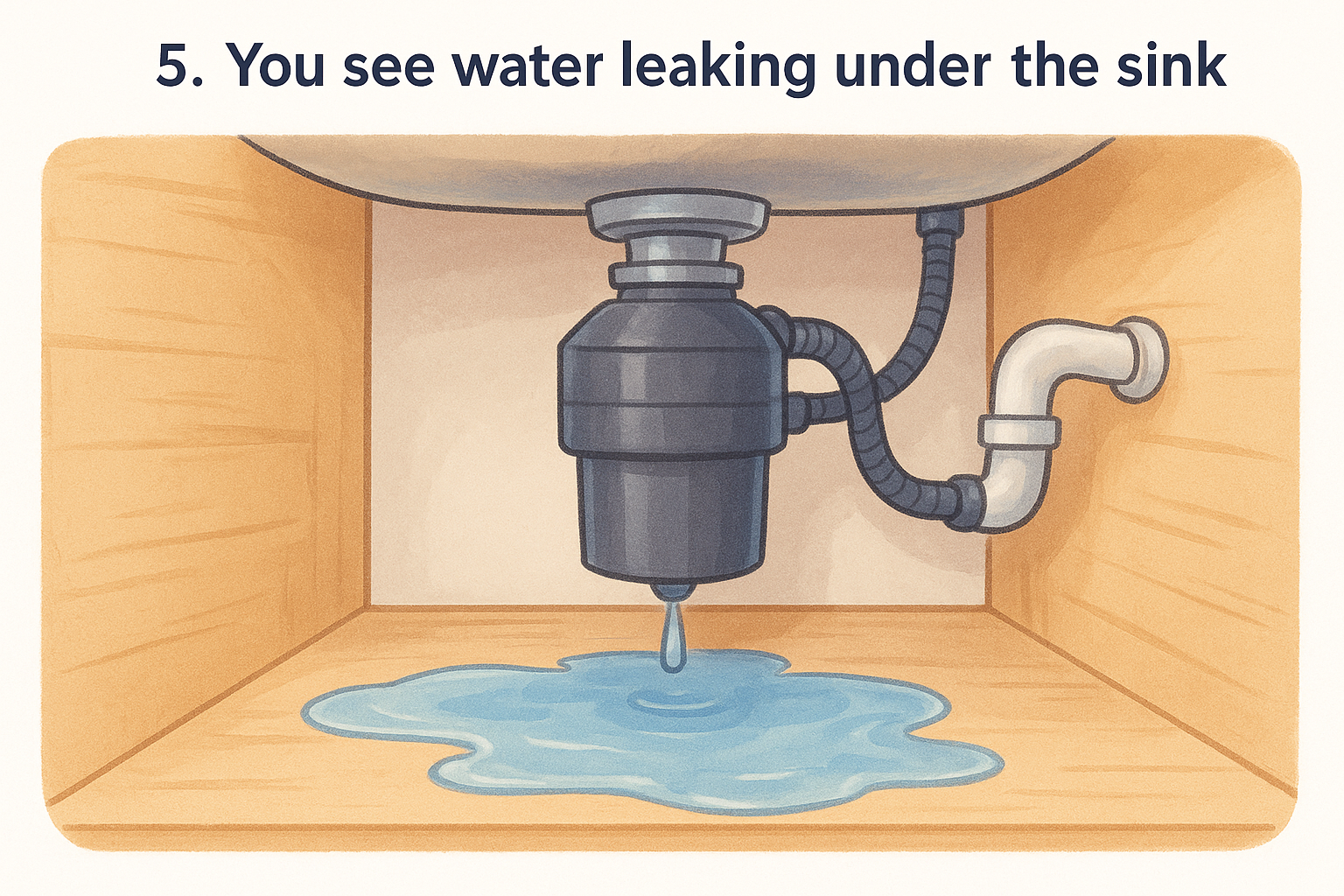
5. You see water leaking under the sink
Water pooling under your kitchen sink isn’t always a disposal problem, but when it is, it tends to get worse quickly. A slow drip can soak cabinet floors, warp wood, and create mold conditions before you even notice how serious the situation has become.
What you notice at the sink
You open the cabinet below the sink and find standing water or a wet spot on the cabinet floor. Sometimes the leak is obvious, a steady drip running down the side of the disposal unit. Other times, you only notice it because of discoloration or dampness on the cabinet shelf.
What it usually means
Leaks on a disposal unit come from a few different spots. The sink flange at the top can loosen over time, especially on older units. The discharge pipe or drain connection on the side of the unit can develop cracks or loose fittings. A leak from the bottom of the unit almost always means an internal seal has failed, and at that point, repair is rarely cost-effective.
A leak at the bottom of your disposal unit means the internal seals are gone, and replacement is usually the smarter call over a repair.
What you can try safely before calling
Check whether the discharge pipe connections feel loose and hand-tighten any accessible fittings. Dry the area completely so you can pinpoint exactly where the water originates before calling a garbage disposal repair service.
When a plumber makes more sense than DIY
If the leak continues after tightening the connections, or if you can’t identify the source of the water, stop guessing and call a plumber.
What the service visit typically covers
A plumber will trace the leak to its source, replace any failed seals or fittings, and let you know whether the unit itself needs to be replaced.
6. Your sink drains slowly or backs up
A slow drain isn’t always a clog in the pipes. When your garbage disposal is part of the problem, you’ll often notice the water sitting in the sink longer than it should, even when you haven’t put anything unusual down it. That delay at the drain is worth taking seriously before it turns into a full backup.
What you notice at the sink
Water sits in the sink basin after you run the disposal, draining away slowly over several minutes. In worse cases, the water rises back up into the sink while the unit is running or shortly after you turn it off. The drain gurgling or bubbling as water finally exits is another clear signal.
What it usually means
A slow drain connected to your disposal usually points to a partial blockage in the drain line or a buildup of food waste inside the disposal’s discharge pipe. Over time, grease, starchy foods, and fibrous material accumulate inside the line and restrict flow. The problem worsens gradually, which is why many homeowners dismiss it early on.
If your sink backs up while the disposal is running, the blockage is likely in the drain line just past the unit, not in the pipes further down.
What you can try safely before calling
- Run cold water for 30 seconds before and after using the disposal
- Avoid putting grease, pasta, or rice down the drain, as these cause buildup quickly
- Try flushing the drain with hot water and dish soap to break up minor grease deposits
When a plumber makes more sense than DIY
If the drain stays slow after a few days of careful use, or if the backup worsens, a garbage disposal repair service will clear the blockage properly without damaging the drain line.
What the service visit typically covers
A plumber will clear the blockage, inspect the discharge pipe, and check whether the disposal itself is contributing to the restriction or whether the problem extends further into your drain system.
7. You hear loud grinding or rattling noises
A disposal that suddenly sounds like it’s chewing on rocks is difficult to ignore. Unusual noises during operation are one of the clearest signs something has gone wrong inside the unit, and running it through the noise only makes the damage worse.
What you notice at the sink
You turn on the disposal and hear a loud metallic grinding, rattling, or clanking sound that wasn’t there before. The noise may start immediately or kick in partway through a cycle. Sometimes the unit vibrates harder than usual, or the sound shifts depending on what’s inside.
What it usually means
Rattling usually means a hard object like a bottle cap, small bone, or piece of cutlery has fallen into the grinding chamber and is bouncing around. Grinding or scraping sounds typically point to worn grinding plates, loose mounting hardware, or broken internal parts that have shifted out of position.
Running a disposal that rattles or grinds against a foreign object can damage the grinding plate and motor quickly, turning a simple fix into a full replacement.
What you can try safely before calling
- Turn the disposal completely off before doing anything
- Use tongs or pliers to check for and remove any visible hard objects from the opening
When a plumber makes more sense than DIY
If you remove any visible objects but the noise continues, or if the grinding started without any obvious cause, contact a garbage disposal repair service to inspect the internal components properly.
What the service visit typically covers
A plumber will open and inspect the grinding chamber, identify the exact source of the noise, and repair or replace any damaged parts before they cause further mechanical failure.
8. It smells bad even after cleaning
A persistent smell coming from your disposal is more than just unpleasant. It usually means something is wrong inside the unit that a quick rinse or a handful of ice cubes won’t fix.
What you notice at the sink
You clean the disposal regularly, run cold water, and maybe even drop in some citrus peels, but a sour or rotting smell keeps coming back within a day or two. The odor hits you every time you run water or stand near the sink, and nothing you try keeps it gone for long.
What it usually means
Stubborn odors point to food waste trapped inside the grinding chamber or discharge pipe in spots that regular cleaning can’t reach. Grease buildup, cracked internal components, or a worn rubber splash guard can harbor bacteria that keeps producing the smell no matter what you pour down the drain.
If the smell returns within 24 hours of cleaning, the problem is deeper than the surface of the disposal.
What you can try safely before calling
- Scrub the underside of the rubber splash guard with a brush and dish soap
- Run the disposal with a few ice cubes and coarse salt to break up residue on the grinding plates
- Avoid putting grease or starchy foods down the disposal going forward
When a plumber makes more sense than DIY
If the smell persists after a week of consistent cleaning, a garbage disposal repair service can inspect the unit for cracked components or trapped buildup that’s out of reach.
What the service visit typically covers
A plumber will clean out the discharge pipe, inspect the splash guard and grinding chamber, and tell you whether the unit needs a targeted repair or a full replacement to resolve the issue.
What to do next
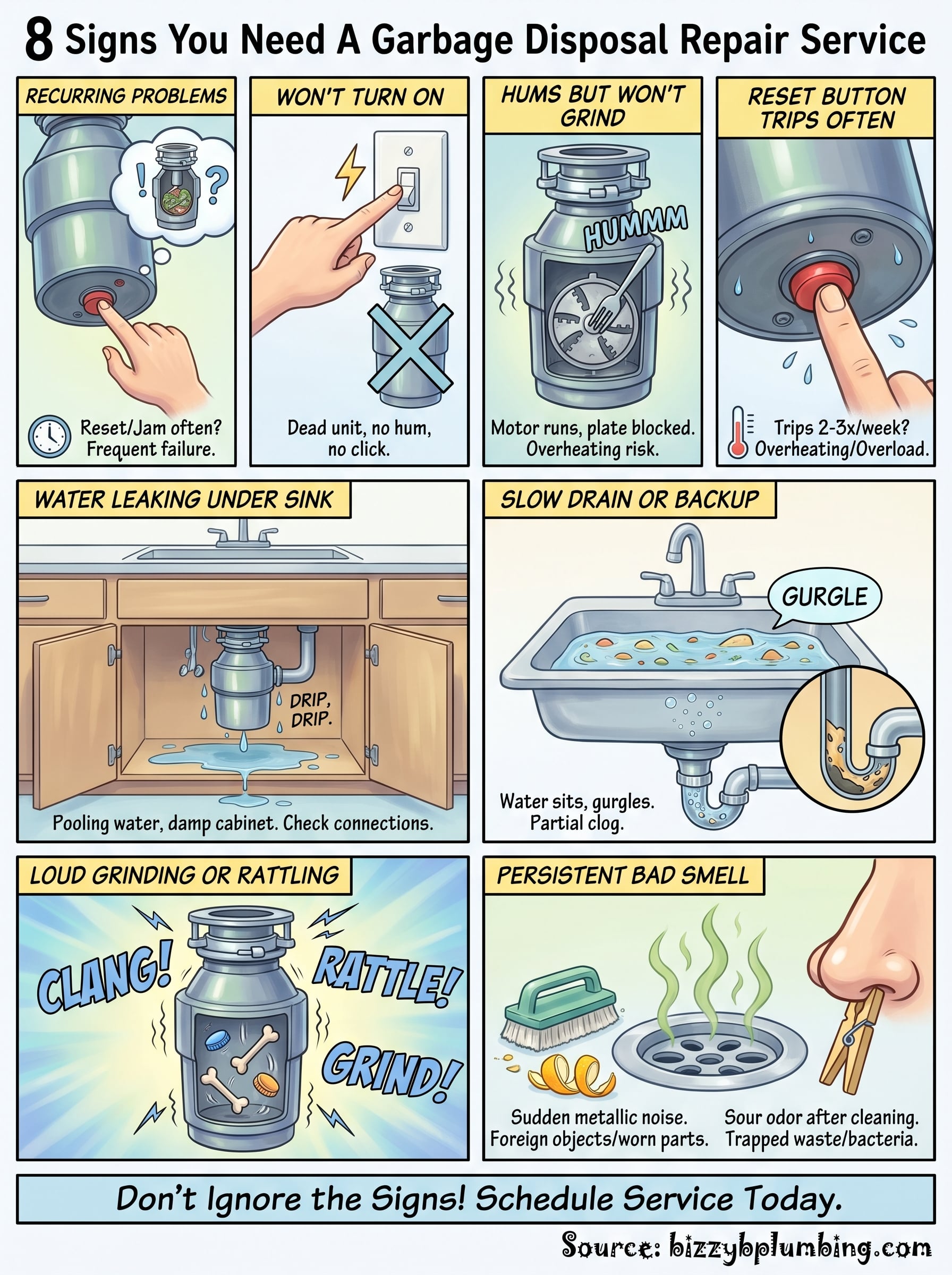
Any of the eight signs above is a reason to stop waiting and get your disposal checked. Recurring jams, leaks, strange noises, and persistent smells don’t fix themselves, and running a failing unit longer typically turns a repair into a full replacement. If you’ve already worked through the basic troubleshooting steps and the problem keeps coming back, the next call should go to a plumber.
Bizzy B Plumbing handles garbage disposal repair and replacement across Knoxville and the surrounding East Tennessee communities, including Maryville, Farragut, Alcoa, and West Knoxville. Same-day service is available for urgent issues, and you’ll get upfront pricing before any work starts so there are no surprises on the bill. Whether your disposal needs a targeted fix or a full swap, you’ll get an honest answer and a clear path forward.
Schedule your garbage disposal repair service with Bizzy B Plumbing and get it handled today.