
You turn on the kitchen faucet and get a weak, frustrating trickle instead of a steady stream. Low water pressure in kitchen sink faucets is one of the most common complaints we hear from homeowners across Knoxville, Alcoa, Maryville, and the surrounding East Tennessee area. It makes everyday tasks, washing dishes, filling pots, rinsing produce, take longer than they should. The good news? The fix is often simpler than you’d expect.
Several issues can cause your kitchen sink pressure to drop, from a clogged aerator to problems deeper in your plumbing system. Some you can handle yourself in minutes; others need a professional’s attention. At Bizzy B Plumbing, we help homeowners diagnose and solve these problems every day, and we want to share what we know so you can take the right steps before calling for backup.
This guide walks you through the most common causes of low kitchen sink water pressure and exactly how to troubleshoot each one.
What to check first before troubleshooting
Before you grab any tools, spend two minutes running through a couple of quick checks. These observations help you pinpoint the cause of your low water pressure in kitchen sink problem faster and steer you toward the right fix on the first attempt. Skipping this step often means you spend time fixing the wrong thing entirely.
Check whether other faucets are affected
Turn on a faucet in your bathroom or laundry room and compare the flow to your kitchen sink. If every faucet in your home has weak pressure, the problem likely involves your main supply line, your pressure regulator, or a service interruption from your utility provider, not the kitchen sink itself. If only the kitchen faucet is affected, you are dealing with a localized issue that you can likely fix yourself by working through the steps in this guide.
If your whole house has low pressure, contact your water utility provider first to rule out a service interruption before touching any plumbing.
Note whether it is hot, cold, or both
At your kitchen sink, test the hot and cold water separately by running each on its own for about 20 seconds. Cold water only being weak usually points to the supply line or shutoff valve on that side. Hot water only running low often connects back to your water heater or its dedicated supply line. If both temperatures are equally weak, the problem is more likely inside the faucet itself, such as a clogged aerator or a worn cartridge.
Write down what you observed in both checks: which faucets in your home are affected and which water temperature is low. These two data points act as a filter and tell you exactly which steps below apply to your situation so you are not wasting time on causes that do not fit.
Step 1. Confirm where the pressure drop happens
Narrowing down exactly where the pressure drop occurs saves you from pulling apart parts you do not need to touch. This step gives you a clear target before you start any repairs.
Test both handles independently
Turn on only the cold handle and hold your hand under the stream for 20 seconds. Then do the same with the hot handle. Notice whether one side flows stronger than the other. If cold pressure is weak but hot is fine, your cold supply line or shutoff valve is the likely culprit. If hot is the weak side, suspect the water heater or its dedicated line.
Both handles running equally weak almost always points to a blockage inside the faucet body itself, such as a clogged aerator or a failing cartridge.
Check the pull-out sprayer separately
If your kitchen sink has a pull-out or side sprayer, run it on its own and compare the flow to the main spout. Weak pressure through the sprayer only points to a clog or kink in the sprayer hose rather than a broader low water pressure in kitchen sink issue. Weak flow from both the spout and sprayer confirms the problem is upstream of the faucet, in the supply lines or shutoff valves.
Step 2. Fix clogs at the faucet and sprayer
A clogged aerator is the most common cause of low water pressure in kitchen sink faucets, and cleaning it takes less than five minutes. Mineral deposits and debris collect inside the aerator screen over time and steadily choke off your flow.
Clean the aerator
Unscrew the aerator by hand from the tip of the faucet spout. If it is stuck, wrap the aerator in a cloth and use pliers to loosen it without scratching the finish. Once removed, disassemble the small parts and soak them in white vinegar for 15 to 30 minutes to dissolve mineral buildup. Rinse everything under running water, reassemble, and screw it back on. Turn the faucet on and check whether pressure has improved.
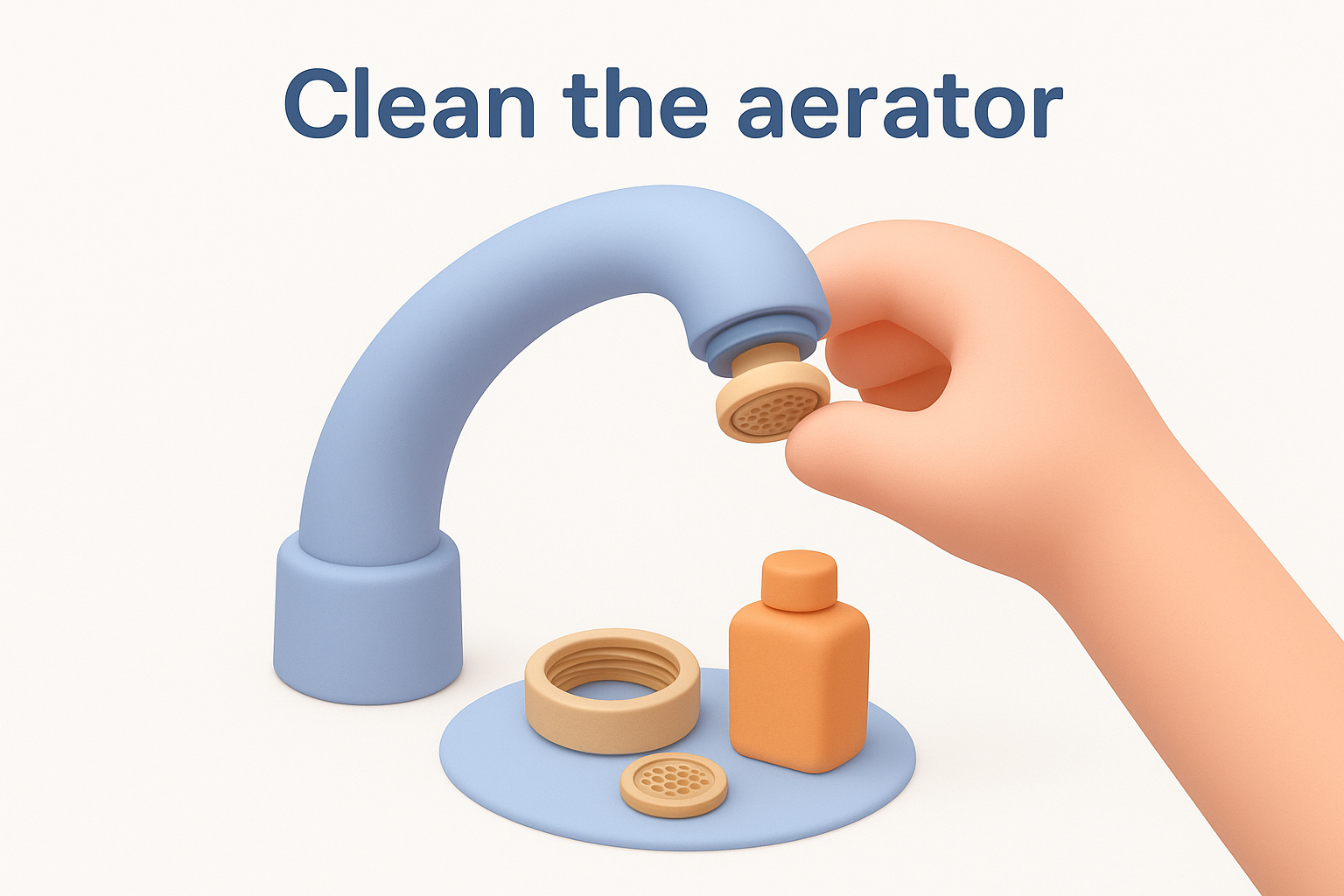
If the aerator screen looks heavily corroded or cracked, replace the whole unit rather than cleaning it. Replacement aerators cost just a few dollars at any hardware store.
Clear the sprayer head
Pull the sprayer head off the hose by unscrewing it. Soak it in white vinegar for 20 minutes, then use a toothbrush to scrub away any remaining deposits from the nozzle holes. Rinse it thoroughly and reattach it. Test the flow before moving on, since this fix alone often restores full pressure.
Step 3. Check shutoff valves and supply lines
If cleaning the faucet did not fix your low water pressure in kitchen sink problem, the next place to look is directly under the sink. Two shutoff valves control the hot and cold water supply to your faucet, and either one can be partially closed without you realizing it.
Check the shutoff valves
Open the cabinet under your sink and locate the two shutoff valves on the supply lines. Follow these steps to confirm each valve is fully open:
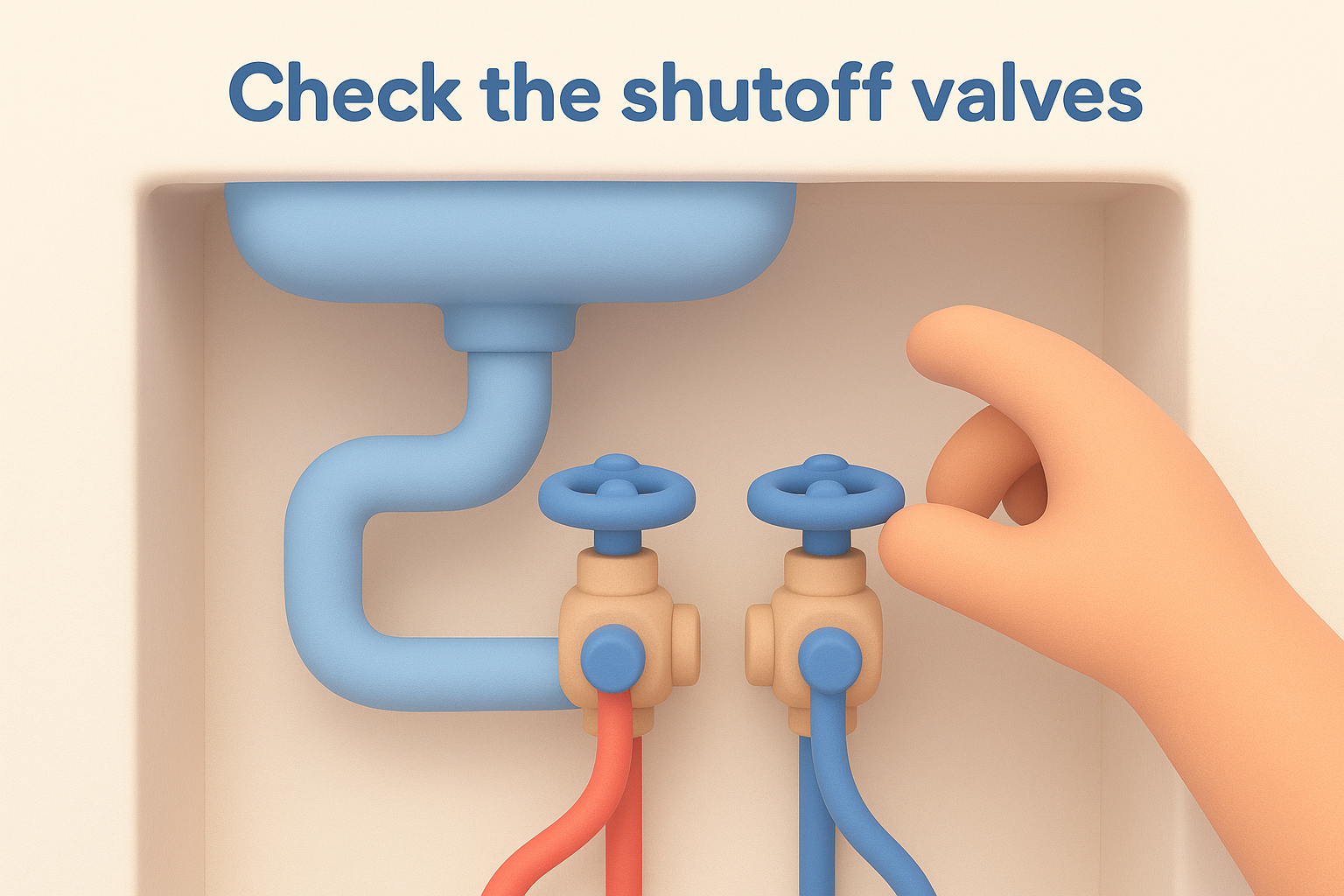
- Turn the cold water shutoff valve counterclockwise as far as it will go.
- Do the same with the hot water shutoff valve.
- Test the faucet and check whether pressure has improved.
A valve that feels fully open but still seems stiff or gritty may be failing internally and needs replacement.
Inspect the supply lines
Look at the flexible supply hoses connecting each valve to the faucet. Check for any kinks, sharp bends, or visible corrosion along the length of each hose. A kinked supply line cuts flow the same way a pinched garden hose does.
Straighten any kinks by gently repositioning the hose away from obstructions inside the cabinet. If a hose feels stiff, cracked, or shows mineral buildup at the fittings, replace it. New supply lines are inexpensive and take about 10 minutes to swap out.
Step 4. Rule out bigger plumbing and hot water issues
If the previous steps did not fix your low water pressure in kitchen sink, the problem may sit further back in your plumbing. Wider system issues like a partially restricted main line or a failing water heater can cut flow to your kitchen without flagging every fixture in the house.
Check your water heater
Sediment buildup inside a tank water heater slowly restricts hot water flow to all fixtures, including the kitchen sink. Confirm your water heater’s inlet valve is fully open by turning it counterclockwise until it stops. If pressure is still weak on the hot side, watch for these signs that the heater itself is the problem:
- Water takes much longer than usual to heat up
- Hot water runs out faster than it used to
- You hear popping or rumbling sounds from the tank
Look for signs of a bigger supply problem
Corroded or aging pipes can narrow internally and reduce flow to specific fixtures without breaking or leaking visibly. Check under the sink and along any exposed supply lines for rust staining, moisture, or white mineral deposits around fittings, all of which point to a condition that goes beyond a simple DIY fix.
Galvanized steel pipes older than 20 years commonly cause localized low pressure and typically need a licensed plumber to assess properly.
If the pressure still does not come back
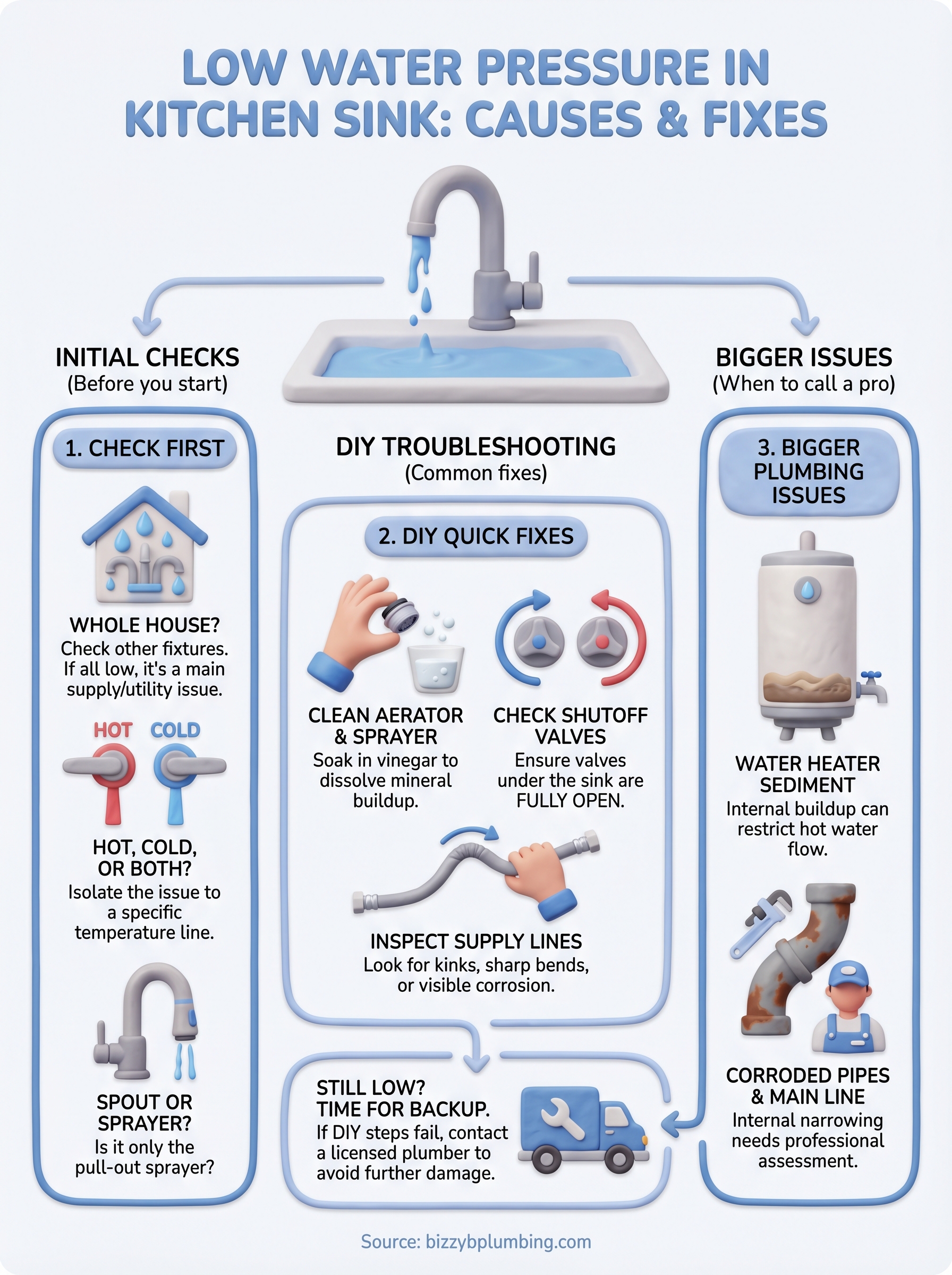
If you have worked through every step in this guide and your low water pressure in kitchen sink is still not resolved, the problem is likely deeper in your plumbing system than a DIY fix can reach. Corroded pipes, a failing pressure regulator, or a partially blocked main line all require a licensed plumber to diagnose and repair safely.
At that point, continuing to troubleshoot on your own risks making the problem worse or missing a developing issue before it turns into a bigger, costlier repair. Calling a professional early saves you time and protects your home from water damage that can result from an undetected failing line.
The team at Bizzy B Plumbing serves Knoxville, Alcoa, Maryville, and the surrounding East Tennessee area with same-day service and upfront pricing. If you need help today, contact Bizzy B Plumbing and we will get your water pressure back where it belongs.