
A pipe bursts, water is everywhere, and once the initial panic settles, your brain goes straight to the money. Burst pipe repair cost depends on a handful of real factors, where the pipe is, what it’s made of, how much damage the water did before you caught it, and the range can be wider than most homeowners expect. A straightforward fix in an accessible spot might run a few hundred dollars. A burst line buried under the foundation or hidden inside a finished wall can push well into the thousands.
We put this guide together because we get these calls regularly at Bizzy B Plumbing. Homeowners across Knoxville, Maryville, Alcoa, and the surrounding East Tennessee communities call with water spraying or pooling and need two things fast: someone who can get there today and a straight answer on what it’s going to cost. That’s how we work, show up, usually same day, explain what happened, and lay out an upfront estimate before anything starts.
Below, you’ll find real-world price ranges for common burst pipe repairs, a breakdown of what drives the cost up or down, and practical information on insurance coverage and when it applies. No vague “it depends”, actual numbers and the context behind them.
Typical burst pipe repair cost ranges in 2026
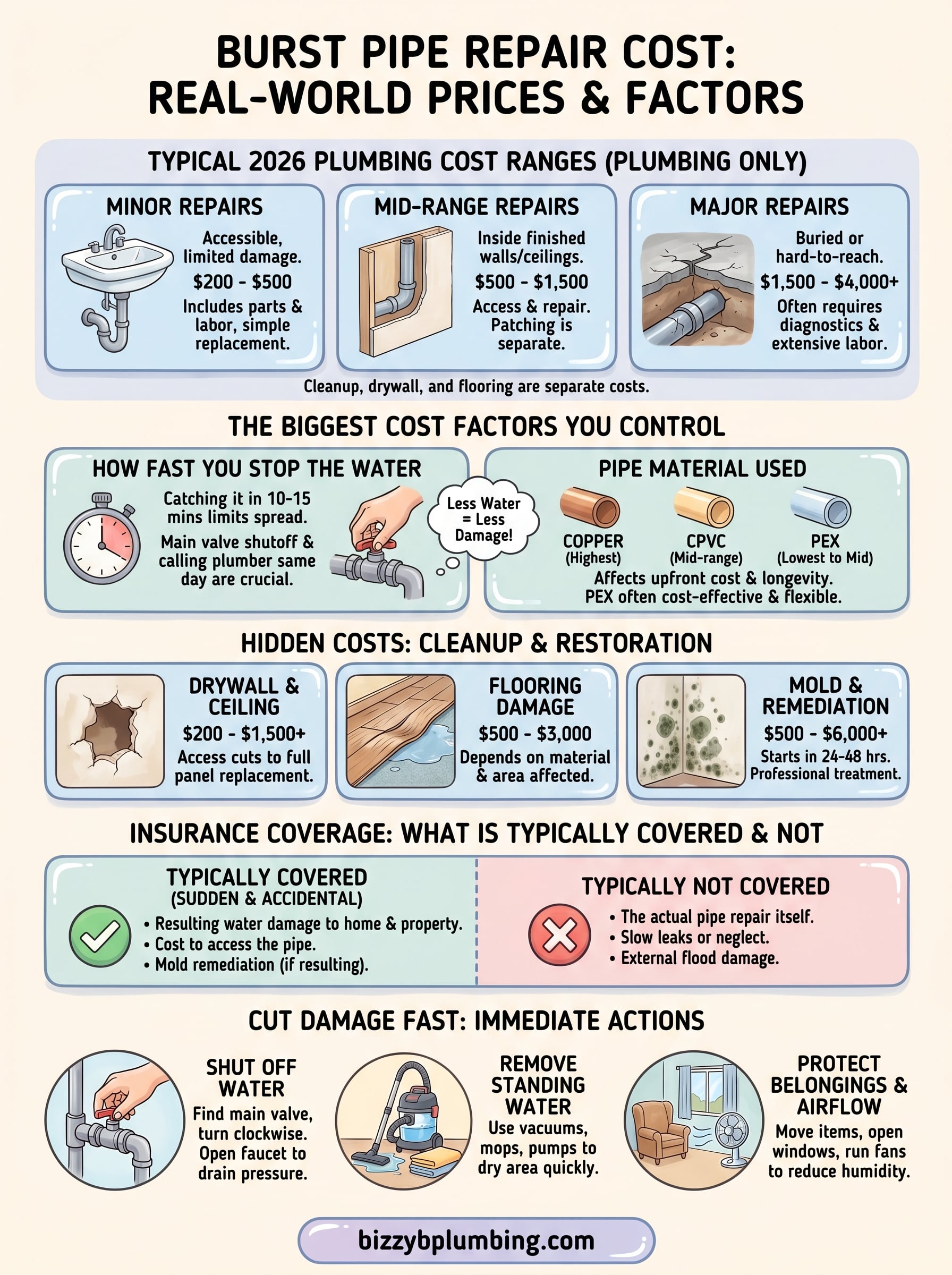
Before anything else, understand that burst pipe repair cost breaks into two parts: the plumbing work itself and the water damage cleanup. This section covers what the plumbing repair typically runs in 2026, based on real job types. Cleanup, drywall, and flooring are separate costs covered later in this guide. The numbers below reflect what homeowners in the Knoxville and East Tennessee area commonly see, though your final cost depends on the specifics a plumber can assess in person.
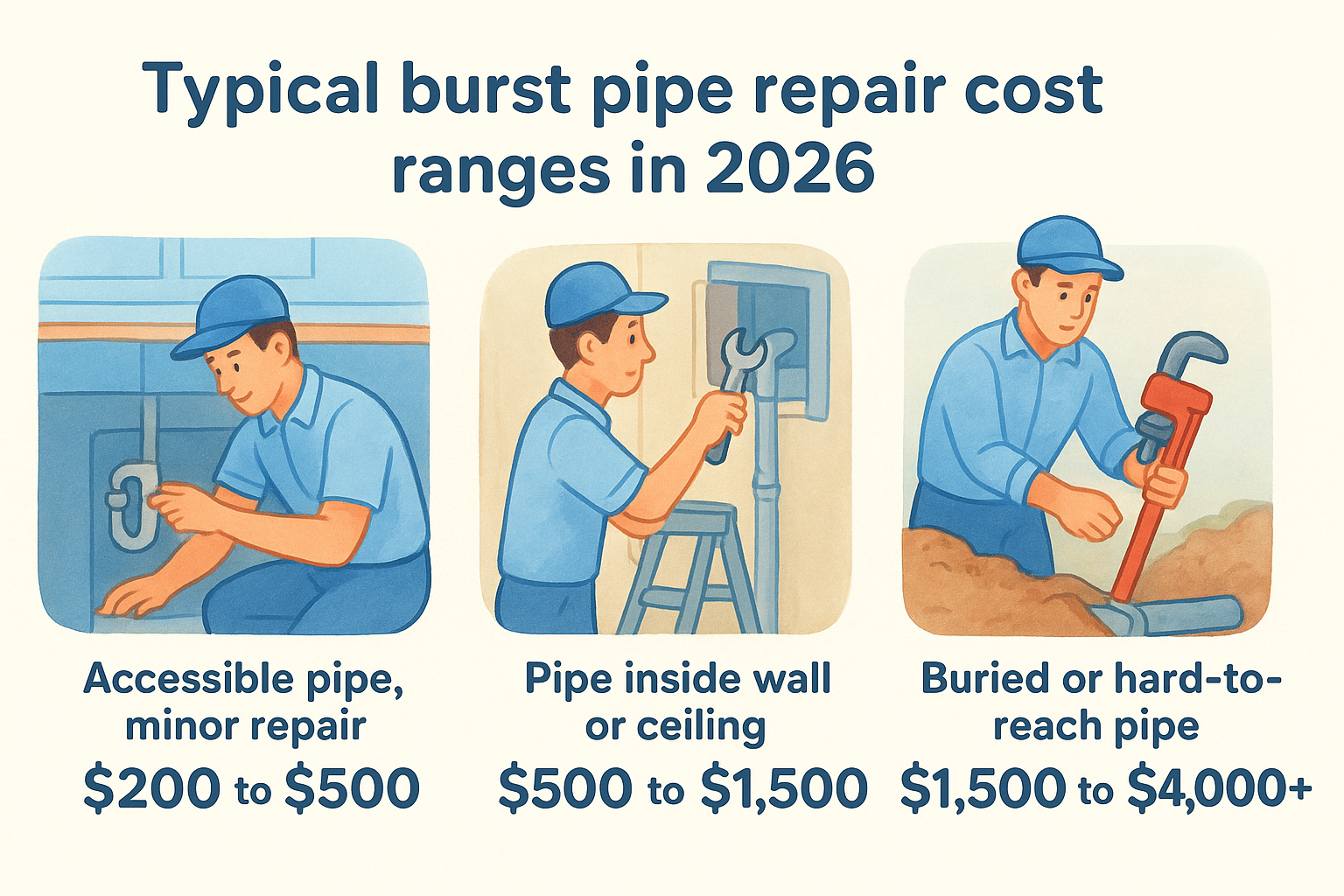
Minor repairs: accessible pipes with limited damage
The lowest end of the range covers situations where the burst pipe is easy to reach and the water did not spread far. Think an exposed pipe under a kitchen sink, a section along an unfinished basement wall, or a line in a utility room where a plumber can get in and out without cutting through anything. These repairs typically run $200 to $500, including parts and labor for a straightforward section replacement.
A few factors keep costs at this level: a short pipe section involved, simple connections, and no need to open walls or flooring. If you caught the burst quickly and shut the water off at the main, you also limited water spread, which keeps the total bill lower.
Shutting off your main water valve the moment you spot a burst pipe is the single most cost-effective thing you can do before the plumber arrives.
Mid-range repairs: pipes inside walls or ceilings
Once the pipe sits inside a finished wall, ceiling, or enclosed cabinet, the cost range climbs to $500 to $1,500 for the plumbing portion alone. Your plumber needs to locate the exact break, open the wall or ceiling to reach it, make the repair, and leave the opening ready for patching. That patching is typically a separate line item handled by a drywall contractor.
Copper, CPVC, and PEX pipes all repair differently, and the pipe material in your home affects both parts cost and labor time. Older East Tennessee homes often have galvanized steel or polybutylene lines, both of which can complicate a repair because the surrounding pipe may be brittle beyond the burst section itself. When that’s the case, replacing a longer run rather than patching one spot is the smarter long-term call, even if it adds to the upfront cost.
Major repairs: buried pipes and hard-to-reach runs
The upper end of the range covers situations where the pipe sits under a concrete floor, runs through a finished basement ceiling, or involves a significant length of deteriorated pipe that needs full replacement. These repairs typically start around $1,500 and can reach $4,000 or more for the plumbing work itself, before any structural or cosmetic repairs are factored in.
Jobs in this range require more diagnostic work and labor hours, and sometimes equipment like a pipe camera to confirm the full scope before any repair plan is set. Whole-home repiping, which comes up when multiple lines are failing, sits in a different category and runs higher.
| Repair Type | Typical Plumbing Cost Range |
|---|---|
| Accessible pipe, minor repair | $200 to $500 |
| Pipe inside wall or ceiling | $500 to $1,500 |
| Buried or hard-to-reach pipe | $1,500 to $4,000+ |
| Whole-home repiping | $4,000 to $15,000+ |
These ranges reflect plumbing labor and materials only. Water damage remediation, drywall repair, flooring replacement, and mold treatment are all separate costs that can add significantly to your total, depending on how long the water ran before it was stopped.
The biggest cost factors you can control
Some parts of burst pipe repair cost come down to factors outside your hands, like where the pipe runs and what the surrounding structure looks like. But two things you do in the first hour after a pipe bursts have a direct effect on the final bill: how fast you cut the water supply and what material goes in when the damaged section gets replaced. Understanding both gives you real leverage over what you ultimately pay.
How quickly you stop the water
Every minute water runs unchecked, it pushes further into walls, insulation, flooring, and wood framing. Catching it in the first 10 to 15 minutes can mean the difference between a straightforward plumbing repair and a full remediation job. The pipe fix itself is essentially the same either way, but the surrounding water damage cleanup is where costs multiply fast.
Your main water shutoff valve is usually near the water meter, in a utility room, or in a crawlspace. Knowing where it is before something goes wrong saves you real money when something does.
Calling a plumber the same day you notice something wrong also matters. A slow drip or a damp patch on the wall that sits unaddressed for a week can turn a simple repair into a mold situation that adds significant cost on top of the original fix. The sooner you make the call, the more contained the damage stays.
The pipe material used for the repair
When your plumber opens the wall and replaces the damaged section, the material they use affects both the upfront repair cost and how well it holds up over the next decade. The three materials you’ll most commonly see in East Tennessee homes right now are copper, CPVC, and PEX.
| Material | Relative Cost | Notes |
|---|---|---|
| Copper | Highest | Durable, time-tested, works well in most applications |
| CPVC | Mid-range | Rigid plastic, found in many older repairs |
| PEX | Lowest to mid | Flexible, handles temperature swings well |
PEX is often the most cost-effective option for a repair or section replacement, and its flexibility makes it more forgiving during East Tennessee’s freeze-thaw winters. Your plumber will explain which material suits your existing system before any work starts. You get the full picture and decide what you want done, with an upfront estimate in hand before anyone touches anything.
Cost by where the pipe burst in the house
Where the pipe burst matters as much as how it burst. Location determines how much labor is involved, how long the job takes, and what gets disturbed in the process. The same burst pipe repair cost for materials can double or triple depending on whether your plumber can reach the break in five minutes or needs to cut through tile, concrete, or a finished ceiling to get there.
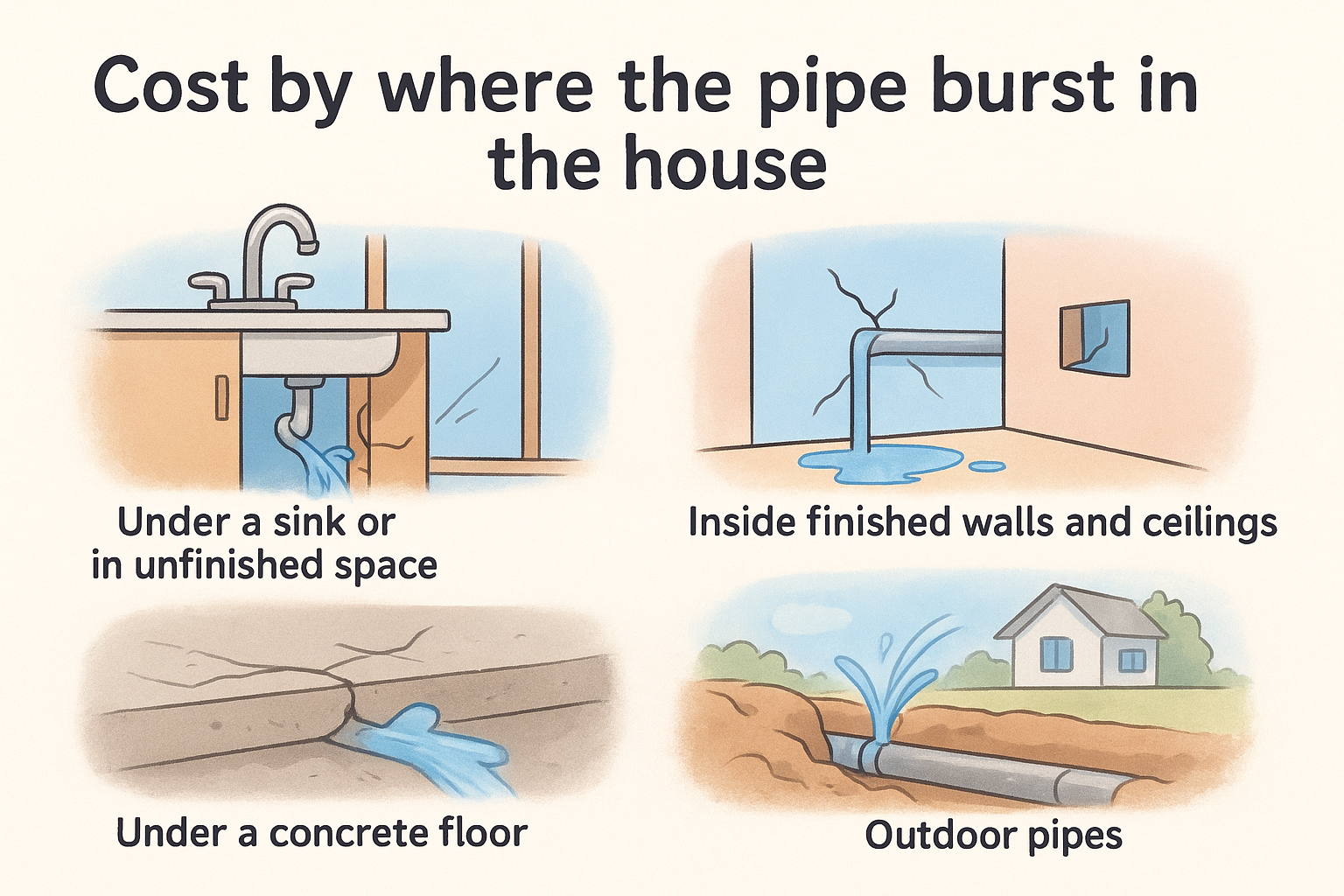
Under a sink or in unfinished space
Exposed pipes are the most straightforward to repair. A burst line under a kitchen or bathroom sink, or running along an unfinished basement or utility room wall, gives your plumber direct access with no demolition required. Repairs in these spots typically sit at the lower end of the price ranges outlined earlier, and the job is usually cleaner and quicker from start to finish.
Knowing where your pipes run before a problem starts helps you describe the situation clearly when you call, which means your plumber can arrive better prepared.
Inside finished walls and ceilings
This is where location adds real cost. When a pipe sits inside a finished wall or ceiling, your plumber needs to find the exact break, cut an opening, make the repair, and leave the space ready for patching. The plumbing repair itself may not take long, but the access work adds labor time, and the drywall or ceiling patch is a separate job handled afterward.
Older East Tennessee homes sometimes have pipes running through tight interior wall cavities that require careful work to avoid disturbing insulation or adjacent framing. The more finished the surrounding area, the more time and care the job takes, and that shows up in the final price.
Under a concrete floor
A burst pipe under a concrete floor is one of the more involved situations you can face. Reaching the pipe typically requires breaking through the concrete, completing the repair, and then patching the slab, each of which adds time and cost. This type of repair usually sits at the top of the price range, and it often involves camera inspection first to confirm the exact location before any concrete work begins.
Outdoor pipes and lines coming into the house
Pipes that run from the street to your home or feed outdoor spigots can burst during hard freezes. Yard excavation is often required to reach the break, which adds equipment and labor cost. The repair itself is usually straightforward once the line is exposed, but digging depth and yard conditions affect how much the job runs overall.
Hidden costs: drywall, flooring, mold, cleanup
The plumbing repair is only one part of the total bill after a pipe bursts. Once the leak is stopped and the damaged section is replaced, you still face whatever the water damaged on its way out. These secondary costs are where the burst pipe repair cost adds up faster than most homeowners expect, and they vary significantly depending on how long the water ran and what materials it soaked into.
Drywall and ceiling repair
When your plumber cuts through a wall or ceiling to reach the pipe, that opening needs to be patched by a separate contractor. Drywall repair typically runs $200 to $600 for a small access cut in good conditions. If water saturated a large section of wall before the leak was caught, you may need full panel replacement and repainting, which can push that number to $1,500 or more depending on the size of the area and whether texture matching is required.
Flooring damage
Water that reaches hardwood, laminate, or carpet causes damage quickly. Hardwood floors absorb moisture and warp, often requiring replacement of several boards or an entire section rather than a simple dry-out. Laminate swells and buckles even faster. Tile holds up better, but the subfloor beneath it can still soften and rot. Flooring repair or replacement in a water-damaged area typically runs $500 to $3,000, depending on the material and square footage affected.
The faster you get the water extracted and the area dried, the more flooring you have a chance of saving.
Mold remediation and water damage cleanup
If water sat in walls, under floors, or in insulation for more than 24 to 48 hours, mold can establish quickly in East Tennessee’s humid climate. Professional mold remediation starts around $500 for a small contained area and can reach $3,000 to $6,000 or more if it has spread into structural framing or insulation. Water damage cleanup, which includes extraction, industrial drying equipment, and antimicrobial treatment, adds another $1,000 to $4,000 depending on the affected square footage.
These costs are separate from anything a plumber handles. Hiring a licensed water damage restoration company alongside your plumber is the right move when saturation is significant, and getting that process started quickly limits how much the mold and structural damage figures grow.
Insurance coverage: what is covered and what is not
Whether your homeowners insurance helps with burst pipe repair cost depends on one key question: was the damage sudden and accidental, or did it build up over time? Most standard homeowners policies cover water damage from a sudden event but draw a clear line at damage caused by neglect or gradual deterioration. Understanding that line before you file a claim saves you time and frustration.
What standard homeowners insurance typically covers
A sudden pipe burst, such as one caused by a hard freeze overnight or a pipe that fails without warning, typically falls under your dwelling coverage. That means the water damage to walls, ceilings, flooring, and personal property is often covered, along with the cost to access the pipe if your plumber needs to cut through a wall or ceiling to reach it. Many policies also include coverage for mold remediation if it results directly from a covered water event.
Document the damage thoroughly with photos and video before any cleanup begins, since your insurance company will ask for evidence of what the water affected.
What gets covered varies by policy, so reading your declarations page and calling your agent directly after the incident is the right move. Your agent can walk you through your deductible, your coverage limits, and what documentation they need to process a claim.
What insurance usually won’t cover
The actual plumbing repair itself is often excluded from standard coverage. Your policy covers the resulting damage, not the broken pipe that caused it. So your insurer may pay to patch the drywall and replace the flooring, but the plumber’s bill for fixing the pipe typically comes out of your pocket.
Insurance companies also regularly deny claims where they find evidence of a slow leak or long-standing issue that a homeowner could reasonably have caught and addressed. If an adjuster determines the pipe was corroding or leaking gradually before it burst, the claim may be denied entirely on the basis of lack of maintenance.
Flood damage from outside sources, like a river, heavy rain, or groundwater, is not covered under a standard homeowners policy at all. Flood coverage requires a separate policy through the National Flood Insurance Program or a private flood insurer. If water entered your home from an outside source rather than an internal pipe, that distinction matters significantly for what you can recover.
How to cut damage fast before the plumber arrives
The steps you take in the first few minutes after a pipe bursts have a direct effect on your burst pipe repair cost. Water spreads fast into walls, flooring, and insulation, and the longer it sits, the more expensive the cleanup becomes. Acting immediately limits the secondary damage and gives your plumber a cleaner situation to work in when they arrive.
Shut the water off first
Your main water shutoff valve is the first thing to find. It is usually near the water meter, in a utility room, crawlspace, or along the front foundation wall of the house. Turn it clockwise until the flow stops completely. If the burst is at a single fixture, the shutoff valve under the sink or behind the toilet handles that line directly without cutting water to the rest of the house.
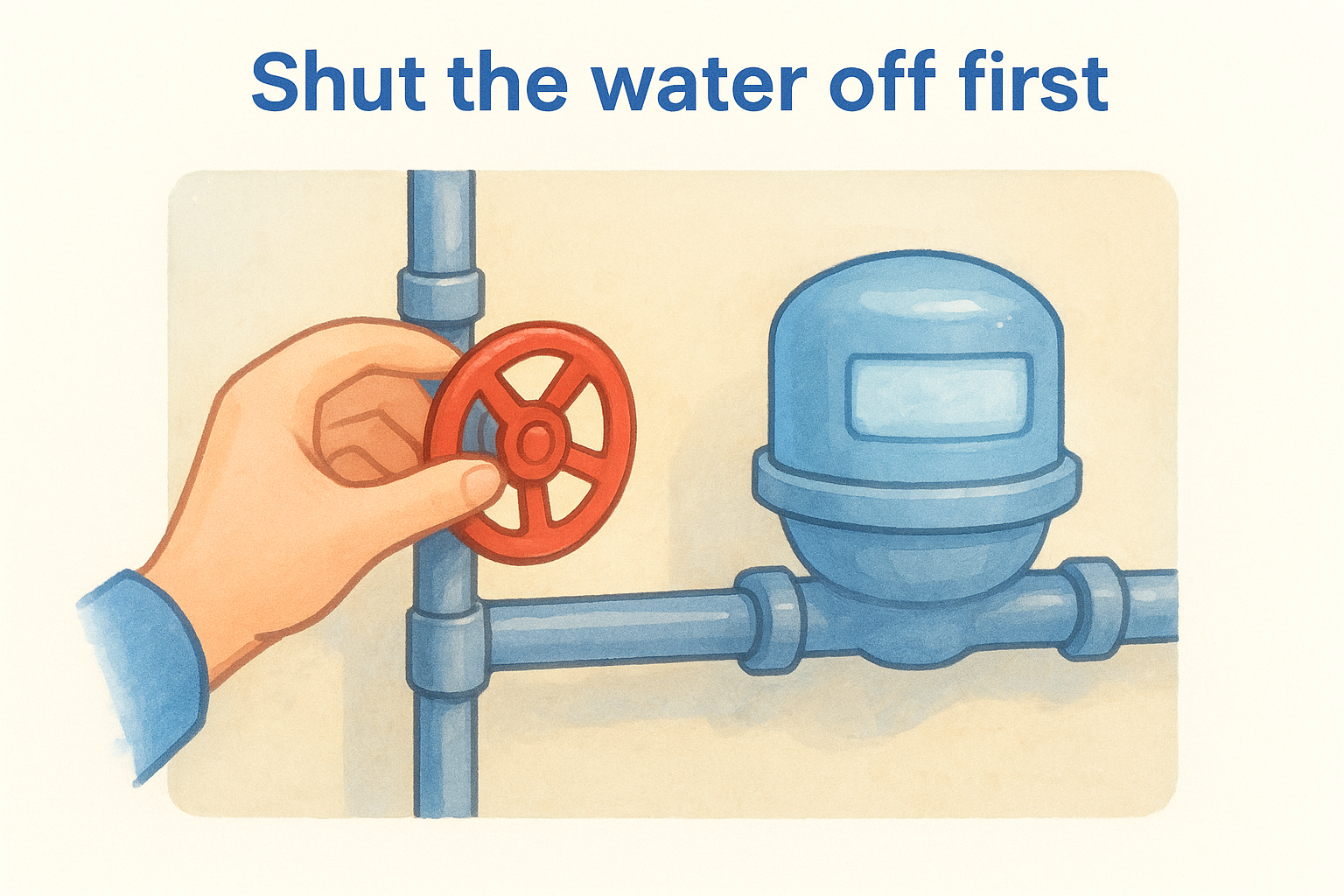
Knowing where your main shutoff valve is before a problem happens is one of the most practical things a homeowner can do.
Once the water is off, open a faucet on a lower floor to drain any remaining pressure from the lines and reduce the amount of water still moving through the damaged section. This step takes under a minute and can meaningfully reduce how much water escapes before your plumber arrives.
Get standing water out quickly
Standing water does the most damage, so removing it fast is the priority. Use towels, mops, or a wet-dry vacuum to pull as much water as possible from floors and hard surfaces. If the burst happened in a basement, a submersible pump can move large volumes quickly. The goal is to reduce how long water stays in contact with wood, drywall, and flooring, since those materials absorb moisture fast and can take days to fully dry out.
Blotting and extracting water from carpet right away also improves your chances of saving it rather than replacing it entirely, which keeps restoration costs lower.
Protect your belongings and improve airflow
Move furniture, rugs, and anything stored on the floor out of the wet area immediately. Wet furniture sitting on hardwood speeds up warping and staining in both directions. Once you have cleared the space, open windows if outdoor air is dry and run fans to move air across wet surfaces.
Reducing humidity in the affected area slows mold growth while you wait for your plumber and, if needed, a water damage restoration crew. In East Tennessee’s climate, mold can establish within 24 to 48 hours, so every hour of airflow you can get running works in your favor.
A simple next step
You now have a realistic picture of burst pipe repair cost, from the plumbing repair itself to the secondary damage that often follows. The price range is wide, but the factors that move your total up or down are mostly tied to two things: how fast you act and how accessible the pipe is. Stopping the water quickly, getting a plumber there the same day, and understanding your insurance coverage all work in your favor.
At Bizzy B Plumbing, we serve Knoxville, Maryville, Alcoa, Farragut, and the surrounding East Tennessee communities. When you call, we show up in most cases the same day, walk through exactly what happened, and give you an upfront estimate before any work starts. You get real options and the full cost in plain English, so you decide what happens next. When you’re ready, give us a call or learn more about our pipe repair and replacement services.


