
Most sump pumps don’t announce their retirement. One day they’re quietly keeping your basement dry, and the next, you’re standing in three inches of water wondering what went wrong. If you’re asking how long does a sump pump last, you’re already thinking ahead, and that puts you in a much better position than most homeowners.
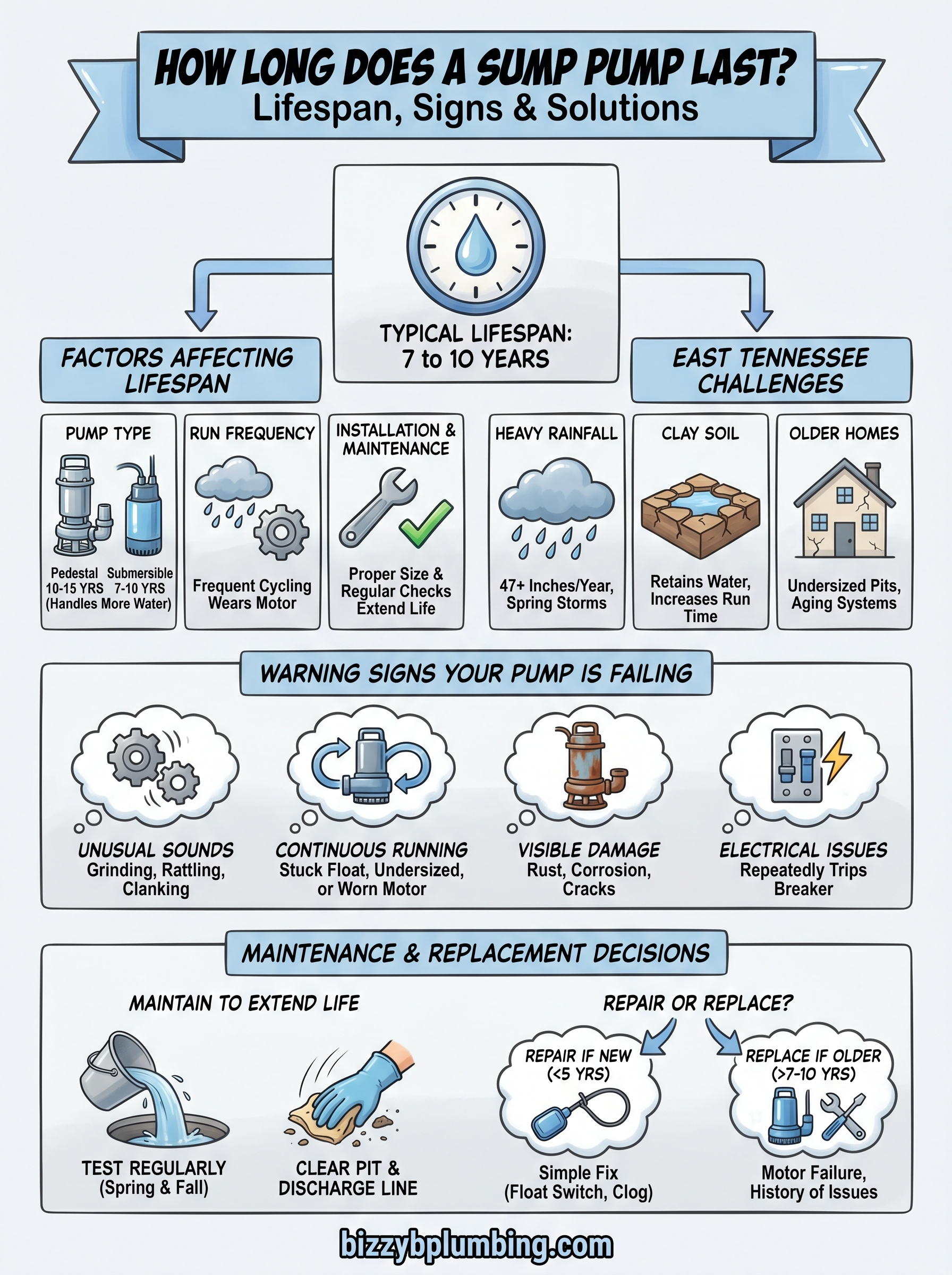
The short answer: a typical sump pump lasts about 7 to 10 years, though several factors can shorten or extend that range. The type of pump, how often it runs, the quality of the installation, and whether it gets regular maintenance all play a role in how long yours will hold up.
At Bizzy B Plumbing, we help homeowners across Knoxville and East Tennessee deal with water intrusion and drainage issues every week. We’ve pulled out pumps that lasted 15 years and others that barely made it to five. This article breaks down what affects your sump pump’s lifespan, the warning signs that replacement is coming, and what you can do right now to get the most life out of your current unit.
Why sump pump lifespan matters in East Tennessee
Knoxville and the surrounding East Tennessee area aren’t easy on sump pumps. Heavy seasonal rainfall, combined with clay-heavy soil that holds water rather than draining it, means your pump often works harder here than it would in drier parts of the country. Understanding how long does a sump pump last in this specific environment gives you a realistic picture of what to expect from your unit, and why skipping regular checks here carries more risk than it might elsewhere.
The rainfall and soil reality
East Tennessee averages more than 47 inches of rain per year, and a significant portion of that falls during spring storms that send large volumes of water toward your foundation in a short window of time. When a storm rolls through and your sump pit fills quickly, your pump cycles on and off repeatedly within hours. Frequent cycling is one of the fastest ways to wear out a motor, and if your pump isn’t sized correctly for the volume of water your property sees, it works even harder during those peak events.
A pump that runs constantly during a heavy storm burns through its motor lifespan much faster than one that cycles a few times a day under normal conditions.
Clay soil, common throughout much of the Knoxville metro area, compounds the problem. Clay retains water instead of allowing it to percolate down and away, which means the ground around your foundation stays saturated long after rain stops. Your sump pump keeps running well past the storm because that stored groundwater continues pressing against your foundation and seeping into the pit.
Older homes in East Tennessee
Many homes in neighborhoods like Fountain City, Bearden, and older West Knoxville subdivisions were built decades before modern waterproofing standards became common practice. These homes sometimes have undersized sump pits, aging drainage tile, or pumps that were installed years ago and have never been replaced or properly inspected. An older pump in a high-demand environment is a combination that leads to failure at the worst possible time, typically during a major storm when you need the protection most.
If your home is more than 20 years old and you’ve never had your sump system evaluated, the pump’s age alone is a good reason to schedule an inspection before the next heavy rain season arrives.
How long sump pumps last and why it varies
The 7 to 10 year average is a useful starting point, but it’s not a guarantee. When you ask how long does a sump pump last, the honest answer depends on the type of pump you have and the conditions it operates under. Some pumps hit 15 years with minimal attention. Others fail before they reach five.
Pedestal vs. submersible pumps
Pedestal pumps sit above the sump pit with a motor mounted on a rod, keeping the motor out of the water. Because the motor stays dry, it tends to last longer, often 10 to 15 years under normal conditions. The tradeoff is that pedestal pumps are louder and less capable of handling large water volumes than submersible models.
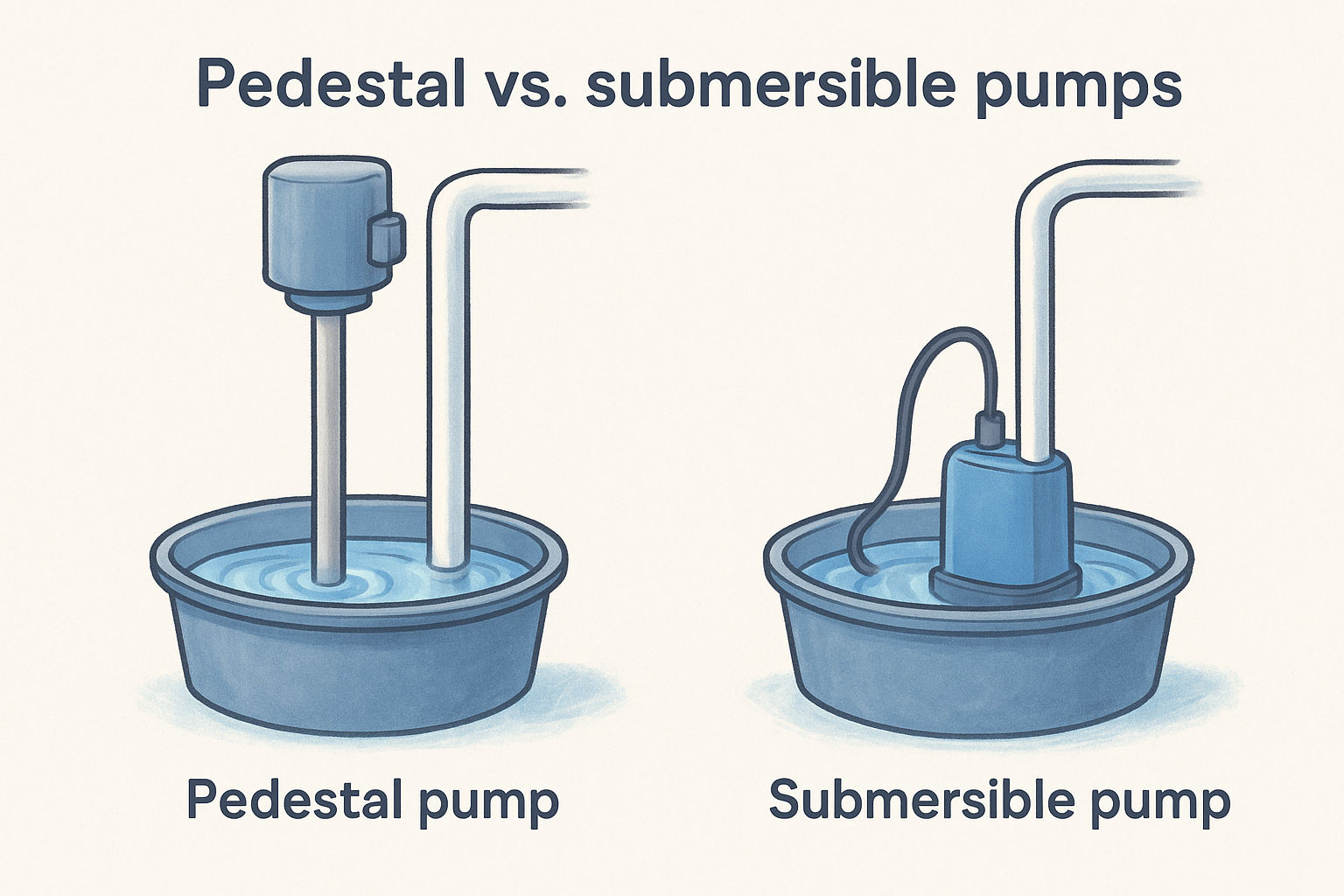
Submersible pumps sit inside the pit and move higher volumes of water more quietly. They’re the more common choice in modern installations, but their motors run in a wet environment, which puts more strain on the unit over time. A well-maintained submersible pump typically lasts 7 to 10 years.
The type of pump matters less than how often it runs. A submersible pump in a low-demand basement can outlast a pedestal pump that cycles dozens of times a day.
What shortens or extends the lifespan
Run frequency is the biggest factor. A pump that handles moderate groundwater a few times a week wears down much slower than one that runs nearly continuously during storm season. Power surges and outages also cause real damage, particularly if your pump lacks a battery backup or surge protector.
Proper installation and a correctly sized sump pit matter just as much. If the pit is too small, the pump short-cycles rapidly, which accelerates motor wear. Annual testing and maintenance push the lifespan toward the higher end of the range and catch small problems before they turn into a flooded basement.
Signs your sump pump is failing
Knowing how long does a sump pump last is useful, but recognizing the warning signs of a failing unit is what actually prevents a flooded basement. Most pumps give you clear signals before they quit entirely, and catching them early gives you time to plan a replacement rather than scrambling during a storm.
Unusual sounds and behavior
A healthy pump runs smoothly and shuts off after the pit clears. If yours makes grinding, rattling, or clanking noises during operation, the motor bearings or impeller are likely worn down. A pump that runs continuously without shutting off points to a stuck float switch, an undersized unit, or a motor that can no longer keep up with incoming water.
A pump that hums but doesn’t actually move water almost always has a seized impeller, and restarting it won’t fix the problem.
Visible signs and age-related red flags
If your pump is past the 7 to 10 year mark, treat any performance issue as a reason to replace rather than repair. Check for these warning signs during a quick visual inspection:
- Rust or corrosion on the housing or discharge pipe
- Standing water in the pit after a dry period
- Visible cracks or damage to the pump body
- The unit tripping the circuit breaker repeatedly
A pump that trips the breaker more than once is drawing too much current, which typically means the motor is failing. If you spot two or more of these signs on an older unit, replacement is the right call.
How to maintain a sump pump to last longer
Regular maintenance is the most effective thing you can do to push your pump toward the longer end of its lifespan range. Simple annual checks done a few times a year can add years to your unit’s life and help you catch small issues before they force an emergency call. Whether your pump is brand new or a few years old, the routine below applies.
Test your pump regularly
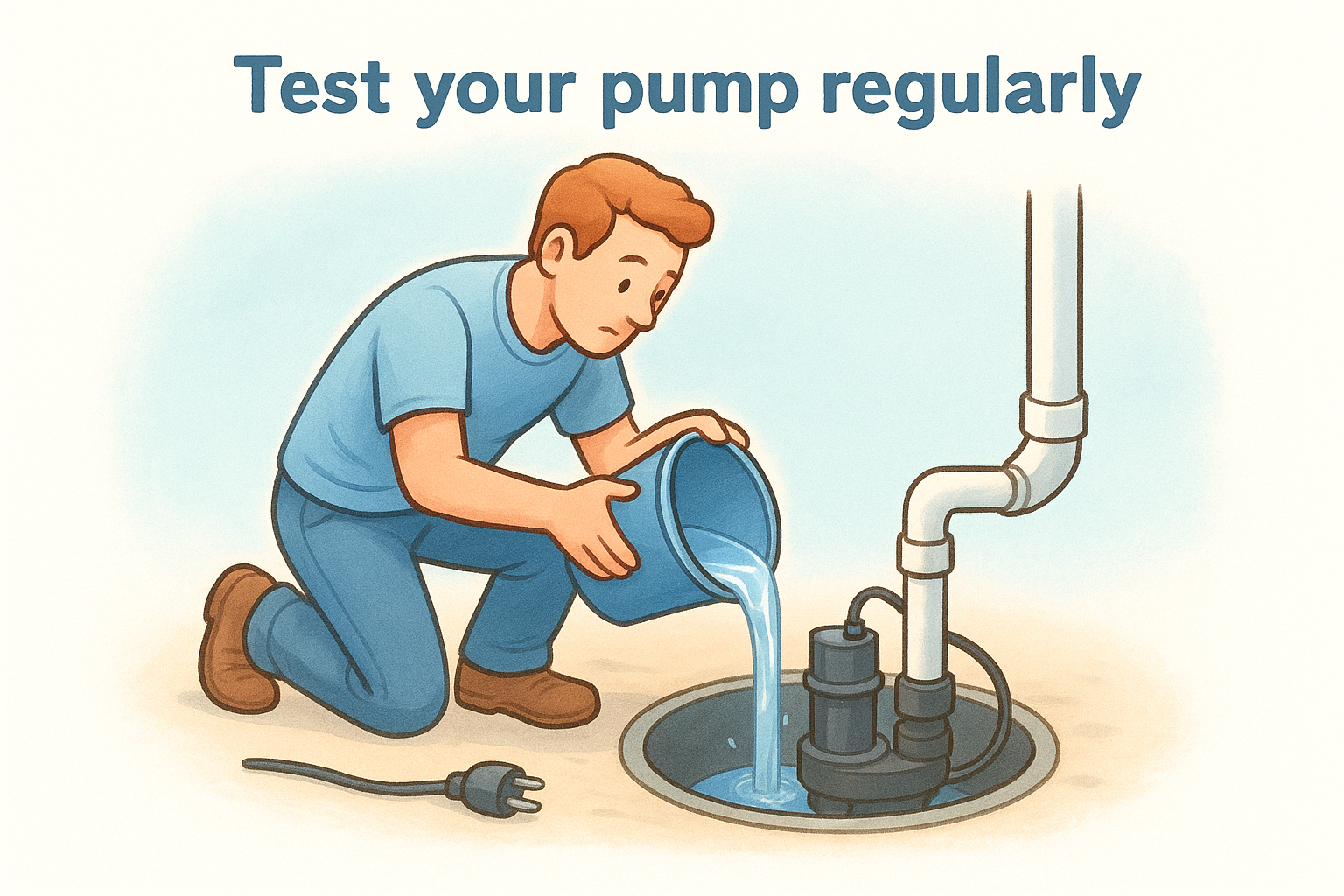
Pour a bucket of water into the sump pit and watch the pump activate, clear the water, and shut off cleanly. If the pump hesitates, fails to clear the pit, or won’t shut off, something is already wrong. Spring and fall are the best testing windows since they fall right before East Tennessee’s wetter seasons, giving you time to act before heavy rain arrives.
A few checks to do while you’re there:
- Confirm the float switch moves freely
- Inspect the power cord for wear
- Check that the backup battery holds a charge
- Listen for grinding or rattling during the cycle
Keep the pit and discharge line clear
Debris in the sump pit restricts the float switch and strains the intake screen, both of which accelerate wear. Clear out any gravel, sediment, or buildup at the bottom of the pit at least once a year. Check that the discharge line exits well away from your foundation so water doesn’t cycle back toward the house.
A blocked discharge line forces your pump to work harder every cycle, which directly affects how long does a sump pump last in your specific setup.
A frozen discharge line in winter can overflow the pit even when your pump motor is working perfectly, so confirm the line stays clear of ice during cold East Tennessee weather.
Replace vs repair and what replacement involves
When your pump starts acting up, the first question most homeowners ask is whether a repair will do the job or whether full replacement is the better call. The answer usually comes down to two things: the age of the unit and the nature of the problem. If your pump is under five years old and the issue is isolated to a float switch or a clogged intake screen, repair is often worth doing. Once you’re past the 7-to-10-year range that defines how long does a sump pump last, paying for repairs on an aging motor rarely makes financial sense.
When repair makes sense
Repair is reasonable when the pump is relatively new and the problem is a single mechanical component rather than the motor itself. A faulty float switch, a stuck check valve, or a loose electrical connection are all straightforward fixes that cost far less than a replacement and don’t signal broader wear. The pump should also have no history of repeated failures. If you’ve called for service more than once in the past year, that pattern tells you the unit is declining regardless of its age.
A single repair on a newer pump is a smart investment; multiple repairs on any pump over seven years old is money spent delaying the problem.
What replacement involves
A standard sump pump replacement typically takes a few hours. A plumber removes the old unit, clears any debris from the pit, and installs the new pump with proper discharge line connections and float switch positioning. Most replacements also include a check valve installation and a full test run to confirm the system cycles correctly before the job is complete.
Next steps for a dry basement
Now that you know how long does a sump pump last and what affects that timeline, you have everything you need to make a confident decision about your current unit. If your pump is within its expected lifespan and showing no warning signs, schedule a quick test this season and add an annual maintenance check to your calendar. If it’s older than 10 years or already showing signs of wear, don’t wait for a storm to make the decision for you.
Homeowners across Knoxville and East Tennessee can count on Bizzy B Plumbing for honest assessments, same-day availability, and upfront pricing with no hidden fees. Whether you need a pump inspection, a straightforward repair, or a full replacement, we’ll tell you exactly what your system needs and why. Reach out to Bizzy B Plumbing to get your basement protected before the next heavy rain hits.