
If you’re wondering how much does a plumber cost, you’re probably staring at a leaky pipe, a broken water heater, or a quote that feels hard to evaluate. Either way, you want a straight answer, and most pricing guides make it harder than it needs to be by burying the numbers under vague ranges and disclaimers.
We’re Bizzy B Plumbing, a veteran-owned plumbing company based in Knoxville, Tennessee. Upfront pricing is central to how we operate, so we know firsthand why cost transparency matters to homeowners. We also know that understanding what you’re paying for, and why, puts you in a much stronger position before you pick up the phone.
This article breaks down 2026 plumbing rates, including hourly costs, flat-rate fees, service call charges, and real pricing examples for common jobs like drain cleaning, water heater installation, and leak repair. Whether you’re budgeting for a planned project or trying to figure out if a quote is fair, you’ll walk away with the numbers you actually need, no guesswork required.
Why plumber pricing feels confusing
Most homeowners ask how much does a plumber cost and expect a single, clear answer. The reality is that plumbers use several different pricing structures, and most companies don’t explain which model they’re using before they show up at your door. That gap between what you expect and what you find on the invoice is exactly where most of the confusion starts. Understanding the structure behind the numbers makes every quote easier to read and compare.
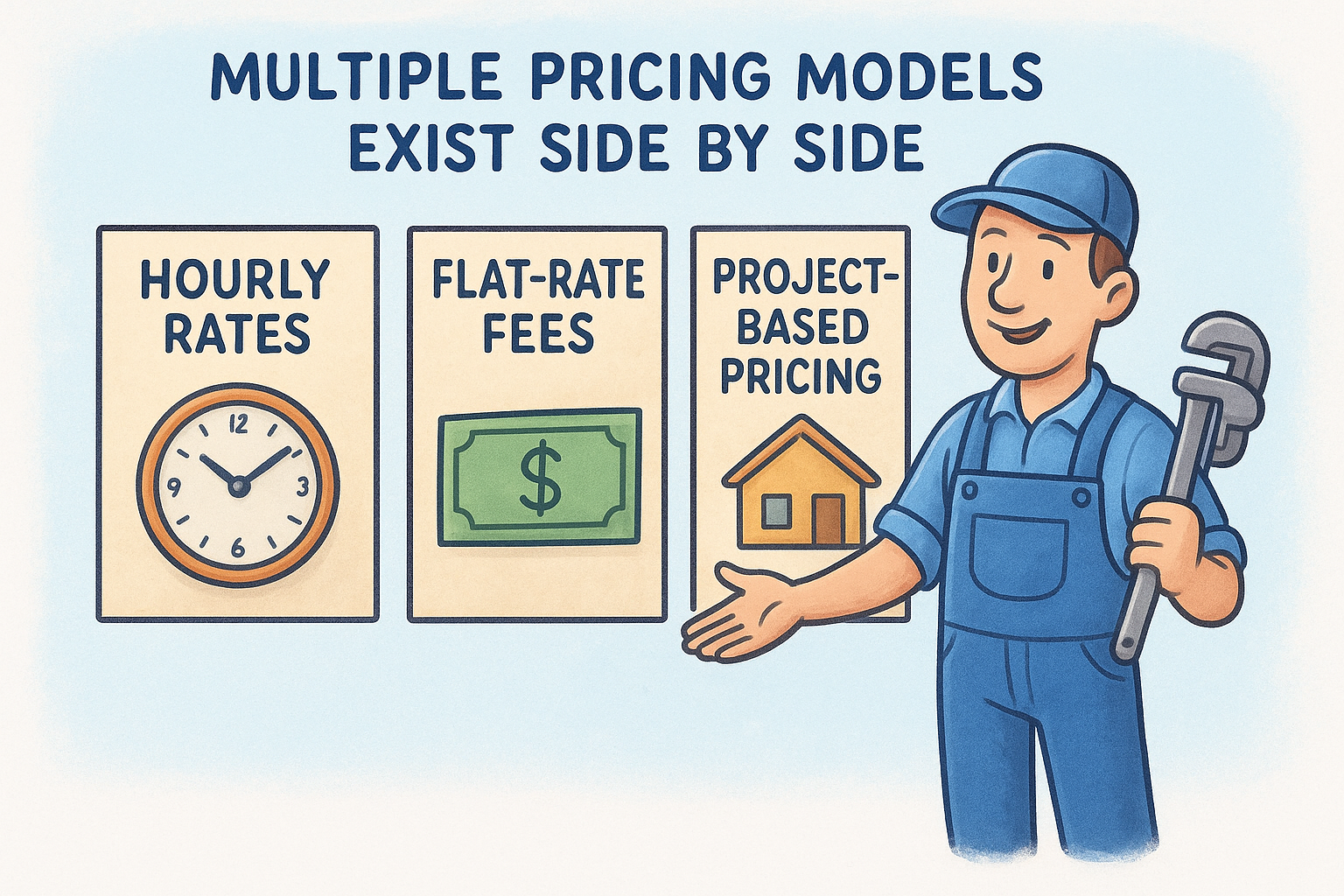
Multiple pricing models exist side by side
Plumbers price their work in three main ways: hourly rates, flat-rate fees, and project-based pricing. Hourly billing charges you for every hour the technician spends working at your home. Flat-rate pricing sets a fixed dollar amount for a specific job type, regardless of how long the work actually takes. Project pricing bundles both labor and materials into a single quote, which is more common for larger scopes like a full re-pipe or a bathroom addition.
Flat-rate pricing protects you when a job runs long; hourly pricing can work in your favor when a repair wraps up faster than expected.
The tricky part is that many companies blend these models depending on the job. A plumber might quote you a flat rate for swapping a faucet but shift to hourly billing when diagnosing a slab leak. If you don’t ask upfront which pricing model applies to your specific job, you won’t be able to make a true side-by-side comparison when you get quotes from more than one company.
The service call fee catches people off guard
Before a plumber touches anything in your home, most companies charge a service call fee just to show up and assess the situation. This fee covers the technician’s drive time and the initial inspection, and it applies regardless of whether you approve the repair. Depending on the company and your area, this charge typically falls between $50 and $150 and is almost always listed separately from the actual repair cost.
Some companies will credit the service call fee toward your invoice if you proceed with the work. Others keep it as a standalone charge no matter what you decide. A few companies advertise free estimates to attract customers and then fold that cost into higher labor rates. Before you book an appointment with any plumber, ask directly whether a service call fee applies and exactly how the company handles it.
Hidden cost factors that shift the final number
Even a detailed quote can change by the time the job is complete. Material costs are the most common reason. Parts prices vary, and some companies mark up materials well above what you’d pay at a hardware store. If a plumber quotes labor only and handles parts separately, your final total can climb higher than the original figure suggested.
Job complexity and physical access play a big role as well. A straightforward toilet replacement in a modern bathroom costs less time and effort than the same job in a tight utility closet with corroded shutoff valves that haven’t moved in years. Older homes, which are common across East Tennessee, often have galvanized steel or cast iron piping that requires more care and different fittings than newer copper or PVC systems. That complexity almost always shows up in the final bill.
Average plumber rates in 2026
When homeowners ask how much does a plumber cost in 2026, the honest answer starts with understanding that rates vary by job type, your region, and the company’s pricing model. That said, national benchmarks exist, and knowing them gives you a solid baseline before you call anyone or accept the first quote you receive.
Hourly rates and what drives them
Most plumbers in the US charge between $75 and $150 per hour for standard residential labor. Rates on the lower end typically reflect smaller markets or independent operators, while higher rates usually come from larger companies carrying more overhead. In the Knoxville and East Tennessee area, you can generally expect to land somewhere in the $85 to $130 per hour range for most routine work.
If a quote seems unusually low, ask directly whether the rate covers both labor and materials or labor only. That single question can reveal a significant gap between what you expect to pay and what actually ends up on your invoice.
Service call fees in most US markets run between $50 and $150, separate from hourly labor. Some companies fold this charge into the first hour of billing, while others list it as a standalone line item regardless of whether you proceed with the repair.
Flat-rate pricing ranges
Many plumbers price common, predictable jobs at flat rates rather than hourly because the scope is well understood before work begins. This approach is simpler for you as the homeowner since you know the full cost upfront. Here are typical flat-rate ranges for standard residential jobs in 2026:
| Job Type | Typical Flat-Rate Range |
|---|---|
| Faucet replacement | $150 – $350 |
| Toilet replacement | $200 – $500 |
| Drain cleaning (single line) | $100 – $300 |
| Water heater replacement | $900 – $2,500 |
| Minor leak repair | $150 – $400 |
These figures reflect labor plus standard parts for typical residential scenarios. Older homes, difficult access points, or non-standard fixtures can push costs above these ranges. Always confirm whether a flat-rate quote includes materials and any disposal fees before you approve the work.
Cost examples for common plumbing jobs
Knowing average rates is useful, but real job examples give you a clearer picture of what to actually budget. When homeowners ask how much does a plumber cost for a specific repair, the most honest answer always starts with the scope of the job itself. The examples below reflect typical labor and parts costs for residential plumbing jobs in the Knoxville area in 2026.
Drain cleaning and minor repairs
Drain clogs are among the most frequent service calls plumbers handle. A standard single-line drain cleaning using a hand snake or small machine auger typically runs $100 to $250. If the clog sits deeper in the line or requires hydro-jetting to clear a grease buildup, the cost rises to the $300 to $500 range. Toilet repairs fall in a similar bracket: replacing a flapper or fill valve usually costs $100 to $175, while a full toilet swap with a basic model lands between $250 and $500 depending on the fixture and labor time involved.
Faucet repairs and replacements are another common call. A leaking faucet repair typically runs $100 to $200, while a full faucet replacement with a standard fixture lands between $175 and $350. If you supply your own faucet, some plumbers will reduce the parts markup, but confirm that arrangement before booking.
Always ask whether the quoted price covers parts disposal and any patching of drywall or flooring disturbed during the repair. These items are easy to overlook and can add to your final bill.
Water heater and larger installations
Water heater work carries higher price tags because the equipment itself is a significant cost. Replacing a standard 40-gallon gas water heater typically totals $900 to $1,800, including the unit and labor. Tankless water heater installations run higher, often landing in the $1,500 to $3,500 range depending on the unit and any gas line modifications required.
Sewer line repairs vary widely based on depth, access, and repair method. A basic sewer cleanout runs $150 to $400, while partial pipe repair or replacement can jump to $1,500 or more once excavation enters the picture.
What changes the final price of a plumber visit
When you ask how much does a plumber cost, the answer depends on more than just the type of repair. Several variables push the final number up or down, and most of them are within your control once you know what to look for. Understanding these factors before you call means fewer surprises when the invoice arrives.
Time of day and job urgency
Standard business hours produce the lowest labor rates for most plumbing companies. Evening, weekend, and holiday calls almost always carry a premium, typically 25 to 50 percent above standard rates, because the technician is pulled away from scheduled work or off-hours time. If your situation isn’t a genuine emergency, waiting until the next regular business day can produce meaningful savings.
Emergency calls are sometimes unavoidable, but if you can safely contain the problem until morning, that decision alone can reduce your bill by $75 to $150 or more.
True plumbing emergencies, like active water intrusion or a failed water heater in winter, justify the premium. A slow drain or a dripping faucet usually does not. Be honest with yourself about the urgency before you request emergency service.
Age and condition of your plumbing
Older homes present more complexity on almost every job. If your home has galvanized steel or cast iron pipes, corroded fittings and brittle connections add time to even routine repairs. A plumber who quotes a standard rate for a faucet replacement in a newer home may need considerably more time for the same job in a 50-year-old house with original supply lines that haven’t been touched in decades.
Shutoff valves that no longer seal properly also drive up costs. A simple toilet swap becomes a bigger job when the isolation valve fails during the repair and needs replacement on the spot.
Parts sourcing and markup
Material costs vary between companies. Some plumbers mark up parts significantly above retail, while others charge closer to cost. If a plumber quotes labor separately and handles parts as an add-on, ask for a parts breakdown before approving the work so you understand exactly what you’re paying for each item.
How to get a fair quote in Knoxville
Getting a fair price starts before anyone shows up at your door. When you understand how much does a plumber cost at a baseline level, you walk into every conversation with enough knowledge to ask the right questions and recognize when a quote doesn’t add up. A few simple steps before you book can save you real money and avoid the frustration of a bill that looks nothing like what you expected.
Ask the right questions before booking
Every call to a plumber should include a few direct questions before you schedule anything. Asking these upfront filters out companies that aren’t transparent and sets a clear expectation that you intend to understand what you’re paying for before approving any work.
Here are the key questions to ask:
- Does a service call fee apply, and will it be credited toward the repair if I proceed?
- Do you use flat-rate pricing, hourly billing, or a combination for this type of job?
- Does your quote include both labor and parts, or are materials billed separately?
- Are there any additional charges for older homes or difficult access points?
- What payment methods do you accept, and do you offer financing?
These questions take less than two minutes and give you a much clearer picture of what the final invoice will actually look like before anyone opens a toolbox.
Compare quotes on equal terms
Comparing quotes only makes sense when you’re looking at the same scope of work. A lower number doesn’t always mean a better deal if one quote covers parts and another covers labor only. Before you evaluate price, confirm that each company has quoted the same job with the same inclusions.
If a plumber refuses to give you a written quote or won’t answer basic questions about their pricing structure, that tells you something important before any work begins.
Local companies in Knoxville often offer more flexibility and pricing transparency than larger national chains. A veteran-owned, locally operated plumber has a direct stake in the community and a stronger incentive to give you honest numbers from the start, so you spend less time second-guessing the invoice and more time focused on getting the problem resolved.
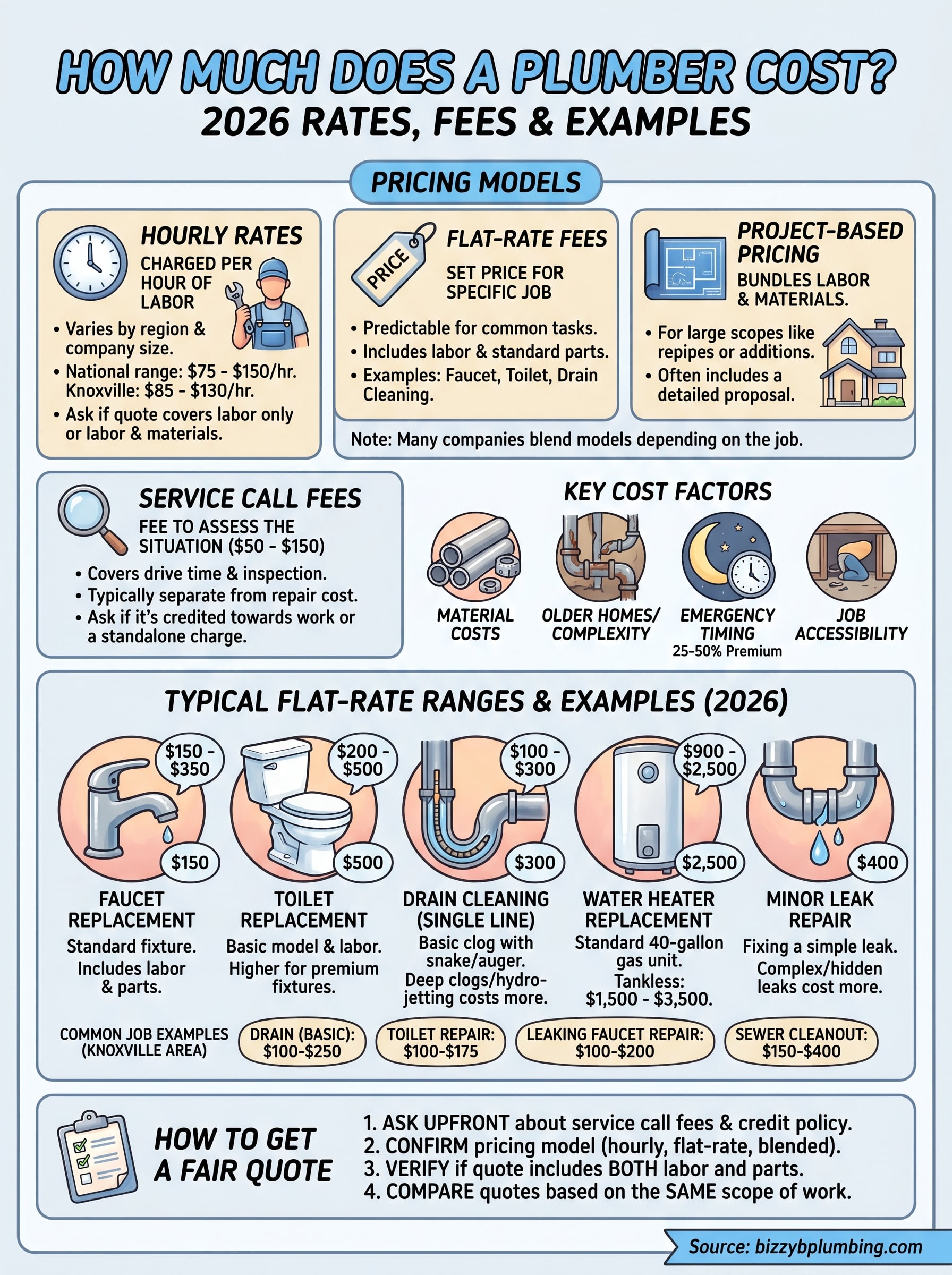
Quick recap and what to do next
Understanding how much does a plumber cost comes down to three things: the pricing model in use, the scope of the job, and exactly what the quote includes. Hourly rates in the Knoxville area run $85 to $130, service call fees add $50 to $150 on top of that, and flat-rate pricing covers most predictable jobs like drain cleaning, faucet replacement, and water heater installation. Older homes, emergency timing, and parts markup are the factors most likely to push your final bill higher than the original estimate.
Before you book any plumber, confirm whether the quote covers both labor and parts, ask about the service call fee, and get the full scope in writing. Bizzy B Plumbing serves homeowners across Knoxville and East Tennessee with same-day availability and upfront pricing from the first call. Schedule your service with Bizzy B Plumbing and get a clear number before any work begins.