
You turn on the shower and get a weak trickle. The kitchen faucet barely fills a pot. If you’re asking why is my water pressure low, you’re dealing with one of the most common, and most frustrating, plumbing problems homeowners face. The good news is that the cause is usually identifiable and often fixable.
Low water pressure can stem from something as simple as a partially closed valve or as serious as corroded pipes buried in your walls. Knowing where to look first saves you time, money, and a lot of unnecessary stress. That’s something we help Knoxville-area homeowners figure out every week at Bizzy B Plumbing.
Below, we’ll walk through five of the most common causes of low water pressure, how to troubleshoot each one, and when it’s time to call in a professional.
1. Your shutoff valve or pressure regulator is the problem
Two of the most common reasons low water pressure appears suddenly in a home have nothing to do with damaged pipes. A partially closed shutoff valve or a worn-out pressure-reducing valve (PRV) can restrict your water supply significantly without showing any other visible symptoms.
What this cause looks like in real life
This problem usually affects every faucet and fixture at once rather than one isolated spot. If your pressure dropped suddenly after recent plumbing work, or after returning from a trip, a valve that didn’t get fully reopened is the most likely explanation.
How to tell low pressure from low flow
Low pressure means water moves slowly regardless of how wide you open the tap. Low flow means only one specific fixture underperforms, which usually points to a localized clog or restriction rather than a system-wide valve issue.
DIY checks at the main shutoff, meter valve, and fixtures
Locate your main shutoff valve (typically near the water meter or where the supply line enters your house) and confirm it’s fully open. A gate valve should turn counterclockwise until it stops. A ball valve handle should sit parallel to the pipe.
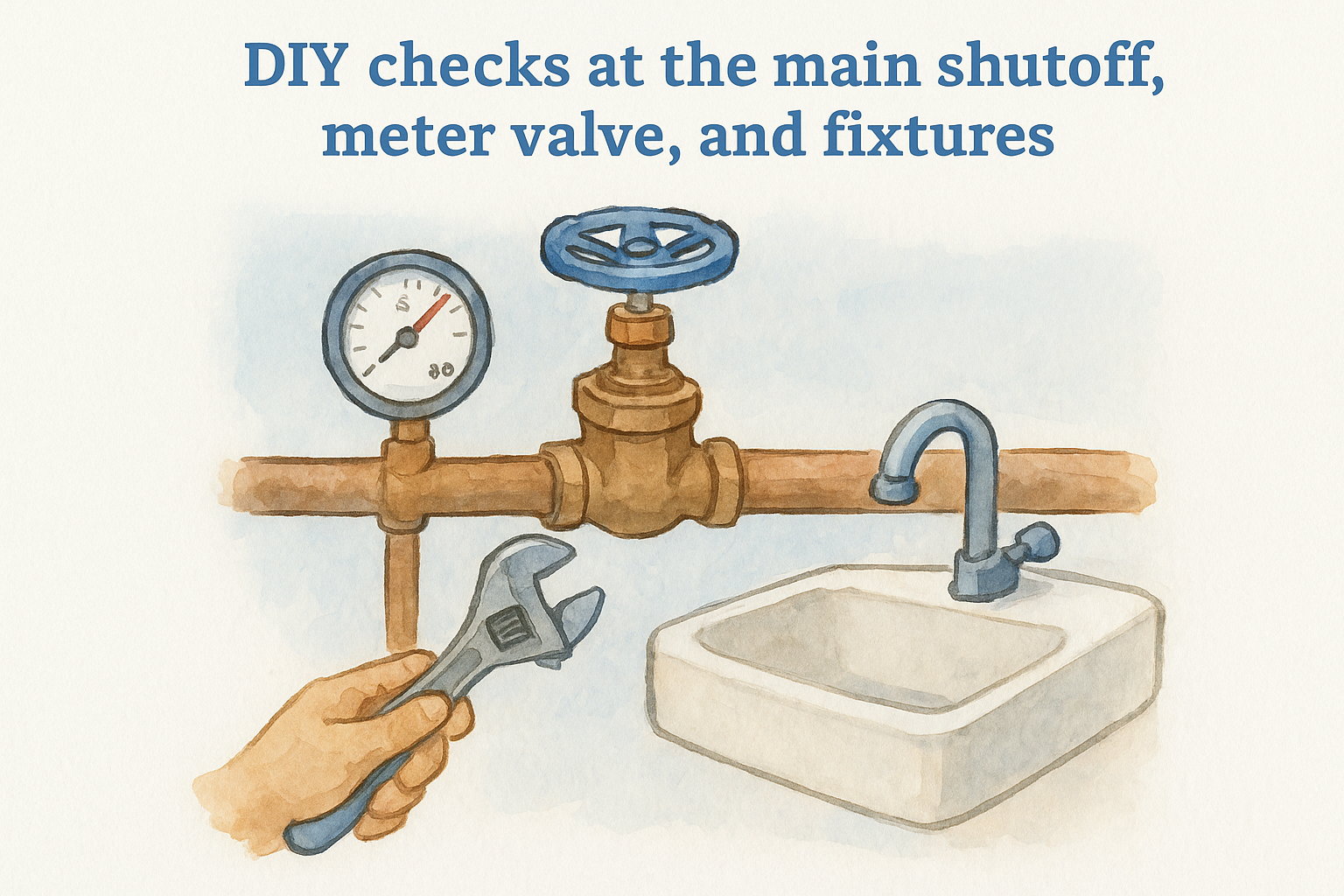
If the valve was recently serviced or bumped, even a quarter turn can drop pressure noticeably throughout your whole home.
How to check for a failing pressure-reducing valve
A PRV sits on the main supply line, usually close to the shutoff. If your pressure reads below 40 PSI on a gauge test at an outdoor hose bib, and all valves are confirmed open, the PRV is likely failing and needs attention.
When to call a Knoxville plumber and what they’ll test
Your plumber will use a pressure gauge test to compare supply pressure at the meter versus the reading inside your home. If those numbers don’t match, the PRV or a partially closed valve is almost certainly responsible. Replacing a PRV typically takes under an hour and restores normal pressure right away.
2. A leak is stealing pressure somewhere in the system
One overlooked answer to why is my water pressure low is a hidden leak pulling water from your supply line before it reaches your fixtures. Unlike a burst pipe, slow leaks often go unnoticed for weeks.
Fast warning signs you should not ignore
Watch for water stains on ceilings or walls, unexplained spikes in your water bill, or the sound of running water when everything is off. Any one of these warrants immediate attention.
How to do a simple meter test for hidden leaks
Turn off every fixture and appliance in your home, then check your water meter. If the meter dial still moves, water is escaping somewhere in the system.
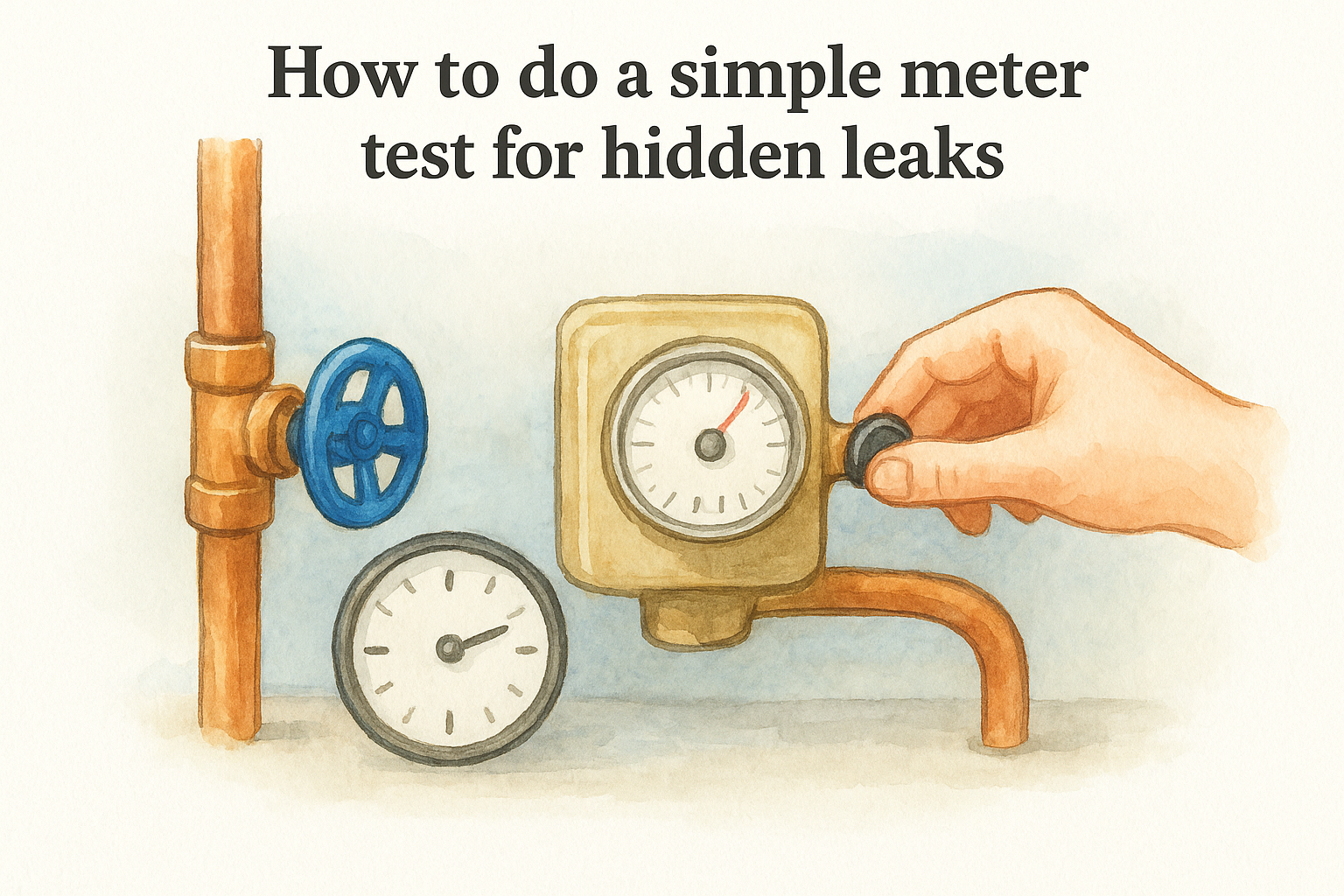
This test takes under five minutes and can confirm a leak before visible damage appears.
Common leak locations inside Knoxville-area homes
Older Knoxville homes frequently have aging copper or galvanized steel pipes that corrode at joints and fittings. Crawl spaces and under-slab lines are the most common places leaks hide without showing surface signs.
What to do right now to limit damage
Shut off your main water supply immediately if you suspect an active leak. Stopping the flow prevents further damage while you wait for help.
When a plumber needs to step in
If your meter test confirms a leak but you cannot locate it visually, a plumber can use pressure testing and leak detection tools to find the source without tearing into walls unnecessarily.
3. Buildup or clogs are restricting flow at the tap
Sometimes the answer to why is my water pressure low is simpler than you might expect. Mineral deposits and debris can accumulate inside fixtures and filters, cutting flow at specific points rather than across your entire home.
Aerators, showerheads, and cartridge clogs that mimic low pressure
Clogged aerators on faucets and blocked showerheads are the most common culprits when only one fixture underperforms. Cartridge buildup inside single-handle faucets produces the same symptom and is easy to miss during a basic inspection.
Whole-house filters and softeners that cut flow when they clog
A dirty sediment filter or a salt-bridged water softener can reduce pressure throughout your home. Check your filter cartridge replacement schedule first if you have any whole-house treatment equipment installed.
Hard water scale and sediment problems in East Tennessee
East Tennessee water carries enough mineral content to build scale inside pipes and fixtures over time. Galvanized steel pipes in older Knoxville homes are especially prone to internal corrosion that slowly narrows the supply line.
If your pressure has dropped gradually over years rather than suddenly, scale buildup inside aging pipes is a strong likely factor.
Safe cleaning steps and when replacement makes more sense
Soaking aerators in white vinegar overnight removes most mineral deposits without causing damage. Showerheads with heavy buildup often need full replacement rather than cleaning alone.
When low flow points to a bigger piping issue
Cleaning fixtures that still underperform after a thorough soak signals something deeper. Corroded or scaled pipes behind the walls may be narrowing your supply, and a plumber can assess pipe condition to determine whether re-piping is the right next step.
4. Your hot water side has a restriction or water heater issue
If low pressure only appears on the hot side, the water heater or a valve connected to it is likely the culprit. This narrows your diagnosis considerably.
How hot-only low pressure changes the diagnosis
When cold water pressure runs normally but hot water barely flows, skip the main supply line. Your problem sits between the heater and the fixture.
Water heater shutoffs, dip tubes, and sediment buildup
Check that the shutoff valve on the cold-inlet line of your water heater is fully open. A failed dip tube or sediment layer at the tank bottom can restrict hot water delivery significantly.
Flushing your tank once a year removes sediment before it narrows the flow path enough to affect pressure.
Mixing valves, thermostatic showers, and single-handle faucets
A failing mixing valve or a worn cartridge inside a thermostatic shower can cut hot water flow to a trickle without touching cold-side pressure at all.
Quick comparisons to run at multiple fixtures
Test hot water pressure at two or three fixtures. If every hot tap runs weak, the heater or its inlet valve is the source. If only one underperforms, the restriction is local to that fixture.
When water heater repair becomes the next step
If you’ve been asking why is my water pressure low only when hot water runs, the fix lives at the heater. A plumber can flush sediment, test the dip tube, or determine whether the unit needs replacing.
5. The issue comes from the street or neighborhood demand
Sometimes why is my water pressure low has nothing to do with your plumbing. Municipal water supply pressure fluctuates based on demand, infrastructure conditions, and time of day, and your fixtures simply reflect what arrives at the meter.
How city water pressure normally varies by time of day
Peak demand hours, typically early morning and early evening, pull more water from the main and can drop household pressure noticeably at your fixtures.
How to use the neighbor test to confirm an area issue
Ask a neighbor on the same street whether they’re experiencing the same drop. If they are, your supply main is the common factor, not your home’s plumbing.
Local supply disruptions, main breaks, and planned work
Water main breaks and scheduled maintenance in your area can cause temporary pressure drops. Check your water provider’s website or app for active service alerts before assuming the problem is internal.
If multiple neighbors report the same issue at the same time, contact your utility immediately.
What your water provider can confirm and what they can’t change
Your utility company can confirm whether supply pressure at the meter meets standard levels. They cannot always raise it if your street sits at the far end of a distribution zone.
What to do if your home always sits at the low end of pressure
Installing a booster pump is the most reliable fix when street pressure consistently falls short of what your household needs.
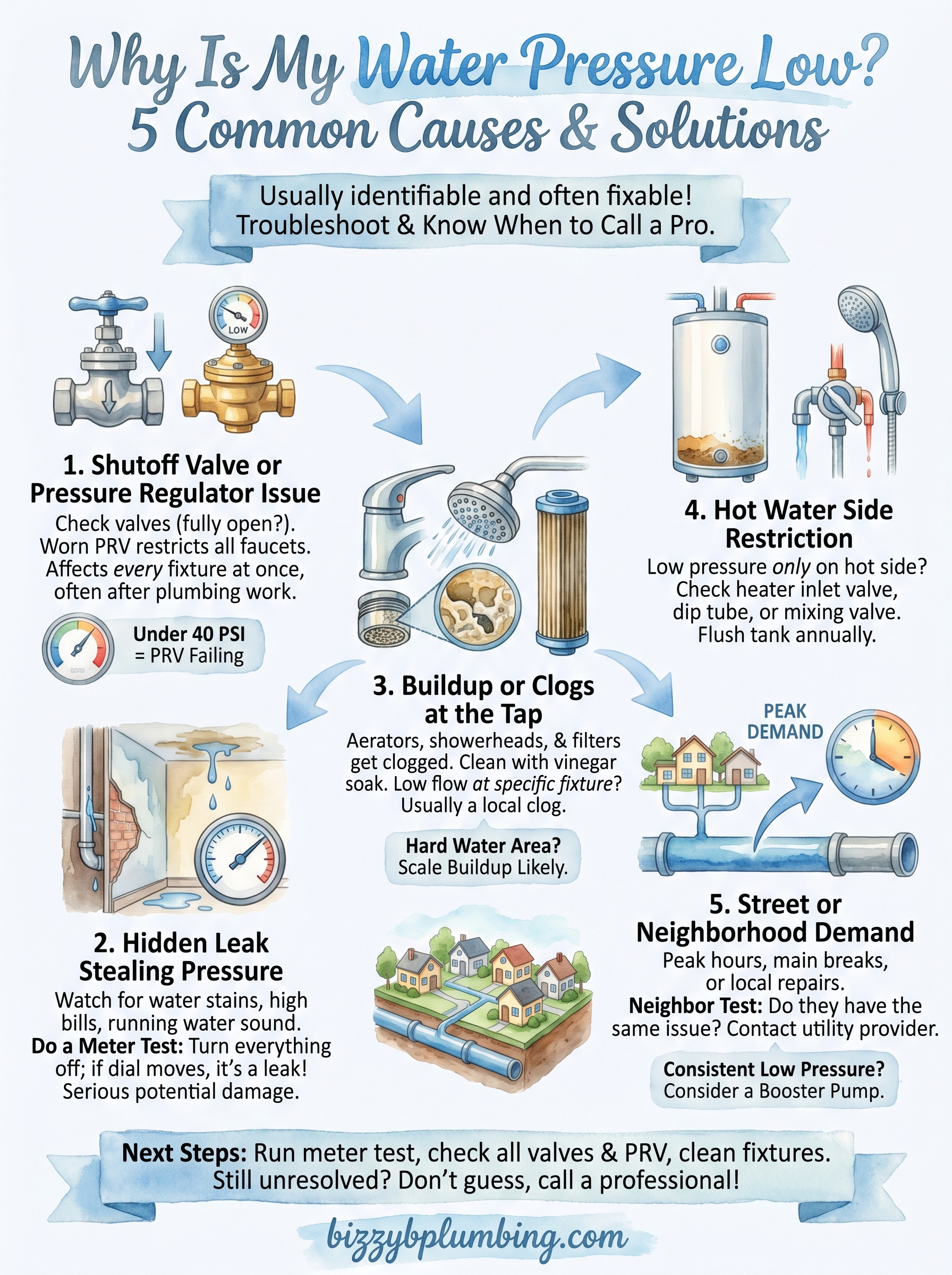
Next Steps
Now that you know why is my water pressure low has five distinct answers, you can start narrowing down the cause without guessing. Run the meter test to rule out a hidden leak, check your shutoff valves and PRV, then work through the fixture-level checks. Most homeowners can identify the likely cause within 30 minutes of looking in the right places.
Some fixes, like soaking an aerator or fully opening a valve, take minutes. Others, like replacing a PRV, repairing a buried leak, or flushing a water heater, require tools and expertise that most households don’t have on hand. Putting those repairs off usually makes the problem worse and more expensive over time.
If you’ve worked through these checks and still can’t pinpoint the issue, or if you’d rather have a professional confirm the diagnosis fast, contact Bizzy B Plumbing for same-day service in Knoxville and surrounding East Tennessee communities.