
If you’ve ever walked downstairs after a heavy rain to find water pooling on your basement floor, you already know how stressful unexpected flooding can be. That’s exactly the problem a sump pump is designed to solve. So, what is a sump pump? It’s a device installed below your basement or crawl space floor that actively removes water before it has a chance to cause damage. For homeowners in Knoxville and the surrounding East Tennessee area, where seasonal storms and shifting ground moisture are common, understanding this piece of equipment can save you thousands in potential water damage repairs.
At Bizzy B Plumbing, we install, repair, and maintain sump pumps for homeowners across Knoxville, Maryville, Farragut, and nearby communities. We’ve seen firsthand what happens when a home doesn’t have one, and what happens when an existing unit fails at the worst possible time. Our goal with this guide is straightforward: give you a clear, no-nonsense explanation of how sump pumps work, what types are available, and how to know whether your home needs one. By the end, you’ll have the knowledge to make a confident decision about protecting your home from water intrusion.
Why sump pumps matter for homeowners
Water damage is one of the most expensive problems a homeowner can face. Even a small amount of standing water in your basement or crawl space can lead to structural damage, mold growth, and destroyed personal belongings. Understanding what is a sump pump and why it matters gives you a practical advantage, because water problems rarely announce themselves with much warning before they spiral into major repair bills.
The real cost of basement flooding
Most homeowners don’t think about water intrusion until they’re standing in it. A single flooding event can cost between $1,000 and $10,000 or more in water damage repairs, depending on how much water enters your home and how long it sits before you address it. Mold remediation alone often runs into the thousands, and mold can begin developing within 24 to 48 hours of moisture exposure.
Unaddressed water damage doesn’t just cost money; it can compromise your home’s structural integrity and make it harder to sell down the road.
Replacing flooring, drywall, insulation, and personal property adds up quickly. A properly maintained sump pump costs a fraction of what you’d spend recovering from even one major flooding event.
Why East Tennessee homes are particularly at risk
Knoxville and the surrounding area see significant seasonal rainfall, and the region’s clay-heavy soil doesn’t drain water quickly. Heavy spring and summer storms can saturate the ground around your foundation faster than the soil can absorb it. When that happens, water follows the path of least resistance, which is often through your basement walls or floor.
Older homes in areas like Maryville, Farragut, and West Knoxville frequently have aging drainage systems that weren’t designed to handle current stormwater volumes. Crawl space homes are also common across East Tennessee, and those spaces are just as vulnerable to moisture buildup as any basement. A sump pump gives your home an active defense rather than leaving you dependent on passive drainage that may already be struggling.
How a sump pump works step by step
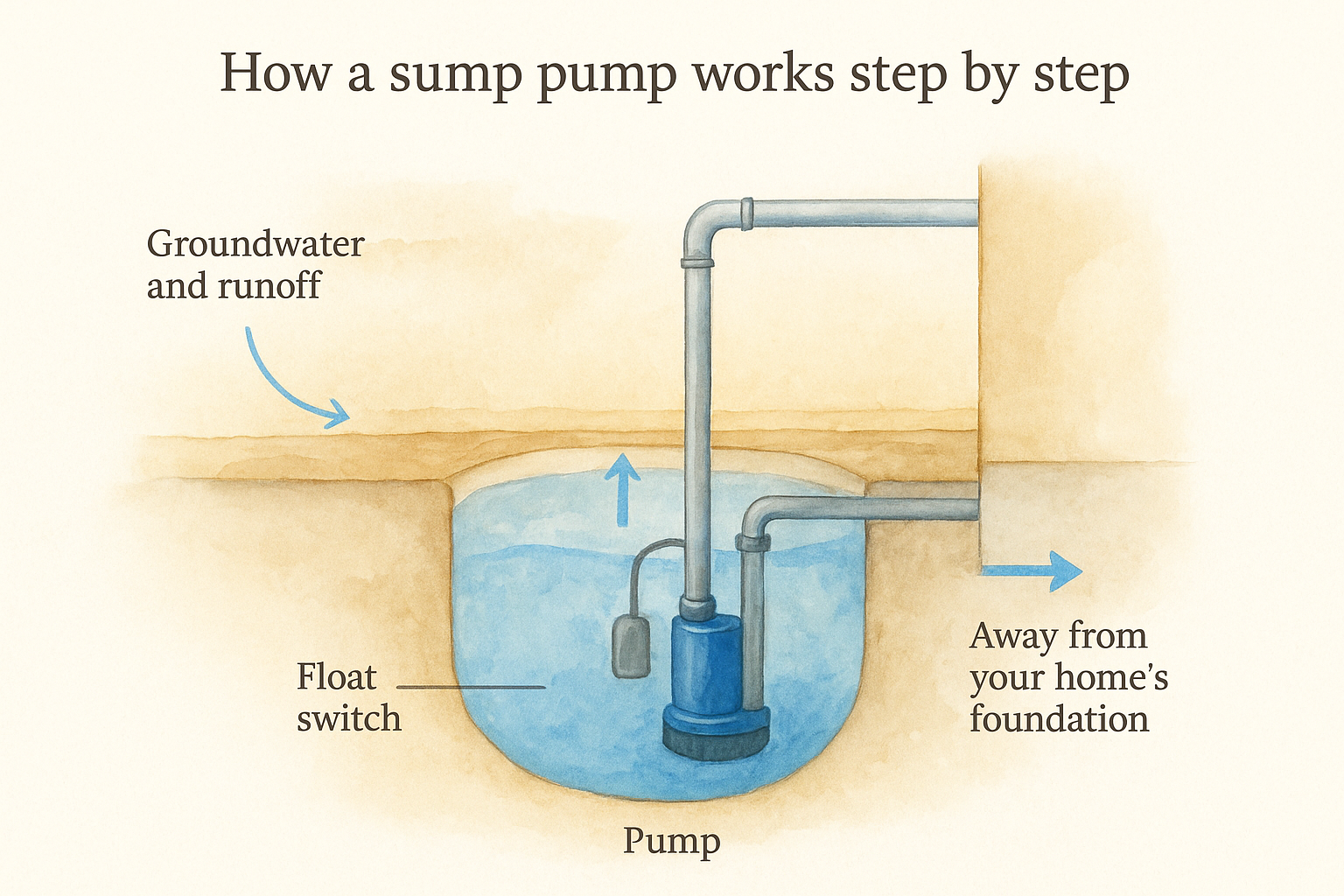
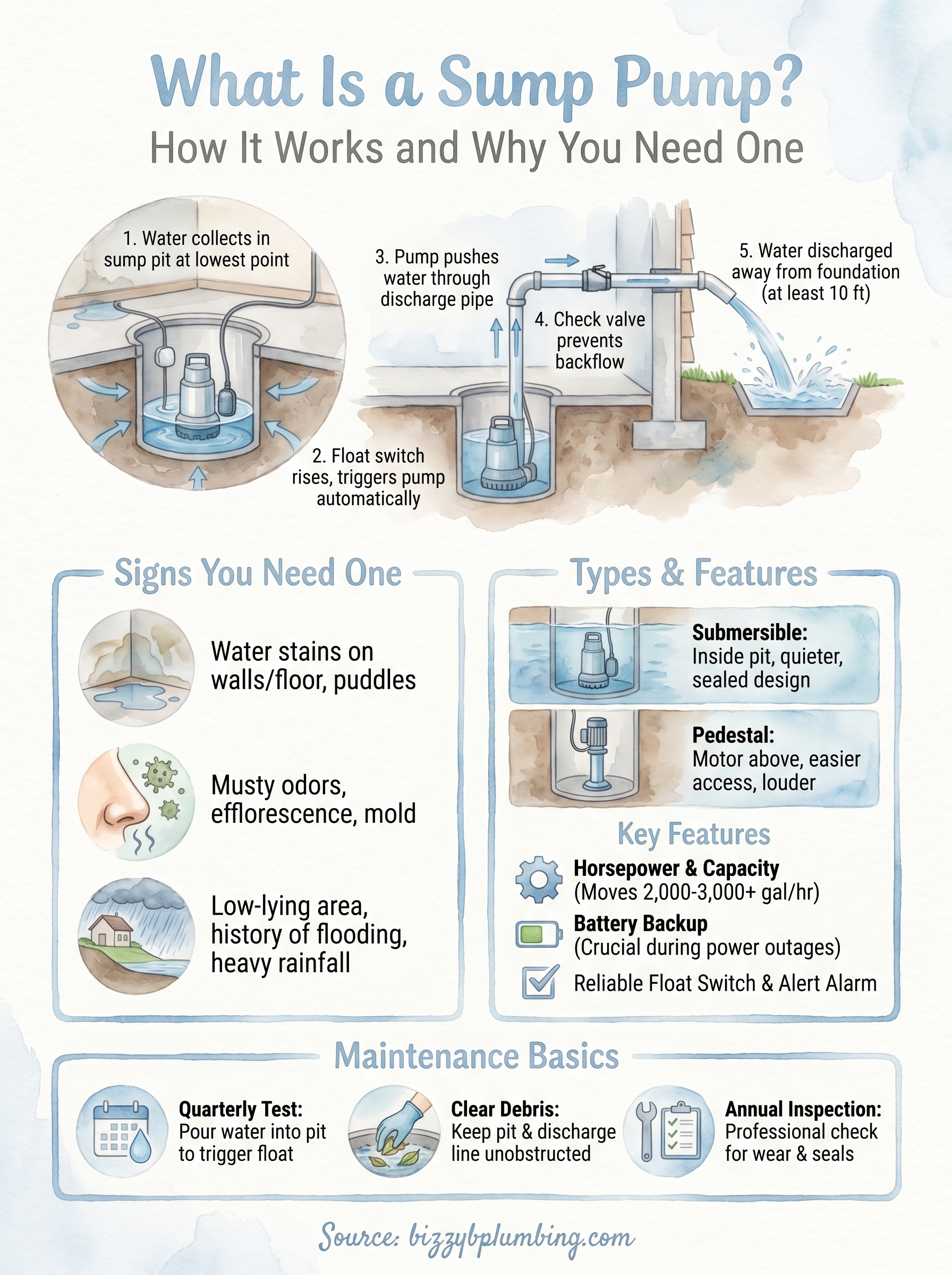
Understanding what is a sump pump becomes much easier once you see the process from start to finish. The pump sits inside a sump pit, which is a hole dug at the lowest point of your basement or crawl space floor. Groundwater and runoff naturally collect in this pit rather than spreading across your floor.
From detection to discharge
When water in the pit rises to a set level, a float switch triggers the pump automatically, requiring no action from you. The pump then pushes the water through a discharge pipe that carries it away from your home’s foundation, typically to a storm drain, dry well, or a drainage area in your yard.
Where that water discharges matters. Releasing it too close to your foundation just sends it back underground and into the pit again.
Most pumps run for only a short burst each cycle, shutting off once the water level drops below the float. During heavy rain, a pump might cycle many times within an hour. A check valve on the discharge pipe stops water from flowing back into the pit when the pump shuts off, keeping the system running efficiently and protecting the motor from unnecessary wear. Knowing this basic sequence helps you recognize when something in your system is not working the way it should.
Types of sump pumps and key features
Once you understand what is a sump pump at its core, the next step is knowing which type fits your home. The two most common options are submersible and pedestal pumps, and each suits a different situation depending on your pit size and how much water your home typically manages.
Submersible vs. pedestal pumps
Submersible pumps sit fully inside the pit, below the waterline, which makes them quieter and better suited for homes with higher water intrusion risk. Pedestal pumps mount the motor above the pit on a raised column, keeping it more accessible for maintenance but making the unit louder during operation.
- Submersible: Quieter, higher capacity, sealed design, typically more expensive
- Pedestal: Easier to service, lower upfront cost, better for shallower pits
Submersible models tend to last longer when properly maintained inside a sealed pit.
Features worth paying attention to
Horsepower rating and pump capacity determine how quickly your system clears water from the pit. Most residential units move 2,000 to 3,000 gallons per hour, but homes in low-lying areas or with serious groundwater issues often need higher-capacity models. You should also look for a reliable float switch, a built-in alert alarm, and a battery backup system. The storms most likely to flood your basement are often the same ones that knock out your power, so having a backup keeps your pump running when you need it most.
Do you need a sump pump in your home
Knowing what is a sump pump is one thing; figuring out whether your specific home needs one is another. Not every home requires a sump pump, but certain conditions make installation a smart move rather than an optional upgrade. If your home has a basement or crawl space, the question is worth answering before the next heavy rain does it for you.
Signs your home is at risk
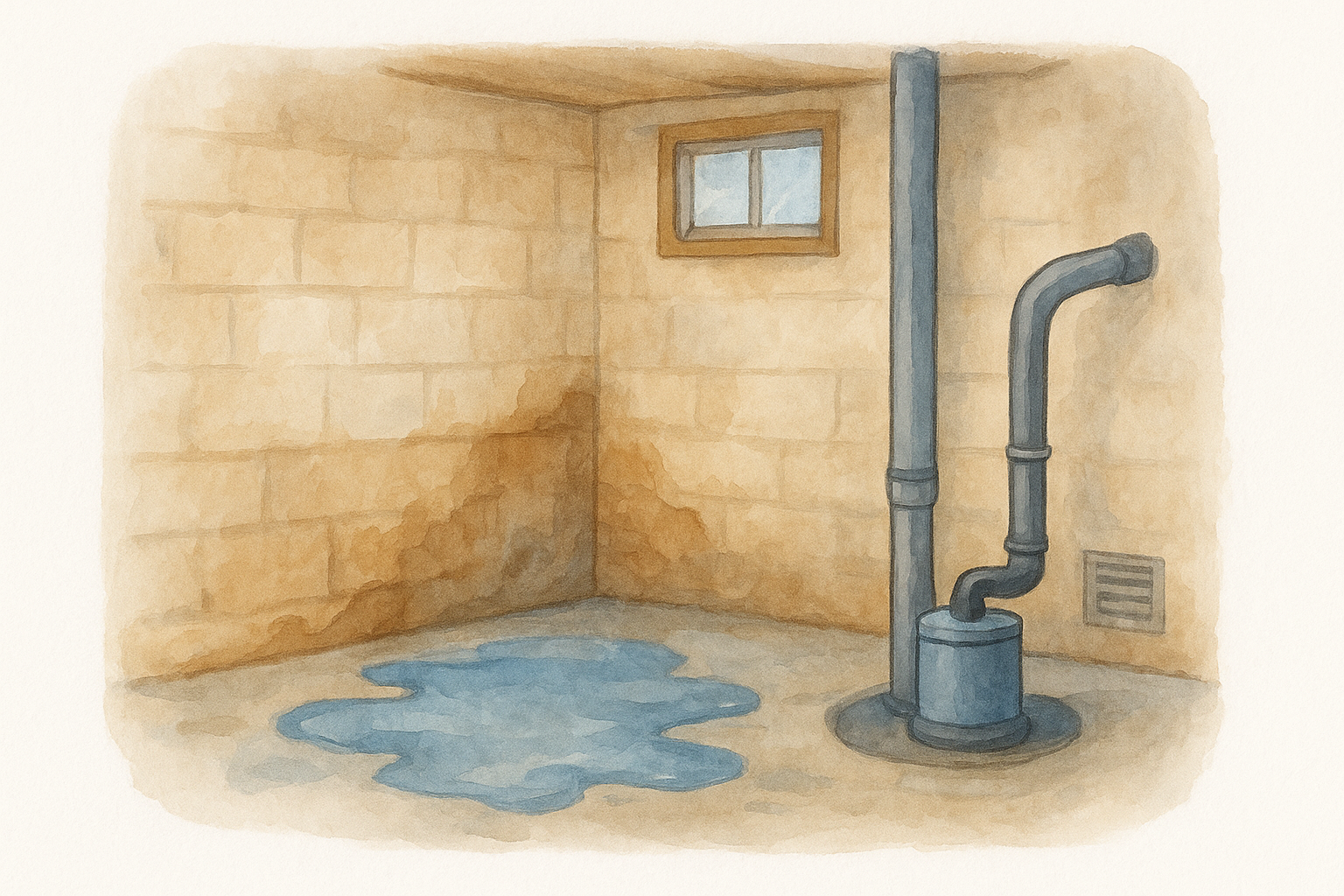
Water stains along your basement walls or floor are one of the clearest indicators that moisture is already finding a way in. You should also pay attention to musty odors, efflorescence (white mineral deposits on concrete), or any history of flooding, even minor pooling after a storm.
If your neighbors have sump pumps, that’s a strong signal your lot sits in an area with groundwater pressure or drainage challenges.
Several other factors point toward needing a pump:
- Your home sits at the bottom of a slope or in a low-lying area
- Your basement has flooded at least once before
- You live in a region with heavy seasonal rainfall, like the Knoxville and East Tennessee area
- Your crawl space shows signs of persistent moisture or standing water
- Your home is older and lacks modern drainage infrastructure
Installation, discharge, and maintenance basics
Once you understand what is a sump pump and confirm your home needs one, the installation process and ongoing maintenance become your next priority. A licensed plumber handles pit excavation, pump placement, and discharge line routing to make sure everything works correctly from the start. Getting these details right the first time prevents the most common failure points homeowners run into later.
Getting the discharge right
Where your discharge line terminates matters as much as the pump itself. Your local municipality may have specific rules about where sump pump water can be released, so checking those requirements before installation protects you from fines or rework. The discharge point should sit at least 10 feet from your foundation to prevent water from cycling back underground and re-entering the pit.
Discharging into a sanitary sewer line is prohibited in most jurisdictions and can result in code violations.
Keeping your pump working year-round
Routine maintenance on a sump pump is simple but easy to skip. Every three to four months, pour water into the pit and confirm the float switch triggers correctly. Clear debris from the pit, check that the discharge line is unobstructed, and test your battery backup if you have one. An annual inspection by a plumber catches motor wear and seal degradation before they cause a failure mid-storm.
Next steps
Now that you know what is a sump pump, how it works, and what signs point to needing one, you’re in a much stronger position to protect your home from water damage. The biggest mistake homeowners make is waiting until after a flooding event to address the problem. If your basement has shown any of the warning signs covered in this guide, taking action now costs far less than recovering from a flooded lower level after the next major storm rolls through East Tennessee.
Getting a professional assessment is the right first move if you’re unsure whether your home needs a sump pump or if an existing unit is performing correctly. Bizzy B Plumbing serves homeowners across Knoxville, Maryville, Farragut, and the surrounding East Tennessee area with same-day service and upfront pricing. You’ll get honest answers about what your home actually needs, with no pressure and no surprises. Schedule a sump pump inspection with Bizzy B Plumbing and stop guessing before the next heavy rain.