
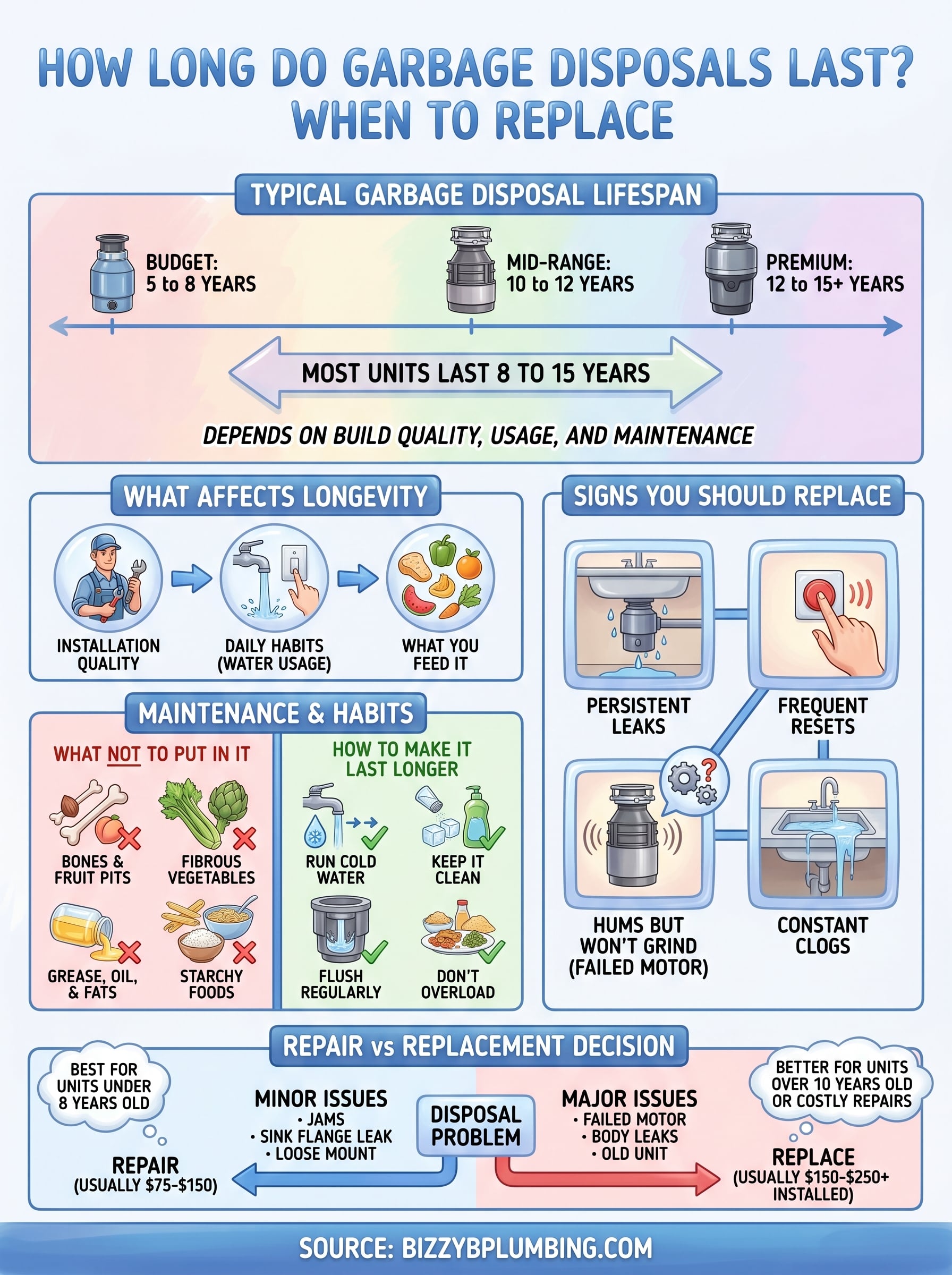
Your garbage disposal handles a lot of abuse, food scraps, grease, the occasional fork, and most of the time it just keeps grinding. But every unit has a limit, and most homeowners don’t think about replacement until the thing stops working mid-dinner prep. So, how long do garbage disposals last, and how do you know when yours is on its way out? The short answer: most units last between 8 and 15 years, depending on the brand, usage habits, and how well they’ve been maintained.
At Bizzy B Plumbing, we replace and repair garbage disposals across Knoxville and the surrounding East Tennessee area on a regular basis. We’ve seen units that lasted well beyond a decade with basic care, and others that gave out in under five years because of repeated misuse or poor installation. The patterns are pretty consistent, and they’re worth knowing before you’re standing over a sink full of backed-up water wondering what happened.
This article breaks down the typical lifespan of a garbage disposal, the clearest warning signs that yours needs replacing, and practical steps you can take to get the most years out of it.
Typical garbage disposal lifespan
The standard answer to how long do garbage disposals last is 8 to 15 years, but that range is wide for a reason. A basic unit running in a busy household with two adults and three kids will wear down faster than the same model in a single-person apartment. The lifespan you actually get depends on build quality, how often you run the unit, and what goes into it.
Most manufacturers design their mid-range and premium disposals to handle about 10 years of regular use before the motor, grinding components, or seals begin to fail.
Budget, mid-range, and premium models
Not all disposals are built the same, and the price you pay upfront usually reflects how long the unit will hold up. Here is a general breakdown of what to expect by tier:
| Disposal tier | Typical price range | Expected lifespan |
|---|---|---|
| Budget | Under $100 | 5 to 8 years |
| Mid-range | $100 to $200 | 10 to 12 years |
| Premium | $200 and above | 12 to 15+ years |
Budget units use lower-grade motors and thinner grinding chambers, so they tend to wear out faster under regular use. Premium models use heavier motors, stainless steel grinding components, and multi-stage grinding systems that simply hold up longer under daily demand.
How household size and frequency affect longevity
A disposal running twice a day in a household of four puts significantly more stress on the motor and grinding ring than one running a few times a week. High-frequency use accelerates wear on the internal seals and bearings, which are often the first components to fail in any unit regardless of price tier.
If your household generates a large volume of food waste daily, stepping up to a mid-range or premium model is a better long-term investment than defaulting to the cheapest option available.
What affects how long a disposal lasts
The answer to how long do garbage disposals last in your specific home comes down to a few controllable factors. Installation quality, daily habits, and what you feed the unit all influence wear rate more than the brand name on the side. Understanding these factors helps you make smarter decisions before the next problem shows up.
What you put into it
Hard items like bones, fruit pits, and fibrous vegetables put stress on the grinding ring far faster than soft food scraps do. Grease and oil coat internal components and restrict movement over time, which leads to motor strain and early seal failure. The items below are the most common causes of premature wear:
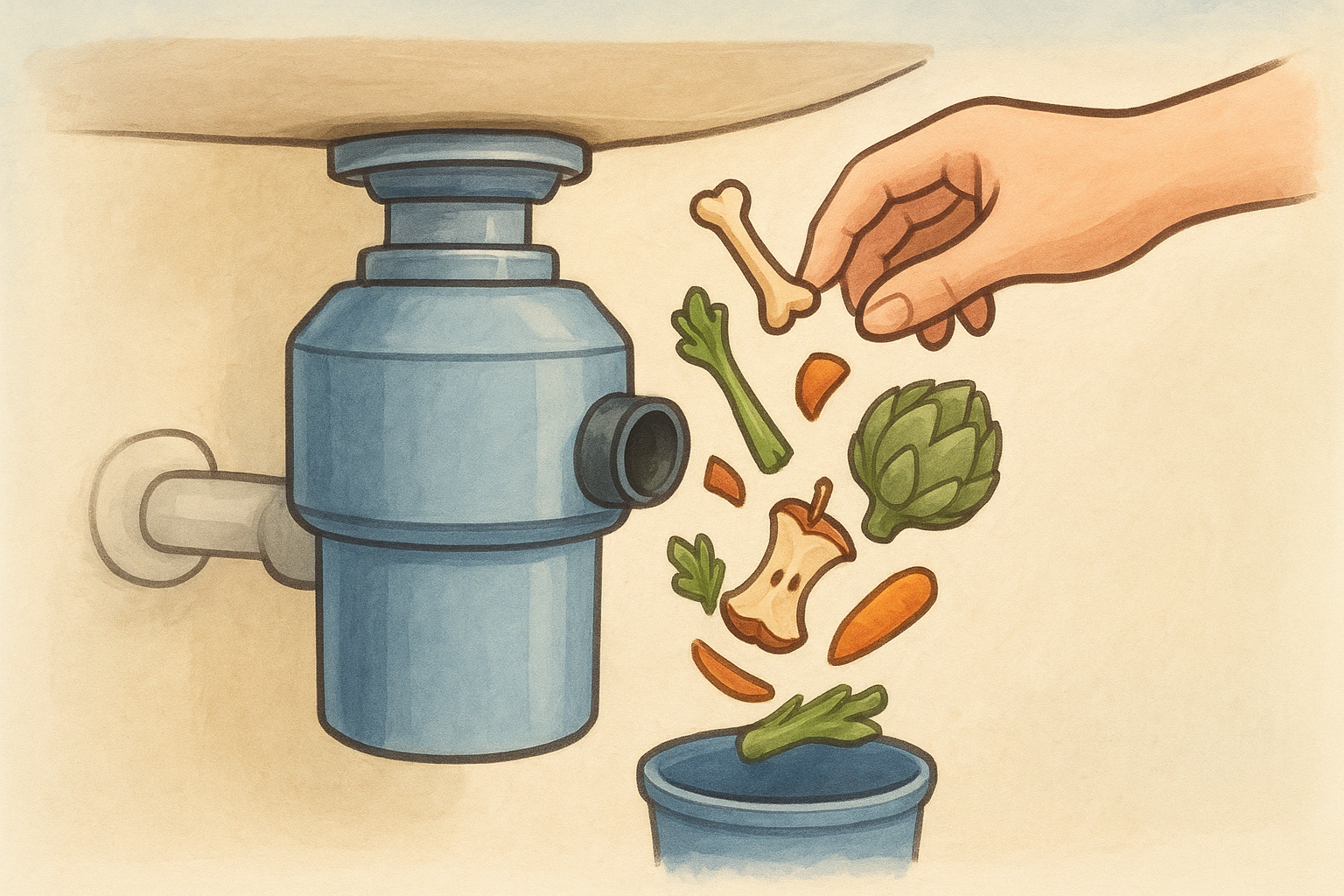
- Bones and fruit pits
- Fibrous vegetables like celery and artichokes
- Grease, oil, and fats
- Starchy foods like pasta and rice that expand with water
Treating your disposal like a trash can rather than a kitchen tool is the fastest way to shorten its lifespan.
Water usage during grinding
Running cold water before, during, and after grinding reduces wear on internal components significantly. Insufficient water flow forces the motor to work harder to push food waste through the drain line, which builds heat and accelerates bearing wear over time. Follow these basic water habits to protect the unit:
- Start cold water before switching the disposal on
- Keep it running throughout the entire grinding cycle
- Let water run for 10 to 15 seconds after turning the unit off
Signs you should repair or replace
Knowing when to repair versus when to replace a unit is one of the more practical decisions homeowners face. Some problems are minor and cheap to fix. Others signal that the unit has reached the end of its useful life, and putting money into repairs just delays an inevitable replacement.
Signs that point to repair
Occasional jams are usually not a reason to replace a unit outright. If the unit trips the reset button once in a while but otherwise grinds normally, a simple reset or manual clearing is often all it needs. Repairable issues typically include:
- Jams cleared with the reset button on the bottom of the unit
- Leaks from the sink flange or mounting ring
- A unit that hums but spins freely after manual reset
Signs that point to replacement
If you find yourself asking how long do garbage disposals last because your unit has multiple problems at once, replacement usually makes more sense than repair. Watch for these signals:
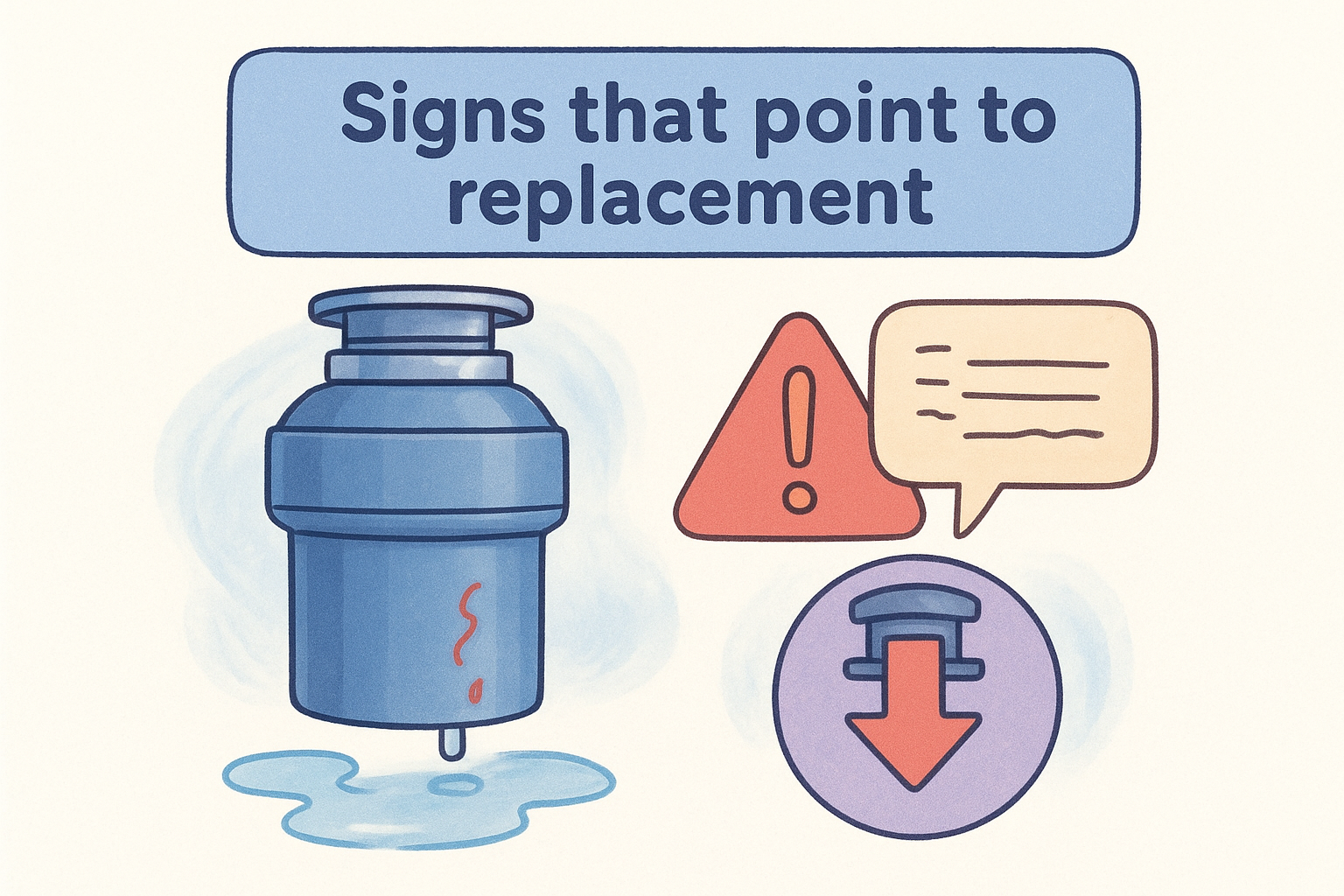
A disposal that hums but won’t grind almost always has a failed motor, which costs more to fix than buying a new unit outright.
- Persistent leaks from the body or bottom of the unit
- Frequent resets needed multiple times per week
- Grinding that gets louder over time despite clearing jams
- Constant clogs in a drain line that was not previously an issue
Repair vs replacement cost and timing
Cost is often what pushes homeowners to decide between fixing a unit and replacing it outright. When something goes wrong with your disposal, the repair price matters, but so does the age of the unit and how long garbage disposals last under normal conditions.
What repairs typically cost
Minor repairs like replacing a sink flange, tightening a mounting ring, or manually clearing a jam usually run between $75 and $150 when a plumber handles the job. These fixes make sense on a unit that is less than eight years old and has no other symptoms. Paying for a repair on a 12-year-old unit with recurring problems is a different calculation entirely.
If the repair cost exceeds half the price of a comparable new unit, replacement is almost always the smarter financial choice.
When replacement is the better call
A new mid-range disposal typically runs between $150 and $250 installed, depending on the unit and the complexity of the job. If your current unit is older than ten years and needs a motor replacement or has persistent leaks from the body, that repair cost often approaches or exceeds what a new unit would cost.
Replacing before total failure also saves you from an emergency service call and the mess that comes with a completely dead unit backing up your sink.
How to make your garbage disposal last longer
Understanding how long do garbage disposals last comes with a natural follow-up question: what can you do to push yours toward the higher end of that range? Simple, consistent habits make a bigger difference than any single maintenance step, and most of them cost you nothing.
Run it correctly every time
Cold water is one of the most important habits you can build around your disposal. Run it before you switch the unit on, keep it flowing during the entire grind cycle, and let it run for 10 to 15 seconds after you shut the unit off. This flushes remaining debris through the drain line and reduces heat buildup in the motor.
Skipping the water step consistently is one of the most common reasons disposals fail years ahead of schedule.
Keep it clean and free of buildup
Grease and food residue accumulate on the grinding ring and internal walls over time, which strains the motor and creates odors. Drop a few ice cubes and a handful of coarse salt into the unit and run it once a month to scrub residue off the grinding components. Follow that with cold water and a small amount of dish soap to flush the drain line clean.
When in doubt, get it checked
Knowing how long do garbage disposals last gives you a solid baseline, but every unit and household is different. If your disposal is making unfamiliar noises, leaking in a new spot, or tripping the reset button more than once a week, those are signals worth taking seriously rather than ignoring until something fails completely. Catching a problem early usually keeps the repair cost low and prevents a backed-up sink from turning into a bigger plumbing headache.
Your best move when something feels off is to get a plumber to take a look before the situation gets worse. Bizzy B Plumbing serves Knoxville and the surrounding East Tennessee area with same-day availability and upfront pricing, so you know exactly what you’re dealing with before any work begins. Schedule a garbage disposal inspection and get a clear, honest answer from someone who handles these jobs every day.