
A slow or stopped drain doesn’t always need a service call, and it definitely doesn’t need a bottle of caustic chemicals poured down the pipe. Most homeowners in Knoxville and East Tennessee can unclog a drain using tools and methods they already have at home, often in under 30 minutes.
That said, not every clog is a simple fix. At Bizzy B Plumbing, we handle drain emergencies across Knoxville, Maryville, Farragut, and the surrounding areas every single day. We’ve seen what works, what doesn’t, and what turns a minor blockage into a bigger problem. That hands-on experience is exactly what shaped this guide, so you get real advice, not internet guesswork.
Below, we’ll walk you through the fastest and most effective ways to clear a clogged drain at home without reaching for harsh chemical drain cleaners. We’ll cover what causes most clogs, the best DIY methods to try first, and when it’s time to call a plumber instead of pushing your luck.
What to do first and what to avoid
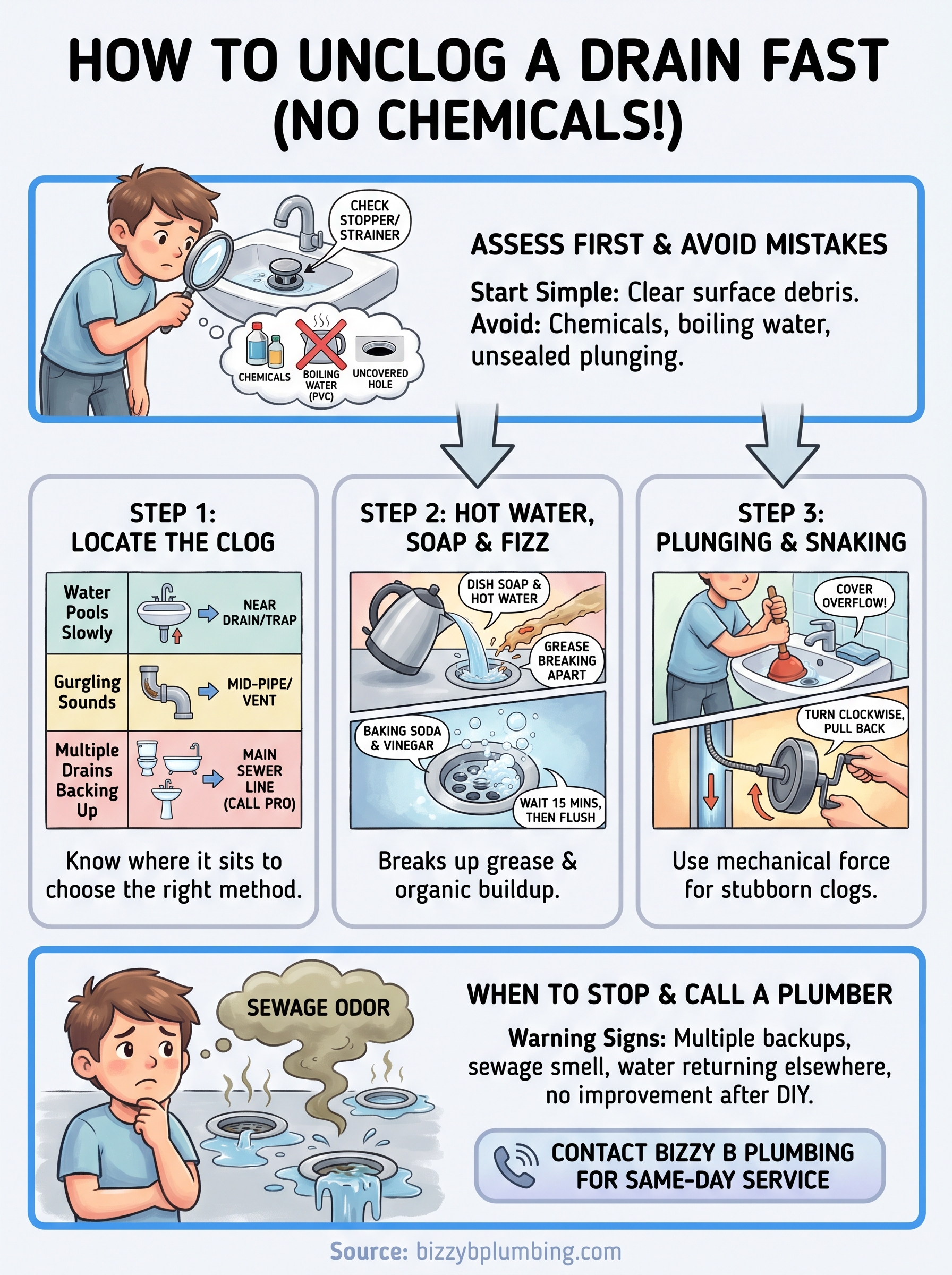
Before you grab any tools or products, take a moment to assess the situation. A single slow drain usually points to a localized blockage, which is the easiest type to fix at home. If multiple drains in your house are slow or backing up at the same time, that signals a deeper issue in the main line, and DIY methods won’t reach it.
Start with the simplest check
The first thing to do is remove and inspect the drain stopper or strainer. In bathroom sinks and tubs, hair and soap scum collect right at the surface, often just below the drain cover. You can clear this by hand or with a pair of needle-nose pliers. This single step solves a surprising number of slow drain problems before you even need to think about how to unclog a drain more aggressively.
Clearing the stopper and strainer first takes two minutes and often resolves the problem entirely before you need any other tools.
Check whether the water drains at all or just moves very slowly. A completely blocked drain needs a different approach than one that’s partially flowing. Partial blockages usually respond well to hot water and manual tools, while complete blockages may need a drain snake.
Avoid these common mistakes
Many people reach for chemical drain cleaners first, but these products can damage older pipes, corrode metal fittings, and create a hazardous situation if you later try to use a plunger. They also rarely dissolve the full clog, which means the problem comes back fast. Other mistakes to skip:
- Pouring boiling water into PVC pipes (it can warp or loosen joints)
- Plunging without covering overflow openings first (it breaks the seal and kills suction)
- Using a drain snake without knowing which direction the clog is located
Step 1. Find the type and location of the clog
Knowing where the clog sits and what’s causing it is the fastest way to figure out how to unclog a drain effectively. Guessing wrong wastes your time and can push the blockage deeper into the pipe, making the fix harder.
Spend two minutes diagnosing the clog before you reach for any tools or products.
Check which drain is affected
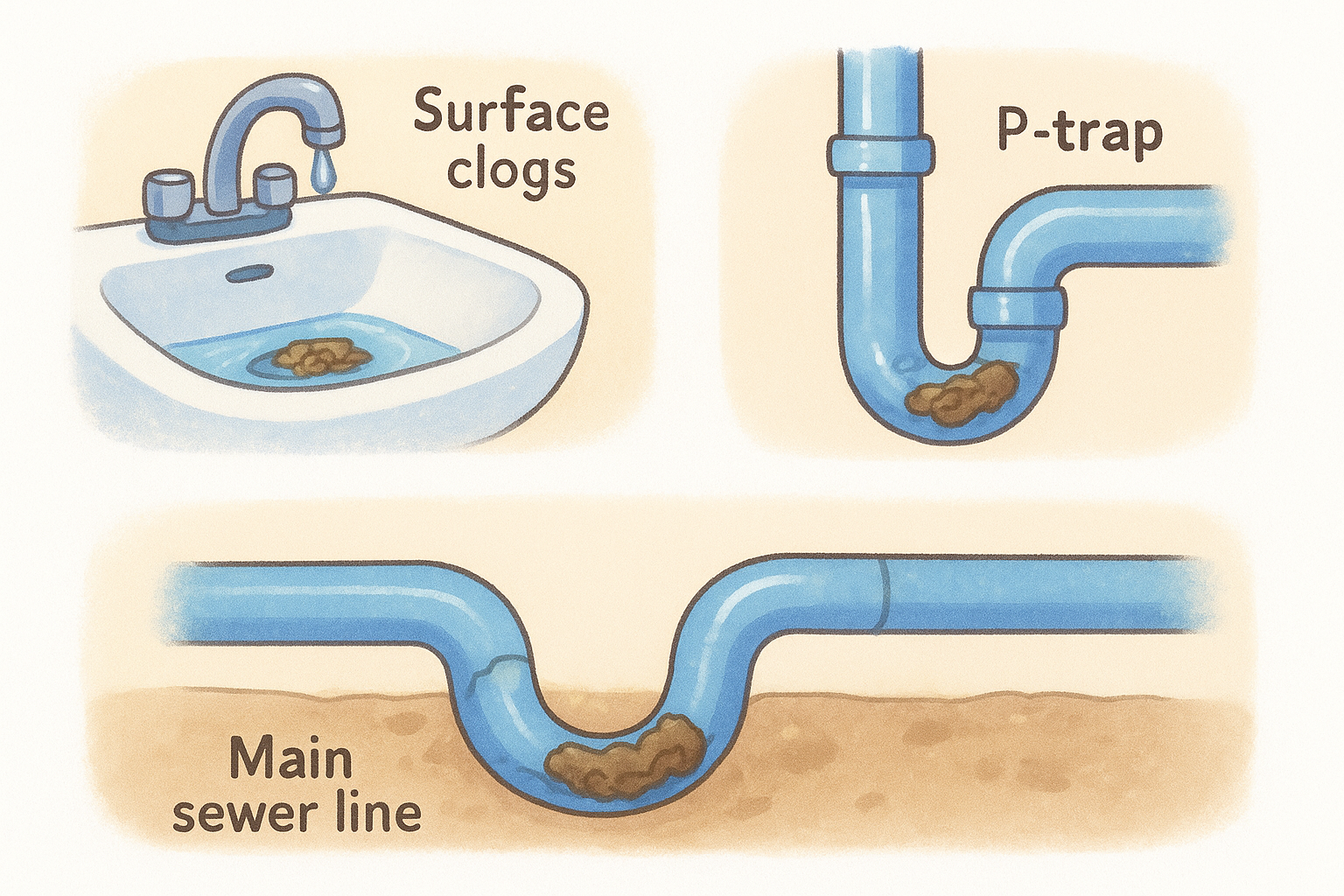
A single slow or blocked drain points to a localized clog in the trap or the pipe just below that fixture. If multiple drains across your home are sluggish or backing up at the same time, the problem is deeper in the main sewer line, which requires a professional, not a plunger.
Identify where the blockage sits
Surface clogs sit right at or just below the drain opening, typically made up of hair, soap scum, or food debris. Deeper clogs form in the P-trap or further down the line and require more mechanical force to clear. Use this quick reference to match your symptoms to the likely location:
| Symptom | Likely clog location |
|---|---|
| Water pools slowly but eventually drains | Near the drain opening or P-trap |
| Gurgling sounds when water drains | Mid-pipe or blocked vent |
| Multiple drains backing up at once | Main sewer line |
Step 2. Clear the clog with hot water, soap, and fizz
Once you’ve identified a localized, partial clog, start with the least invasive approach before reaching for tools. Hot water, dish soap, and a baking soda and vinegar reaction can break up grease, soap scum, and organic buildup without damaging your pipes.
The hot water and dish soap method
Squirt two tablespoons of dish soap into the drain, then slowly pour a full kettle of hot (not boiling) water down after it. The soap lubricates the blockage while the heat softens grease and buildup. Wait three to five minutes, then run the tap to check for improvement.
This works best for kitchen sink drains blocked by grease or food residue. Avoid boiling water in PVC pipe systems, since extreme heat can loosen pipe joints over time.
If the drain clears even slightly after this step, repeat the flush once before moving on.
The baking soda and vinegar flush
Knowing how to unclog a drain without chemicals starts here. The fizzing reaction between baking soda and vinegar breaks down organic buildup and loosens debris clinging to pipe walls. Follow these steps:
- Pour half a cup of baking soda directly into the drain
- Add half a cup of white vinegar right after
- Cover the drain with a stopper to push the fizz downward into the clog
- Wait 15 minutes, then flush with hot water
Step 3. Use plunging and simple drain tools
If hot water and baking soda didn’t fully clear the blockage, mechanical force is your next step. A standard cup plunger and a basic drain snake handle the majority of stubborn clogs and are the same tools professionals reach for first when figuring out how to unclog a drain quickly.
How to plunge correctly
A cup plunger works best on flat drain openings in sinks and tubs. Before you start, cover the overflow opening with a wet rag to seal it, otherwise the suction escapes and the plunger loses all its force. Follow these steps in order:
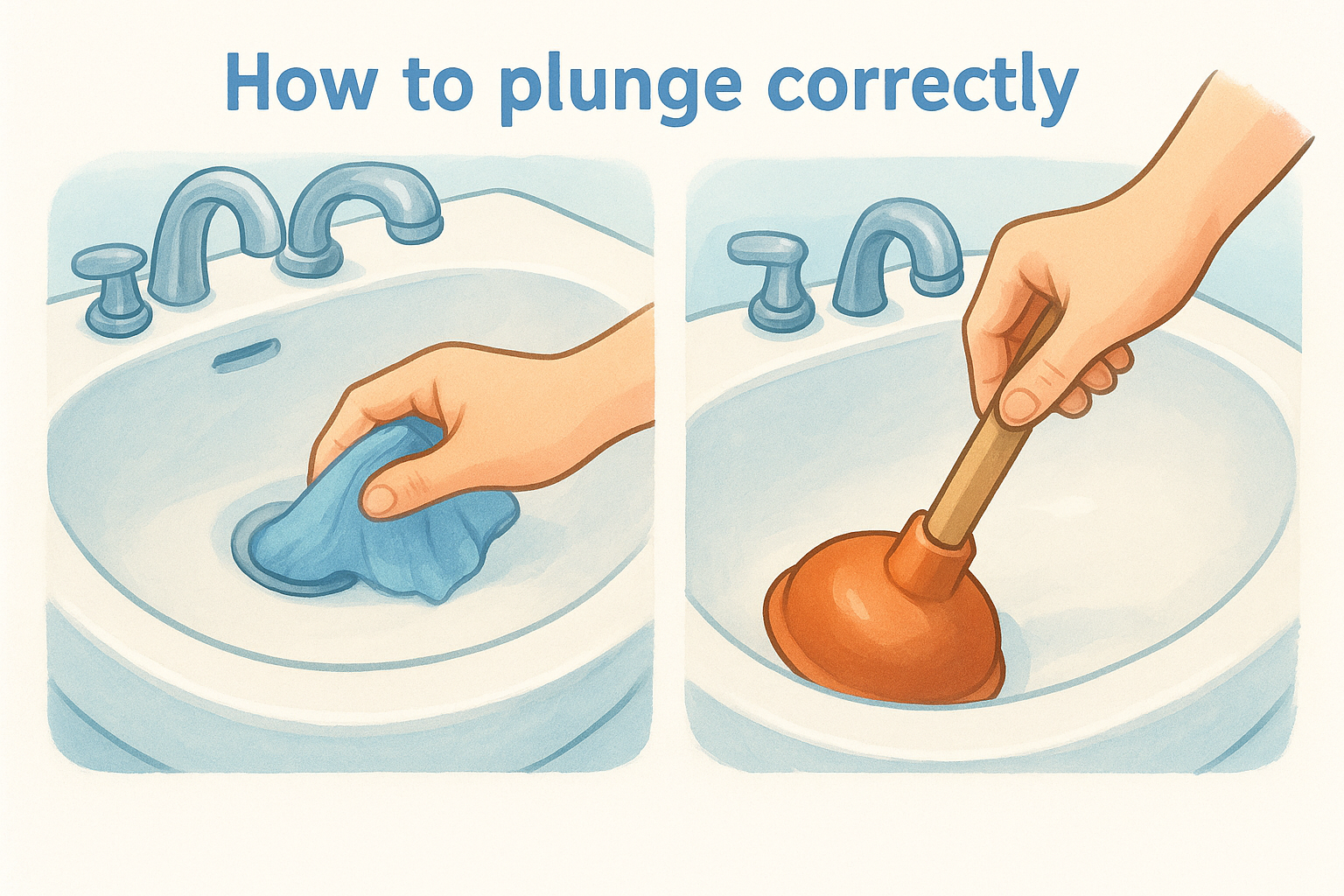
- Block the overflow opening with a wet rag
- Place the plunger cup fully over the drain opening
- Push down slowly to create a tight seal
- Pull back sharply 10 to 15 times
- Lift and run hot water to test the drain
Covering the overflow hole is the single most important step for effective plunging.
Using a drain snake
A hand-crank drain snake reaches clogs sitting deeper in the P-trap or further down the pipe where a plunger can’t reach. Feed the cable into the drain, turn the handle clockwise while pushing forward, and rotate when you feel resistance. Pull the snake back slowly to drag the clog out rather than push it deeper into the line.
When to stop DIY and call a plumber
DIY drain methods work well for localized, surface-level blockages, but they have clear limits. If you’ve worked through the steps above and the drain still won’t clear, pushing further on your own can turn a manageable clog into a cracked pipe or a flooded floor. Knowing when to stop is just as important as knowing how to unclog a drain in the first place.
Signs the clog is beyond DIY
Several warning signs tell you it’s time to stop and call a professional instead of pushing further. Watch for any of these:
- Multiple drains backing up at the same time across your home
- Sewage odor rising from drains or through floor vents
- Water returning up through a different drain when you run a nearby fixture
- No improvement after two full rounds with a plunger and drain snake
If water backs up into your tub when you flush the toilet, that’s a main line blockage that a plumber needs to handle right away.
At Bizzy B Plumbing, we serve Knoxville, Maryville, Farragut, and surrounding East Tennessee communities with same-day drain service and upfront pricing, so you know exactly what the fix costs before any work starts.
Get your drain back to normal
Most clogs you’ll encounter at home respond well to the methods above. Hot water and dish soap handle grease-based kitchen blockages, baking soda and vinegar break down organic buildup, and a plunger or drain snake clears the stubborn ones. Working through these steps in order is the most effective way to handle how to unclog a drain without spending money on harsh chemicals or unnecessary service calls.
Once your drain flows freely again, run hot water for two full minutes to flush out any remaining debris, and clean the stopper and strainer every few weeks to prevent the next buildup before it starts.
If the clog won’t budge or you see any of the warning signs listed above, the smartest move is to stop and get professional help before the problem gets worse. Contact Bizzy B Plumbing for same-day drain service in Knoxville and surrounding East Tennessee communities, with upfront pricing and no surprises.