
A clogged toilet never happens at a convenient time. The water rises, you reach for the plunger, and it’s nowhere to be found. If you’re wondering how to unclog a toilet fast, you’ve got more options than you might think, and most of them use items already sitting in your home.
At Bizzy B Plumbing, we handle toilet clogs across Knoxville, Maryville, Alcoa, and surrounding East Tennessee communities every single day. That hands-on experience has taught us which DIY fixes actually work, and when it’s time to call a professional instead of making things worse. We’re a veteran-owned, local plumbing company, and we’d rather give you a straight answer than an unnecessary service call.
This guide walks you through proven methods to clear a clogged toilet with a plunger, without one, and using common household items. We’ll also cover when a clog signals a bigger problem that needs professional attention.
Start here to prevent overflow and limit the mess
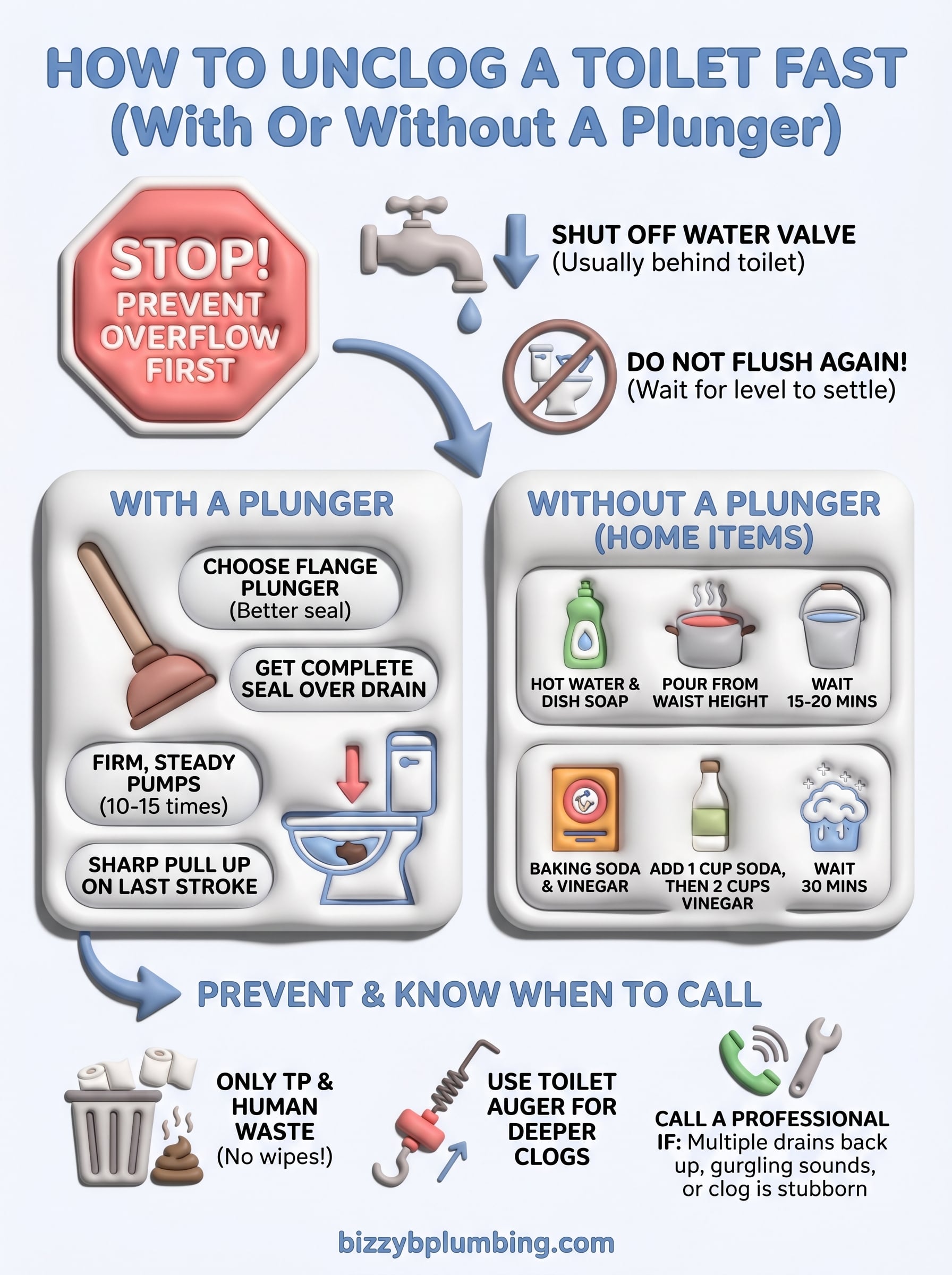
Before you try to figure out how to unclog a toilet, your first priority is stopping the water from rising. A clog alone is manageable. An overflow on your bathroom floor creates a second problem and a potential water damage situation on top of the original one. Take 30 seconds to get control of the situation before you reach for any tools.
Shut off the water supply
The water supply valve sits behind and below the toilet, usually on the left side near the floor. Turn it clockwise until it stops moving. This cuts off the water flow entirely and gives you a stable bowl level to work with. If the valve is stuck or corroded, lift the tank lid and prop up the float ball by hand to prevent more water from entering the bowl.
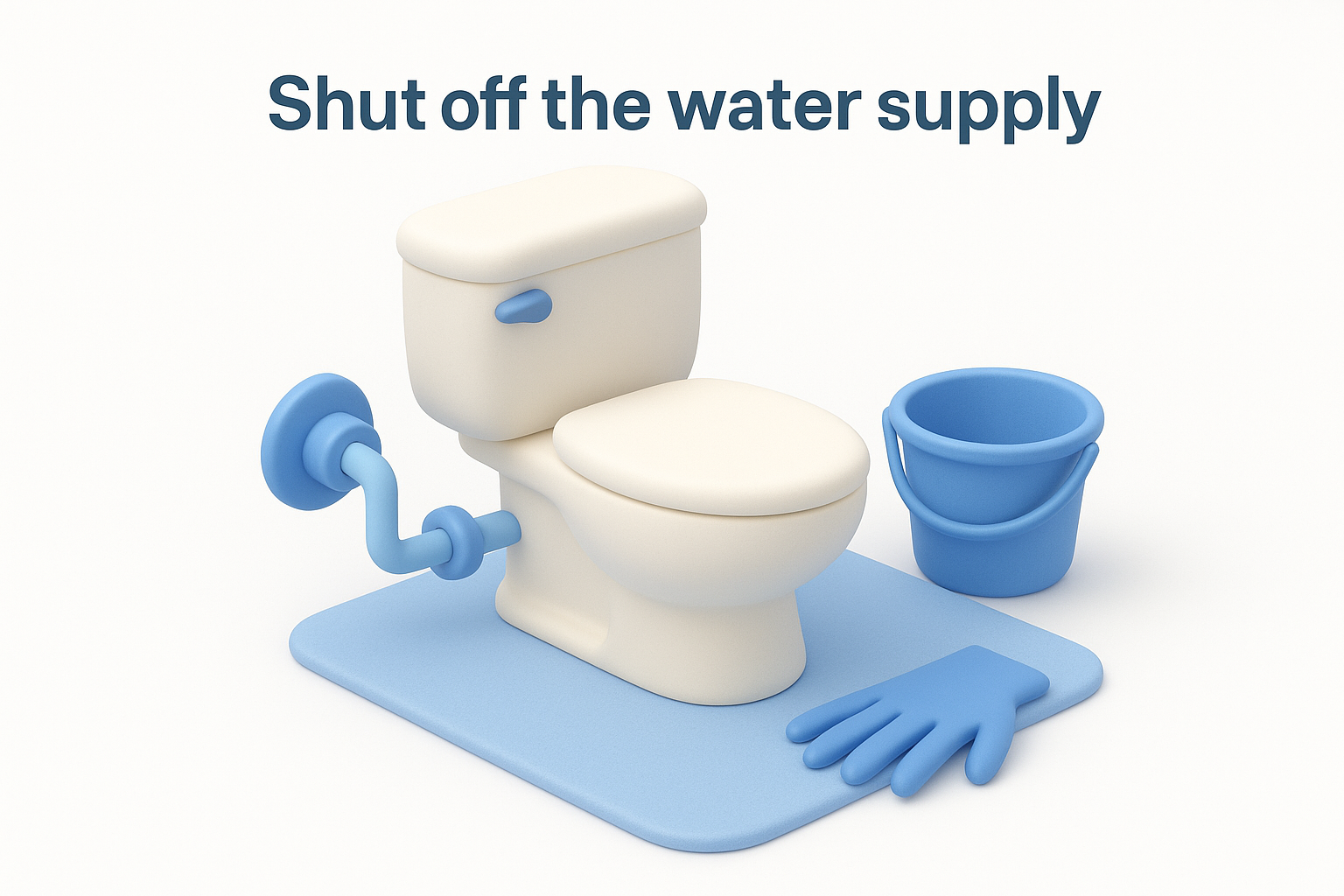
Turning off the water supply valve is the single most important step when you see the bowl starting to rise.
Once the water stops moving, check the current water level in the bowl. If it sits close to the rim, do not flush again. A second flush pushes more water in and raises your overflow risk significantly before the valve has a chance to fully cut the supply. Give the bowl a full minute to settle before you move on to any removal method.
Limit the mess before you start
Lay old towels or a plastic tarp on the floor around the base of the toilet before you do anything else. Clog removal almost always involves some splashing, and having the floor covered saves you a much bigger cleanup job afterward. Keep a bucket and rubber gloves nearby as well. You may need to remove excess water from the bowl if the level is too high to work with safely and effectively.
Use a plunger the right way for the fastest fix
A standard plunger is still the fastest and most reliable tool when you’re figuring out how to unclog a toilet, but technique matters more than most people realize. Using it wrong wastes effort and can push the clog deeper into the drain.
Choose the right plunger
Not all plungers work equally well on toilets. A flange plunger, the one with a rubber flap that folds out from the cup, creates a much tighter seal in the curved toilet drain than a flat-cup sink plunger. If you only have a flat-cup plunger on hand, fold the flap inside the cup and it can still work in a pinch.
The correct plunging technique
Position the rubber cup fully over the drain opening so you get a complete seal before you push. Start with a gentle first push to release trapped air, then follow with firm, even strokes using steady up-and-down pressure. Ten to fifteen pumps is usually enough to break up most clogs. Pull the plunger up sharply on your final stroke to help dislodge the blockage, then let the bowl drain before you consider flushing.
A tight seal on the drain opening is what generates the pressure that actually moves the clog.
Clear a clog without a plunger using home items
No plunger in sight? You still have solid options for how to unclog a toilet using items from your bathroom or kitchen. Two methods work well and won’t damage your toilet or pipes when used correctly.
These no-plunger methods work best on soft clogs from tissue or soap buildup, not on hard foreign objects lodged in the drain.
Hot water and dish soap
Squirt a generous amount of dish soap into the bowl, then pour in a gallon of hot (not boiling) water from waist height. The height creates enough force to help shift the clog. Let it sit for 15 to 20 minutes, then flush slowly.
- Use hot tap water, not boiling water (boiling water can crack porcelain)
- Pour from waist height to generate added pressure
- Repeat with a second pour if the first pass only partially clears the drain
Baking soda and vinegar
Add one cup of baking soda to the bowl first, then follow with two cups of white vinegar. The reaction between the two creates fizzing pressure that breaks up soft blockages. Wait 30 minutes before you flush.
- Use plain white vinegar for the strongest reaction
- Add the vinegar slowly to keep the fizz contained in the bowl
- Repeat once if the clog only partially clears on the first attempt
Handle stubborn clogs with an auger and safe checks
When soap and hot water haven’t moved the clog, knowing how to unclog a toilet with a toilet auger is your next move. This tool reaches blockages deep in the trap, well past where a plunger can work.
Use a toilet auger to reach deeper blockages
A toilet auger has a flexible cable and a curved guide tube that protects your porcelain. Insert the cable into the drain opening, then crank the handle clockwise while pushing forward. When you hit resistance, keep rotating to break up the clog or hook it and pull it out.
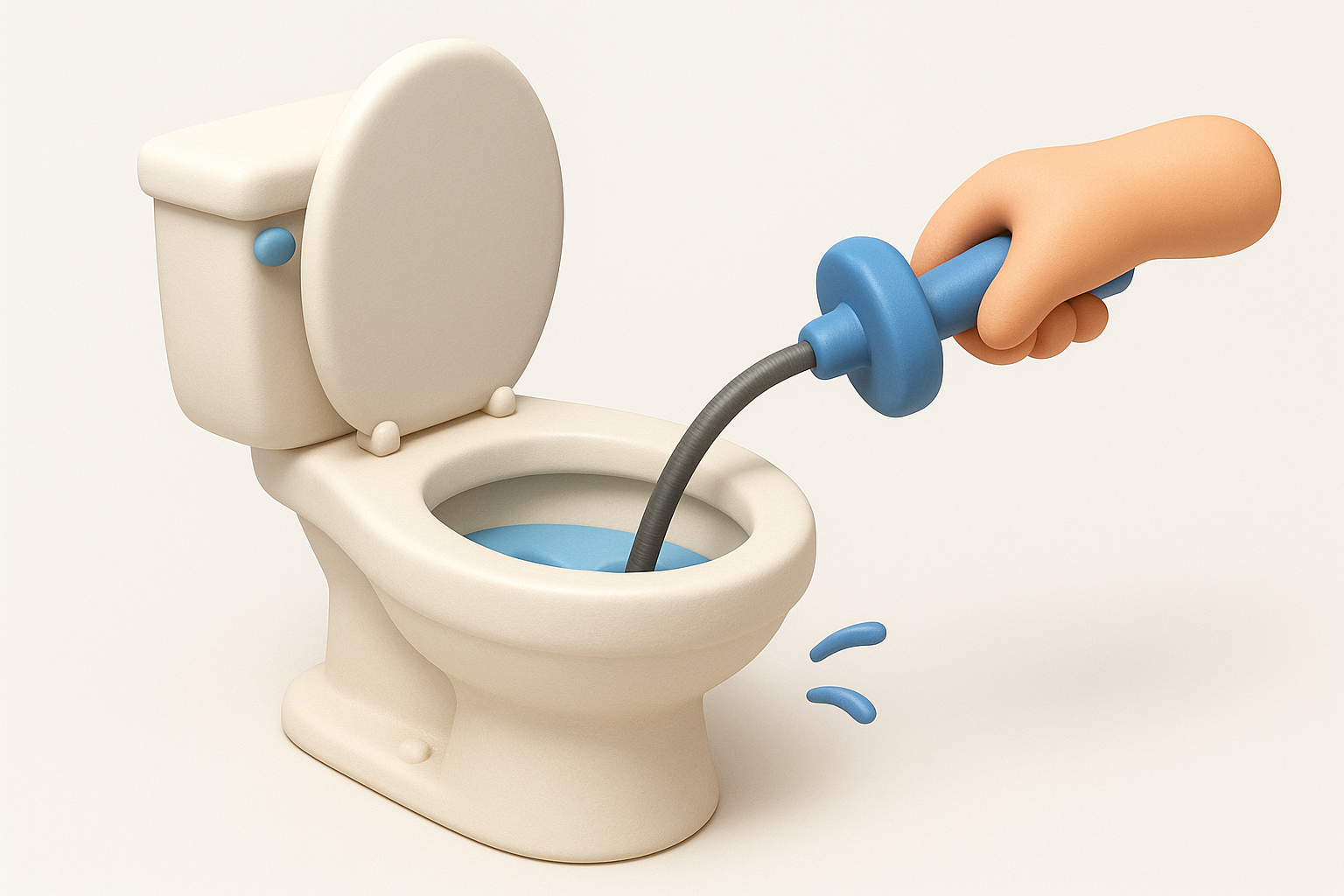
- Rotate slowly to avoid scratching the bowl
- Pull back carefully if the cable catches something solid
- Flush once after to confirm the drain is clear
Check for signs of a deeper problem
Some clogs point to a larger issue in your sewer line. If multiple drains back up together or you hear gurgling sounds from other fixtures while flushing, the problem is likely beyond a single toilet clog.
Multiple drains backing up at the same time points to a main line issue that needs a professional.
Prevent future toilet clogs in a busy household
Once you know how to unclog a toilet, the next step is keeping it from happening again. Most clogs in a busy home come from predictable, avoidable habits, which means a few small changes protect your drain long-term.
Watch what goes into the bowl
Only toilet paper and human waste belong in the toilet. Wipes labeled “flushable” still cause clogs because they don’t break down fast enough in residential pipes. Keep a small trash can in every bathroom so the right choice is always within reach.
Items that regularly block drains:
- “Flushable” wipes and baby wipes
- Paper towels and facial tissue
- Cotton balls and cotton swabs
- Hair and dental floss
Even one thick wipe flushed daily builds up over time and creates the exact blockage you just spent 20 minutes clearing.
Build a simple weekly habit
A quick weekly drain check helps you catch slow drains before they turn into full clogs. Pour a full bucket of water into the bowl from waist height and watch how fast it drains. If it moves slowly, add hot water and dish soap and let it sit for 15 minutes. Catching a partial clog early costs you five minutes instead of an hour.
Next steps if you need help today
The methods above cover how to unclog a toilet in most situations you’ll run into at home. If you’ve worked through all of them and the drain still won’t clear, the clog is either too deep or too dense for DIY tools to handle safely.
That’s when calling a plumber makes more sense than risking a bigger problem. A stubborn clog that doesn’t respond to a plunger, hot water, or an auger often means a partial blockage in your main sewer line or a foreign object lodged past the trap. Pushing harder without the right equipment can damage your pipes and turn a straightforward fix into a costly repair.
Bizzy B Plumbing serves Knoxville, Maryville, Alcoa, and surrounding East Tennessee communities with same-day service and upfront pricing. Contact our team today and a licensed technician will diagnose and clear the problem fast.