
Homeowners across Knoxville and East Tennessee ask us about tankless water heater pros and cons more than almost any other topic. It makes sense, a tankless unit costs significantly more upfront than a traditional tank, so you want to know exactly what you’re getting before you commit. At Bizzy B Plumbing, we’ve installed and serviced both types in homes throughout Maryville, Farragut, West Knoxville, and the surrounding areas, so we’ve seen how each option plays out in real life, not just on a spec sheet.
The honest answer is that tankless water heaters are excellent for some households and a poor fit for others. There’s no universal “right” choice, it depends on your home’s plumbing setup, your hot water usage patterns, and your budget. Flashy marketing from manufacturers won’t tell you that, but we will.
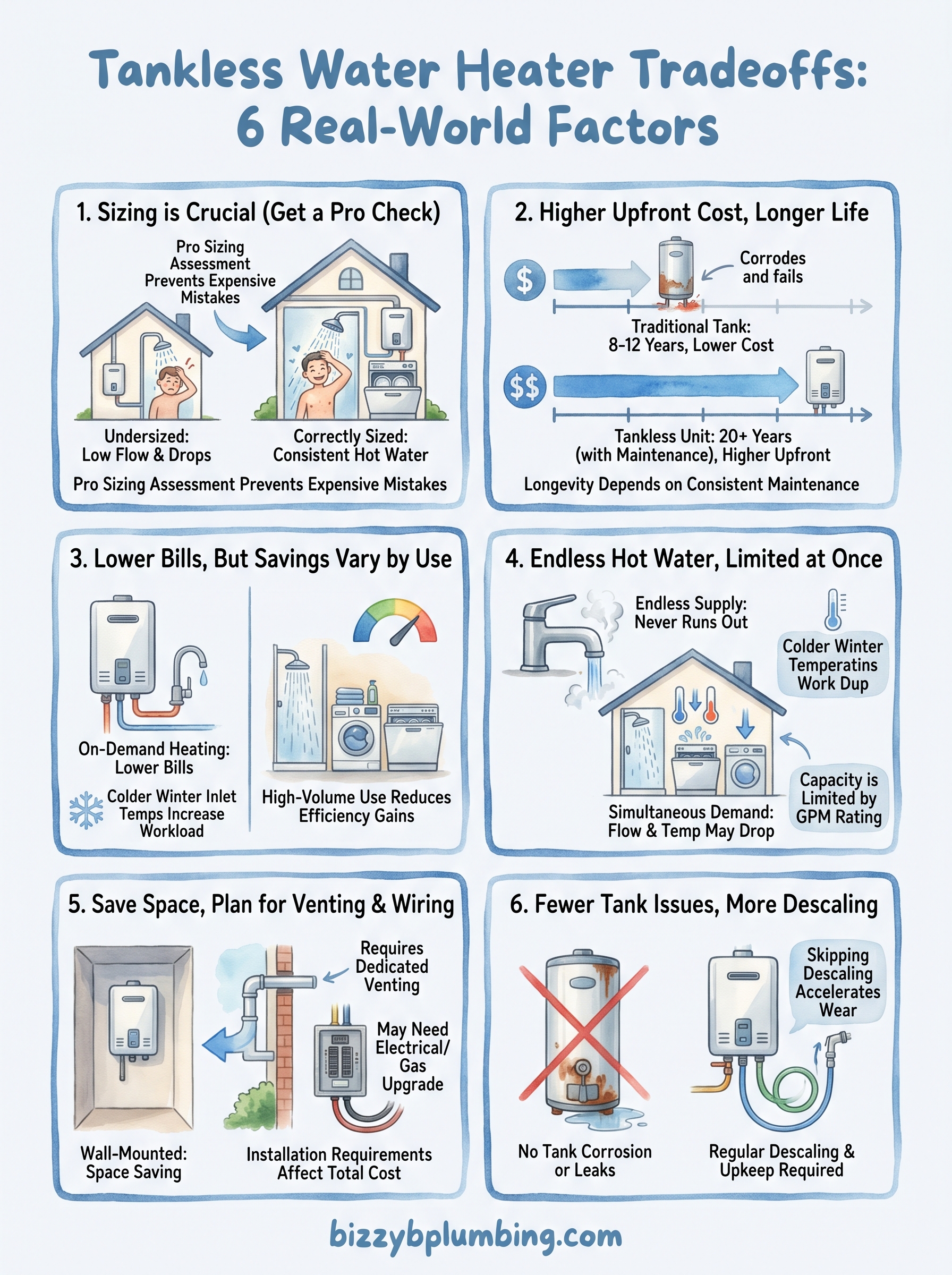
Below, we break down six real-world tradeoffs, the genuine advantages and the legitimate drawbacks, so you can make a decision based on facts, not hype.
1. Get a pro sizing check before you commit
Sizing is the most overlooked factor when homeowners research tankless water heater pros and cons. A unit that’s too small for your home will frustrate you constantly; one that’s oversized wastes money you didn’t need to spend. Getting a proper sizing assessment from a licensed plumber before you purchase saves you from both problems.
What this tradeoff looks like
Tankless water heaters are rated by flow rate in gallons per minute (GPM) and by the temperature rise they can deliver. Your plumber needs to calculate how many fixtures you might run at the same time and what your incoming water temperature is before recommending a specific unit. Skipping this step is one of the most common mistakes homeowners make when going tankless.
Best-case upside
When your unit is correctly sized, you get consistent hot water on demand without running out mid-shower or waiting for a tank to recover. A properly matched unit also runs at peak efficiency, which directly affects how much you save month to month on energy costs.
A correctly sized tankless unit performs exactly as advertised. An undersized one rarely does.
Real-world downside
If the unit is undersized, hot water delivery drops during peak demand, like when someone showers while the dishwasher runs. Many homeowners only discover this after installation, which means paying additional costs to upgrade to a larger unit or add a second one. That’s an expensive lesson that a sizing check upfront prevents entirely.
Knoxville and older-home notes
Knoxville’s incoming water temperatures drop noticeably in winter, which reduces the effective GPM output of any tankless unit. Older homes in areas like Bearden or Fountain City often have smaller gas lines or outdated electrical panels that can’t support a high-output unit without infrastructure upgrades first.
Questions to ask your plumber
Before you finalize any purchase, get direct answers to these:
- What GPM rating does my household actually need?
- What is the average incoming water temperature here in winter?
- Does my current gas line or electrical panel support this unit?
- Will I need any upgrades before installation begins?
2. Higher upfront cost, longer service life
The cost gap between tankless and traditional tank water heaters is one of the most discussed tankless water heater pros and cons. Understanding what you actually get for that extra money helps you decide whether the investment makes sense for your household.
What this tradeoff looks like
A traditional tank water heater typically runs $500 to $1,500 installed. A tankless unit costs $1,500 to $3,500 or more, depending on fuel type, brand, and any infrastructure upgrades your home requires before installation.
Best-case upside
Traditional tanks last 8 to 12 years on average. A well-maintained tankless unit can run for 20 years or longer, which means you may replace a standard tank heater twice before a tankless unit needs replacing.
Over a 20-year window, a tankless unit often costs less in total than two replacement tank heaters.
Real-world downside
That longer lifespan only holds with consistent maintenance. Skipping annual descaling or ignoring minor problems shortens the life of the unit significantly and erodes the financial case for going tankless in the first place.
Knoxville and older-home notes
Older homes in West Knoxville or Maryville often require gas line upgrades before a tankless unit can be installed, which adds $300 to $800 to your upfront costs.
Questions to ask your plumber
Get clear answers to these before finalizing your budget and committing to a unit.
- What is the full installed cost, including any required upgrades?
- How long should this specific unit last with regular maintenance?
- What does an annual maintenance plan cost for this model?
3. Lower energy bills, but savings vary by use
Energy efficiency is one of the most frequently cited tankless water heater pros and cons, and it genuinely delivers savings for many households. However, how much you actually save depends on how your family uses hot water, not on the manufacturer’s efficiency rating alone.
What this tradeoff looks like
Tankless units heat water only when you need it, so they eliminate the standby heat loss that traditional tanks produce around the clock. The U.S. Department of Energy estimates tankless units can be 24 to 34 percent more efficient for homes that use 41 gallons or less per day.
Best-case upside
If your household runs modest hot water demand spread across the day, a tankless unit can trim your water heating bill meaningfully each month. Over years of use, those savings add up and help offset the higher upfront cost.
The efficiency advantage is real, but it shows up most clearly in lower-usage households with consistent patterns.
Real-world downside
High-volume households that run multiple hot water fixtures simultaneously reduce efficiency gains significantly. The unit fires at full capacity more often, which narrows the gap between tankless and traditional tank operating costs.
Knoxville and older-home notes
Colder incoming water temperatures in winter force the unit to work harder, which reduces efficiency during the months when energy costs are already higher.
Questions to ask your plumber
- What is our household’s daily hot water usage, and how does that affect projected savings?
- Based on local water temperatures, what realistic monthly savings should we expect?
4. Endless hot water, limited hot water at once
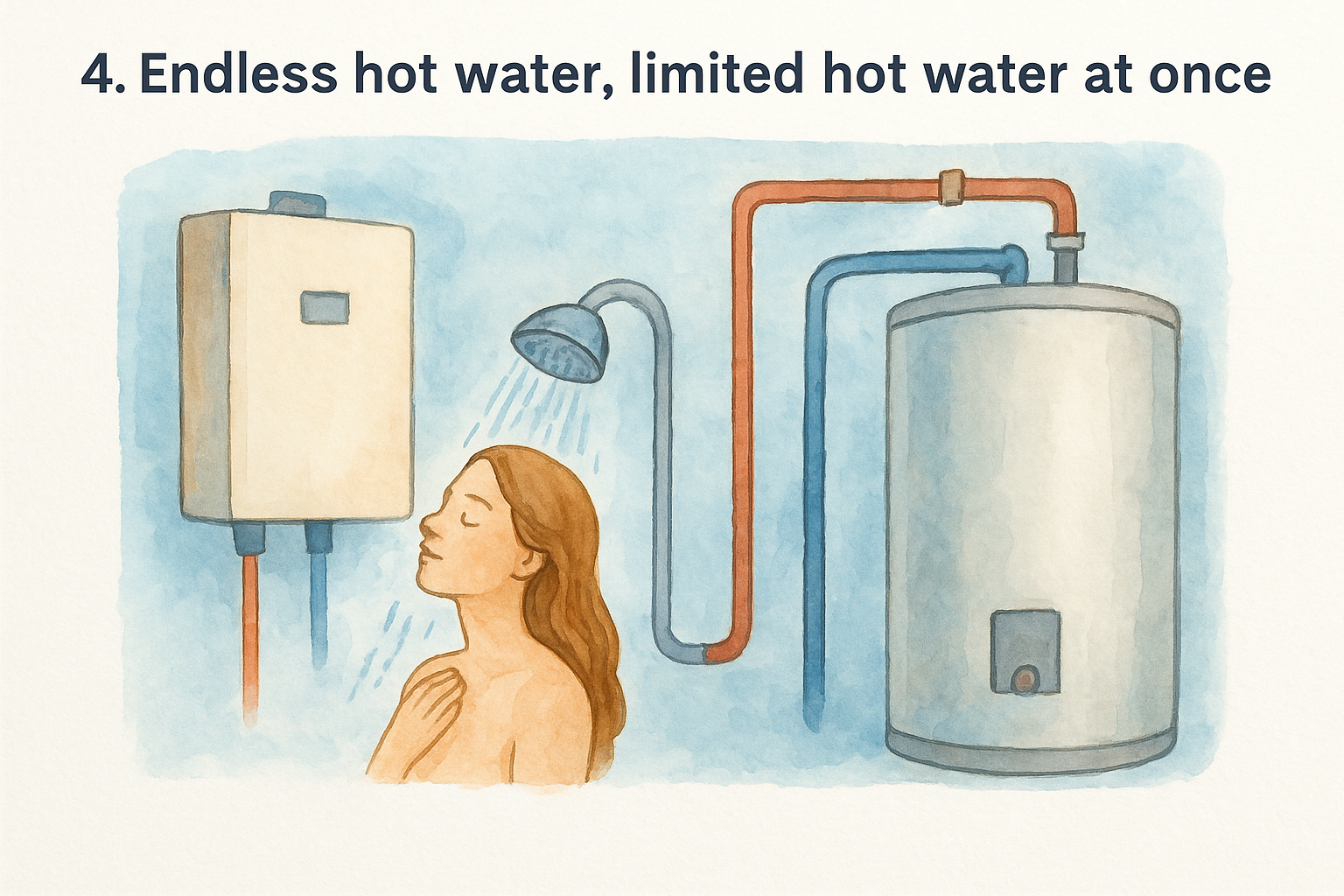
This tradeoff is central to the tankless water heater pros and cons discussion. A tankless unit never runs out of hot water the way a tank does, but it can only process a fixed number of gallons per minute, so simultaneous demand is where the limitation appears.
What this tradeoff looks like
A traditional tank stores 40 to 80 gallons before requiring 30 to 60 minutes of recovery time. A tankless unit carries no reserve, so hot water flows continuously as long as total demand stays within the unit’s GPM rating.
Best-case upside
For households where people shower at different times, this is a genuine upgrade. You never get a cold shower because someone else went first, and back-to-back use won’t drain a fixed reserve that needs time to refill.
The “endless hot water” claim is accurate, as long as demand stays within the unit’s flow capacity.
Real-world downside
Run a shower, dishwasher, and washing machine at the same time, and a single tankless unit may struggle. Hot water doesn’t stop entirely, but water temperature can drop until demand falls back within the unit’s rated flow.
Knoxville and older-home notes
Larger homes in Farragut or Hardin Valley with multiple bathrooms hit this ceiling quickly. A second unit resolves the simultaneous demand issue, but it adds meaningfully to your installation budget.
Questions to ask your plumber
Before you finalize your choice, ask your plumber these questions about capacity and your home’s actual demand.
- How many fixtures can this unit support simultaneously at winter water temperatures?
- Would a point-of-use heater work for a distant bathroom in my home?
5. Save space, but plan for venting and wiring
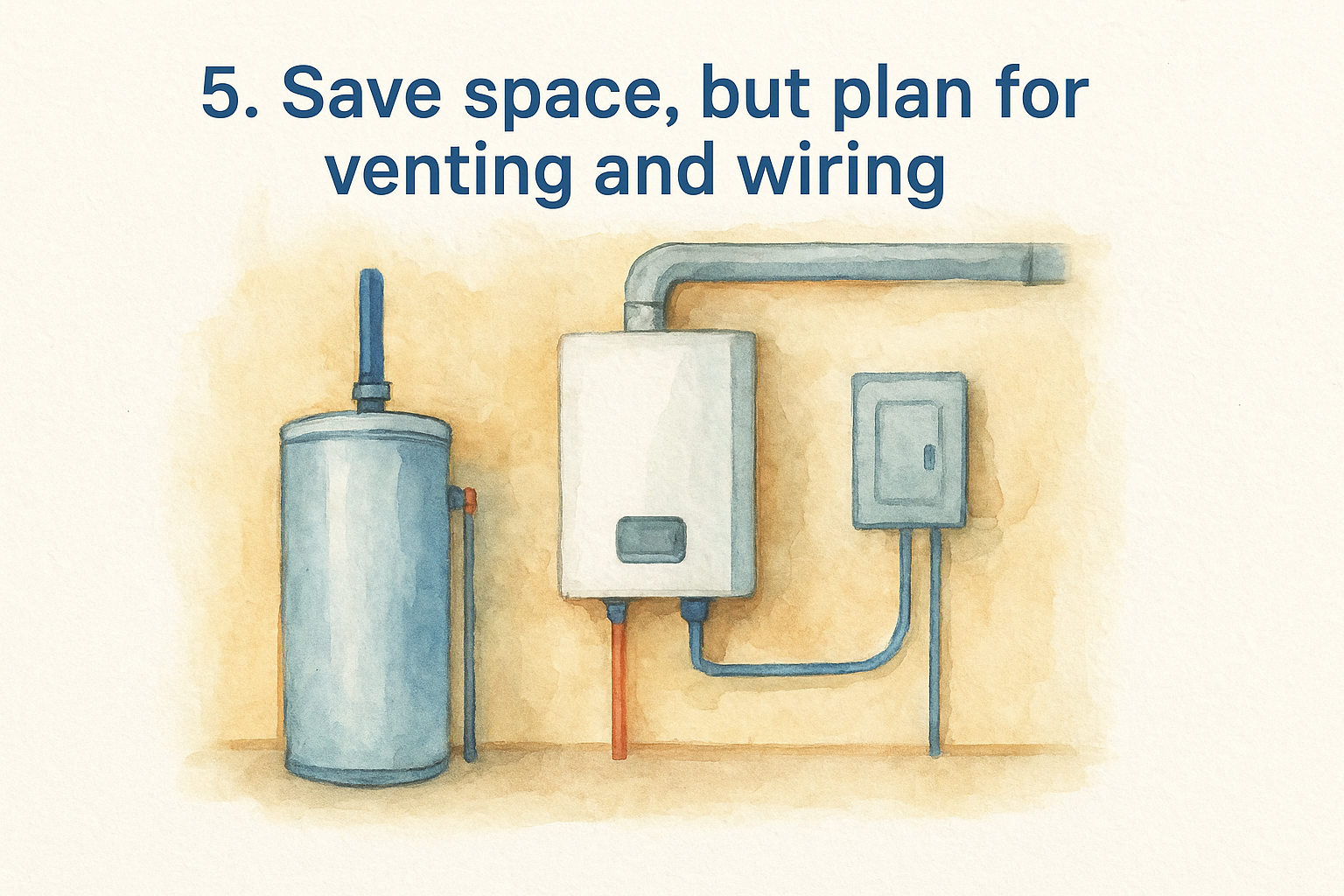
Space savings are a genuine benefit in the tankless water heater pros and cons discussion, but the installation requirements that come with them often catch homeowners off guard. Understanding what your home actually needs before you purchase keeps your budget from shifting mid-project.
What this tradeoff looks like
A traditional tank heater takes up significant floor space in your utility room or garage. A tankless unit mounts directly to the wall, freeing up that footprint entirely, which matters most in smaller homes with limited utility space.
Best-case upside
Wall-mounted units fit into tight utility closets, and some outdoor-rated models eliminate indoor space requirements altogether. If you’re finishing a basement or reconfiguring a utility area, recovering that floor space has real practical value.
The space savings are real, but they come with installation requirements that affect your total project cost.
Real-world downside
Gas tankless units require dedicated venting through an exterior wall, and electric models often need a panel upgrade to handle the electrical load. Both add to your installation cost and extend your project timeline.
Knoxville and older-home notes
Older homes in Bearden or Powell frequently have crowded exterior walls and aging electrical panels that need upgrading before installation. Gas venting routes can also get complicated in homes built before modern construction standards were common.
Questions to ask your plumber
- Does my current electrical panel support a tankless unit without requiring an upgrade?
- Where will the venting route, and what does that add to the total installation cost?
6. Fewer tank issues, more descaling and upkeep
Maintenance is one of the quieter entries in the tankless water heater pros and cons conversation, but it matters more than most homeowners expect. A tankless unit removes tank-specific failures like rust, sediment buildup, and catastrophic leaks, but it introduces a different set of upkeep requirements you need to plan for.
What this tradeoff looks like
Traditional tanks corrode from the inside out over time. Tankless units avoid that failure mode entirely, but their heat exchangers accumulate mineral scale that needs flushing regularly to keep the unit running efficiently and at full flow rate.
Best-case upside
Without a tank to corrode, you eliminate the risk of a sudden failure flooding your utility room. Annual descaling takes less than an hour and keeps the unit performing at full capacity for its full service life.
Consistent maintenance is what separates a 20-year tankless unit from one that fails at 12.
Real-world downside
Skipping annual descaling accelerates wear on the heat exchanger and reduces flow over time. Repairs on a heavily scaled heat exchanger cost significantly more than a routine flush would have.
Knoxville and older-home notes
East Tennessee has moderately hard water, which means mineral deposits build up faster than in softer-water regions. Homes in Maryville or Alcoa may need descaling more than once a year depending on usage volume.
Questions to ask your plumber
- How hard is the water in my specific area?
- What does annual descaling cost, and can you put me on a regular maintenance schedule?
Your next step
Working through the tankless water heater pros and cons takes honest information, not a sales pitch. Each of the six tradeoffs in this article points to the same conclusion: whether a tankless unit is the right call depends entirely on your home, your budget, and how your household uses hot water. There is no one-size-fits-all answer.
Before you spend money on a unit, get a licensed plumber to walk through your home, check your gas line or electrical panel, measure your demand, and give you a real installed cost. That assessment costs you nothing with the right company, and it prevents expensive surprises after the job starts.
If you’re in Knoxville or the surrounding East Tennessee area, the team at Bizzy B Plumbing can give you a straight answer about whether tankless makes sense for your specific home, with no pressure and no hidden fees.